
About This Worksheet
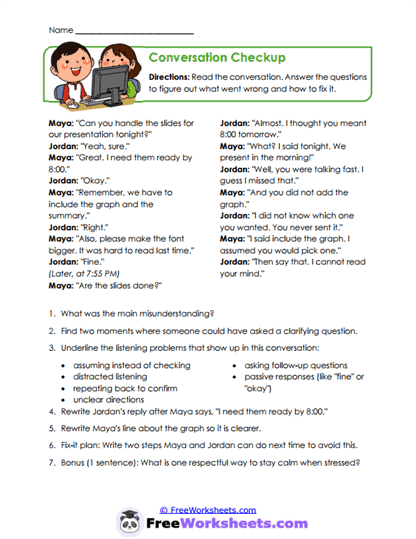
This worksheet is a conversation analysis activity that helps students identify communication breakdowns. It focuses on understanding how misunderstandings happen during real-life interactions. Students read a short dialogue and evaluate what went wrong between the speakers. For example, assuming a time without confirming becomes a misunderstanding that leads to confusion. This strengthens both listening and problem-solving skills in social situations.
Curriculum and Grade Alignment
This worksheet is designed for grades 6 through 8 and targets communication and critical thinking skills. The main goal is to help students analyze conversations and recognize breakdowns in understanding. Students should already be familiar with basic dialogue structure and inference skills. It aligns with CCSS.SL.7.1, which emphasizes collaborative discussions and clear communication. In Texas, it connects to TEKS 110.7(b)(1) related to listening and speaking behaviors.
Student Tasks
On this worksheet, students will read a conversation between two people and answer questions about what went wrong. They will identify misunderstandings and locate specific moments where better communication could have helped. Students are asked to suggest improvements and rewrite unclear parts of the conversation. Some tasks involve analyzing tone and assumptions. The activity encourages deeper thinking about how conversations succeed or fail.
Common Challenges and Misconceptions
Students may focus only on one mistake instead of noticing multiple breakdowns. Some might struggle to explain why a misunderstanding occurred. Others may find it difficult to suggest realistic improvements to the conversation. There can also be confusion between tone issues and factual misunderstandings. Teachers should guide students to look closely at each exchange and discuss possible fixes.
Implementation Guidance
Teachers can use this worksheet during lessons on communication, teamwork, or conflict resolution. It works well as a group activity where students discuss different perspectives. Role-playing the conversation can help deepen understanding. At home, parents can use it to talk about clear communication and avoiding assumptions. This activity supports both academic discussion skills and everyday interactions.
Details and Features
The worksheet includes a detailed conversation and multiple follow-up questions. It is formatted for easy reading and written responses. The structure supports both individual and collaborative work. Realistic dialogue makes the activity relatable for students. It is ideal for classroom discussions or independent analysis.