
About This Worksheet
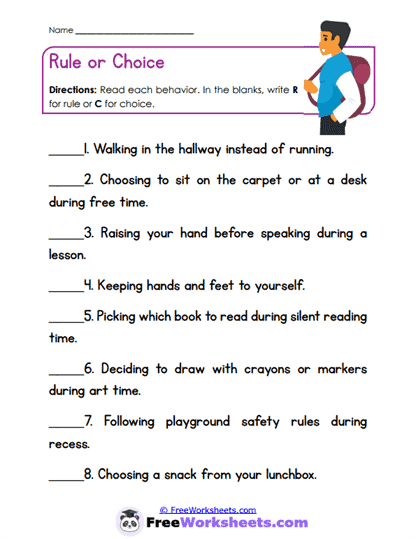
This worksheet is a sorting activity that helps students distinguish between expectations and personal choices. It focuses on understanding the difference between required behaviors and optional decisions. Designed for Grades 3-5, it builds awareness of responsibility and independence. Students read each statement and decide how it should be categorized. For example, raising a hand becomes an expectation, while choosing a book becomes a choice.
Curriculum and Grade Alignment
This activity supports upper elementary students in understanding responsibility and decision-making. The main goal is to help learners separate required behaviors from personal preferences. Students should already be familiar with basic classroom expectations. This builds toward stronger independence and self-regulation. It aligns with CCSS.ELA-LITERACY.RI.3.3 and connects to TEKS standards related to behavior and responsibility.
Student Tasks
On this worksheet, students will read a list of behaviors and actions. They will think carefully about whether each one is expected or a personal choice. Learners then label each item using the correct category. The task encourages thoughtful classification and understanding of responsibility. It helps students recognize the difference between rules and choices in daily life.
Common Challenges and Misconceptions
Students may confuse expectations with choices when both seem acceptable. Some learners might rely on personal preference instead of understanding responsibility. Others may rush and not fully read each statement. Abstract thinking about categories can also be challenging. Teachers can support students by discussing examples and clarifying expectations.
Implementation Guidance
This is one I love using when we’re really trying to build independence in students. It opens up great conversations about what they must do versus what they get to choose. At home, you can connect this to daily routines like chores versus free time. I’d recommend talking through a few examples together before letting them work independently. It helps students take more ownership of their behavior.
Details and Features
The worksheet includes clear statements and simple labeling directions. Its format is easy to follow and supports independent work. The content is relatable to everyday school experiences. It is printable and requires no additional materials. The design encourages both thinking and discussion.