
About This Worksheet
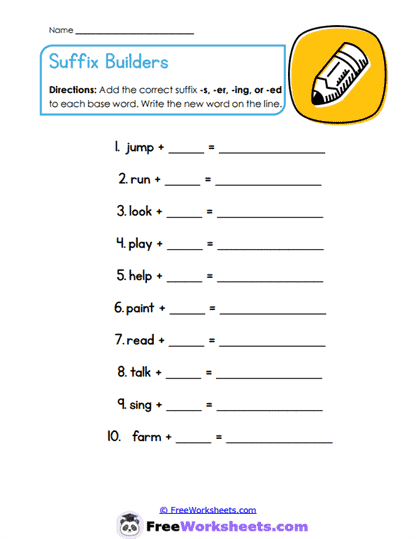
This worksheet helps first grade students practice adding suffixes to base words to create new words. Suffixes are word parts added to the end of a word that change its meaning or how it is used in a sentence. Students add suffixes like -s, -er, -ing, and -ed to words such as jump, talk, and paint. For example, adding -ing to jump creates jumping. This activity supports vocabulary development, spelling patterns, and reading fluency skills.
Curriculum and Grade Alignment
This grade 1 language arts worksheet focuses on suffixes, spelling patterns, and word-building skills. Students practice understanding how suffixes change the meaning and form of a word. Before beginning this activity, learners should recognize common base words and understand simple verb actions. Future literacy learning may include identifying suffixes in reading passages and using them in writing independently. This worksheet aligns with CCSS.ELA-LITERACY.RF.1.3.F and TEKS standards related to phonics and vocabulary development.
Student Tasks
On this worksheet, students will read simple base words like run, help, and sing. Learners choose the correct suffix and write the completed word on the line. Children practice reading the new words aloud after adding endings such as -ed or -ing. Students strengthen decoding and spelling skills while learning how suffixes change words. The activity also encourages careful attention to word endings and meaning patterns.
Common Challenges and Misconceptions
Some first grade students may choose suffixes randomly without thinking about how the new word should sound or mean. Children can also confuse endings like -ed and -ing while reading and writing. A few learners may struggle to spell the completed words correctly after adding the suffix. Others may focus only on copying instead of understanding how the word changes. Teachers can help by modeling how suffixes change both pronunciation and meaning before students begin.
Implementation Guidance
Teachers can use this worksheet during phonics lessons, spelling instruction, or literacy center practice. Parents may also use the activity at home while reviewing reading and vocabulary skills together. Encouraging children to use the completed words in sentences can strengthen comprehension and oral language development. Adults can ask questions like “What does painted mean?” to deepen understanding. This worksheet also works well for guided practice or independent review.
Details and Features
The worksheet includes familiar first grade vocabulary that supports confidence and successful participation. Clear writing spaces make the activity manageable for developing writers. Multiple suffix types provide varied practice while reinforcing common spelling patterns. The simple layout helps students focus on the literacy skill being taught. The worksheet prints clearly for classroom instruction, homeschool use, or intervention support.