
Character Traits Worksheets
Grade 3 reading Character Traits worksheets help students analyze personalities, actions, and motivations across engaging stories and structured comprehension activities. These free, ready-to-print resources are provided in PDF format for immediate classroom use. Students strengthen inference, evidence-based reasoning, and character analysis skills aligned to Common Core expectations.
About This Collection of Worksheets
Understanding character traits is a foundational reading skill in Grade 3, as students transition from basic comprehension to deeper literary analysis. These worksheets are designed to support that progression by aligning with Common Core standards such as RL.3.1 and RL.3.3, helping learners describe characters, interpret actions, and explain how traits influence events. Through repeated exposure to structured passages and targeted questions, students develop the ability to think critically about text.
This collection is highly versatile for classroom use, making it ideal for morning work, homework assignments, RTI interventions, literacy centers, and small group instruction. Teachers can also use these worksheets for formative assessment to gauge student understanding of character development and traits. The variety of formats ensures students remain engaged while practicing essential comprehension strategies.
Each worksheet is designed with print clarity and ink efficiency in mind, ensuring easy classroom implementation. The layouts are clean and accessible, allowing students to focus on the task without distractions. With minimal prep required, teachers can quickly integrate these resources into daily instruction while maintaining high academic rigor.
Paul’s Teacher Tip
When teaching character traits, encourage students to always connect traits to specific actions or dialogue rather than relying on guesswork. Many Grade 3 students can name traits but struggle to justify them, so modeling think-aloud strategies can make this process clearer. Use anchor charts that separate physical and personality traits to prevent confusion. For differentiation, provide sentence frames for students who need support and challenge advanced learners to compare traits across multiple characters. Repeated practice with evidence-based responses will significantly improve both comprehension and written explanations.
Worksheet Collection Skill Spotlights
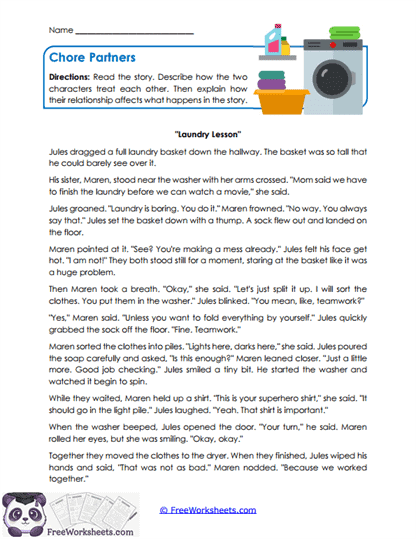
Chore Partners
- What Kids Do:
Students examine sibling interactions within a shared task and describe how cooperation and behavior influence the outcome of completing responsibilities. - Target Skill:
Develops understanding of interpersonal dynamics by analyzing how character relationships shape events and contribute to plot development.
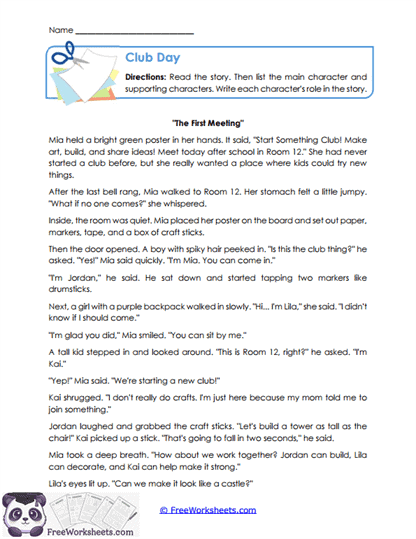
Club Day
- What Kids Do:
Learners read a dialogue-driven story and identify key participants while describing how each individual contributes to the unfolding events. - Target Skill:
Builds foundational character identification and role differentiation using textual evidence and narrative structure awareness.
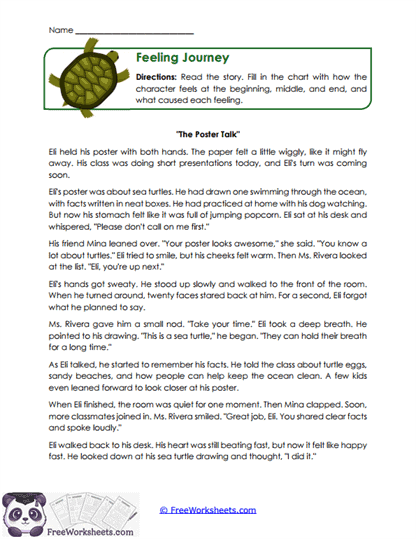
Feeling Journey
- What Kids Do:
Students track emotional shifts across beginning, middle, and end sections of a story and explain triggers for each change. - Target Skill:
Strengthens analysis of emotional development by connecting events to internal character responses over time.
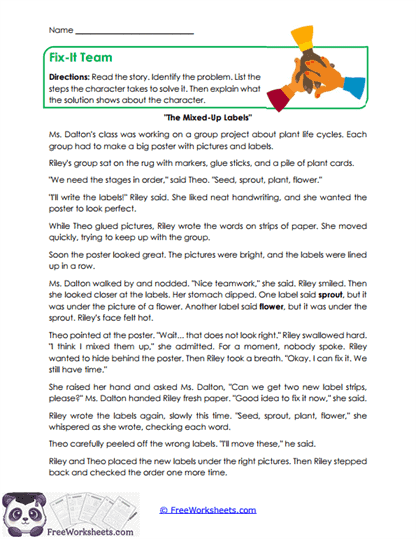
Fix-It Team
- What Kids Do:
Readers identify a central problem, outline solution steps, and determine what the character’s response reveals about personality. - Target Skill:
Enhances problem-solution reasoning while interpreting traits through decision-making and corrective actions.
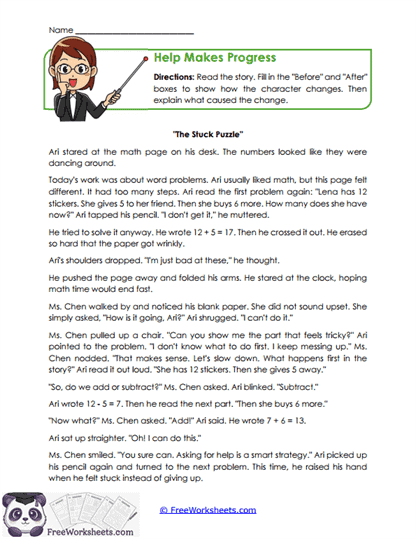
Help Makes Progress
- What Kids Do:
Students compare a character’s mindset before and after receiving help, noting changes in attitude and performance. - Target Skill:
Promotes understanding of character growth by evaluating cause-and-effect relationships tied to learning experiences.
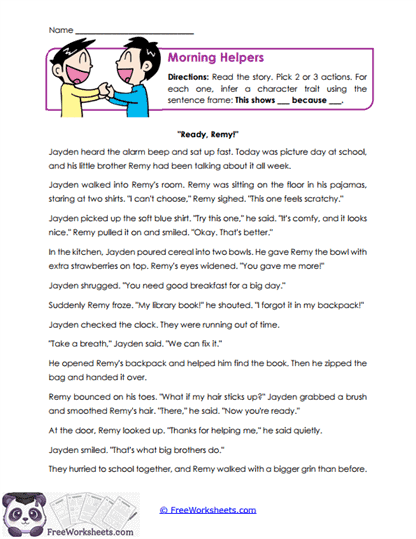
Morning Helpers
- What Kids Do:
Learners select specific supportive actions from a narrative and use structured sentence frames to explain inferred traits. - Target Skill:
Reinforces inference skills by linking observable behaviors to underlying personality characteristics.
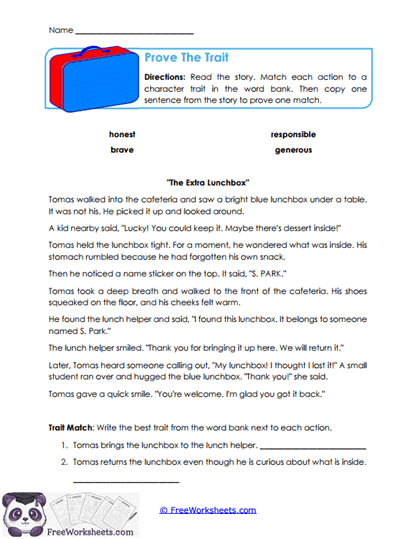
Prove the Trait
- What Kids Do:
Students match story events to appropriate traits and copy textual evidence that justifies their selections. - Target Skill:
Develops evidence-based reasoning through precise alignment of actions with descriptive trait vocabulary.
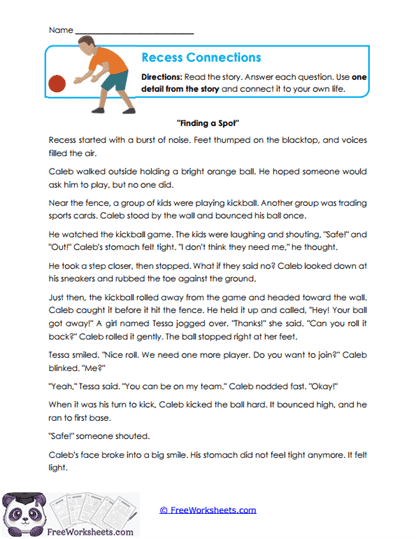
Recess Connections
- What Kids Do:
Readers analyze social interactions and emotional responses, then relate the scenario to their own experiences. - Target Skill:
Encourages empathetic thinking and text-to-self connections while interpreting character feelings and behaviors.
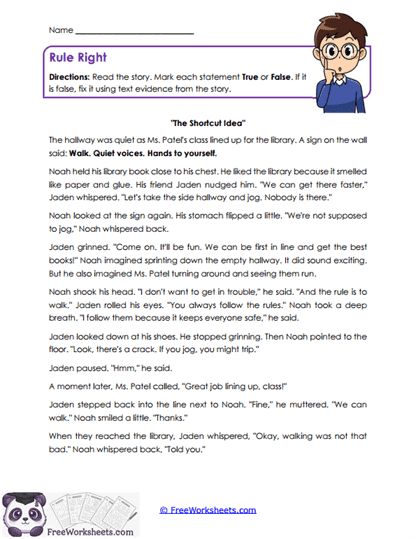
Rule Right
- What Kids Do:
Students evaluate statements about a character’s decisions, correct inaccuracies, and support revisions with text details. - Target Skill:
Builds critical evaluation skills by analyzing choices and verifying understanding through evidence correction.
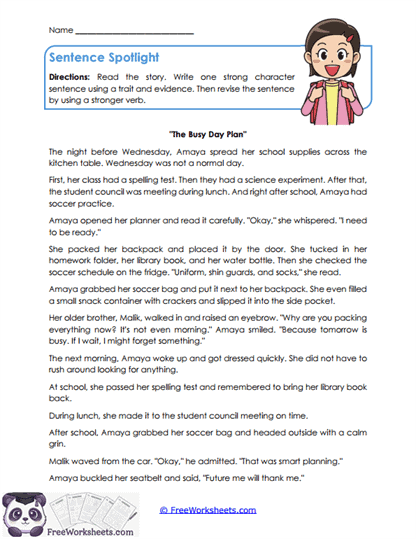
Sentence Spotlight
- What Kids Do:
Learners compose and revise sentences describing traits, improving clarity by replacing weak verbs with stronger alternatives. - Target Skill:
Integrates reading comprehension with writing development, focusing on precise language and explanatory clarity.
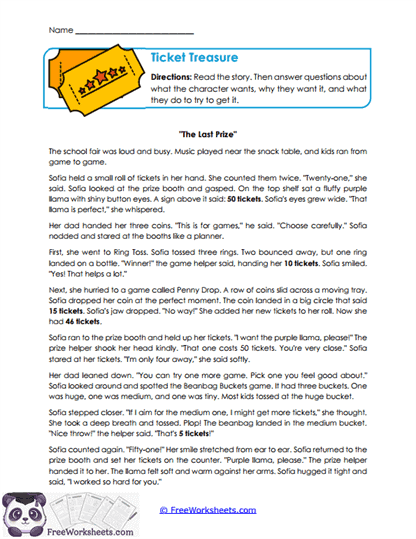
Ticket Treasure
- What Kids Do:
Students follow a goal-driven storyline to identify motivations, decisions, and actions that lead to a desired outcome. - Target Skill:
Strengthens comprehension of character motivation by analyzing how goals influence behavior and sequencing.
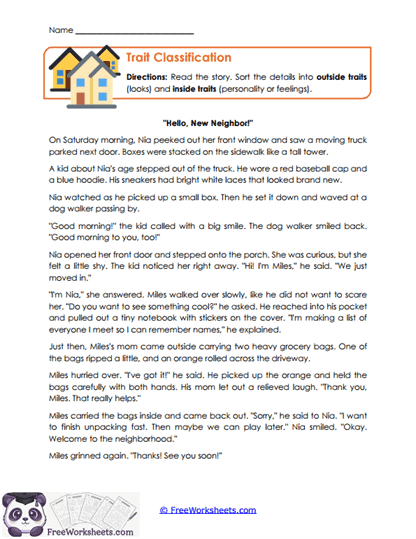
Trait Classification
- What Kids Do:
Students sort descriptive details into categories based on whether they represent physical appearance or personality attributes. - Target Skill:
Improves conceptual understanding of trait types by distinguishing external features from internal qualities.