
Author's Purpose Worksheets
Grade 3 Reading Author's Purpose worksheets help students understand why texts are written and how meaning is shaped through purpose. These free, ready-to-print worksheets are provided in PDF format for immediate classroom use and easy implementation. Students strengthen comprehension, text analysis, and evidence-based reasoning aligned to curriculum standards.
About This Collection of Worksheets
Understanding author’s purpose is a critical literacy skill in Grade 3, as students transition from basic comprehension to deeper text analysis. These worksheets are carefully designed to align with Common Core standards, helping students distinguish between informing, entertaining, and persuading while building essential reasoning skills. This progression supports students in becoming thoughtful, analytical readers across all subject areas.
This collection is versatile for classroom use, making it ideal for morning work, homework assignments, literacy centers, RTI support, and small group instruction. Teachers can also use these worksheets as formative assessments to gauge understanding of text purpose and comprehension strategies. The variety of formats ensures students stay engaged while practicing key reading skills.
Each worksheet is designed for high-quality printing with ink-efficient layouts and student-friendly formatting. The materials are accessible for diverse learners and require minimal preparation, allowing teachers to focus on instruction rather than setup. This makes the collection practical, flexible, and effective for everyday classroom use.
Paul’s Teacher Tip
When teaching author’s purpose in Grade 3, start by explicitly modeling the three main purposes-inform, entertain, and persuade-using short, relatable texts. Many students struggle to distinguish between informative and persuasive writing, so highlight clue words like facts, opinions, and commands during guided practice. Encourage students to justify their answers with evidence, not just labels, to deepen understanding. For differentiation, provide sentence frames or anchor charts for support, while challenging advanced learners to analyze mixed-purpose texts. Repeated exposure across subjects, especially science and social studies, helps students transfer this skill beyond reading time.
Worksheet Collection Skill Spotlights
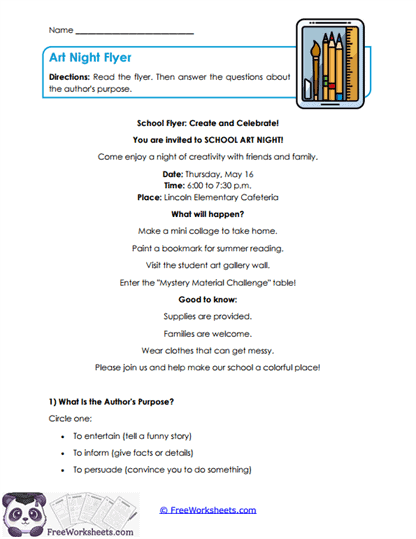
Art Night Flyer
- What Kids Do: Students examine a school event flyer, interpret event details, and decide whether the message is meant to inform or encourage attendance.
- Target Skill: Develops real-world text evaluation and recognition of combined informational and persuasive intent using contextual clues.
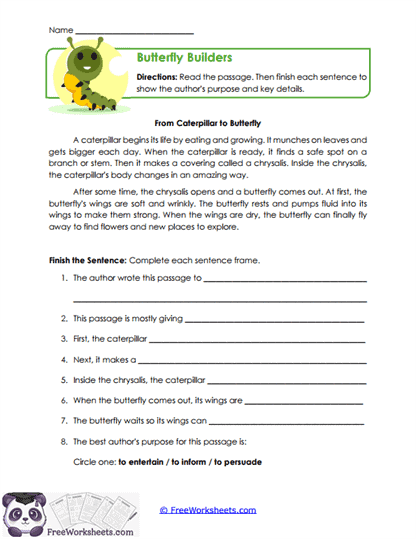
Butterfly Builders
- What Kids Do: Learners read a life cycle passage and complete structured sentence frames using key details from the text.
- Target Skill: Strengthens sequencing comprehension and identification of informational writing through scientific explanation.
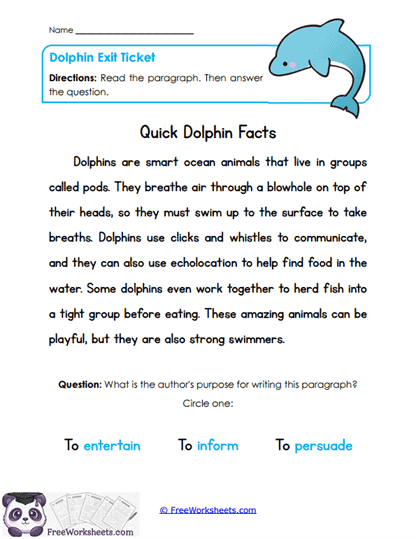
Dolphin Exit Ticket
- What Kids Do: Students quickly read a short paragraph about dolphins and select the correct purpose from multiple-choice options.
- Target Skill: Builds rapid text classification and main idea recognition in informational passages.
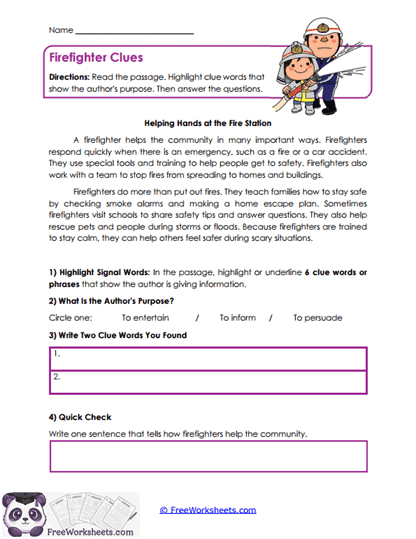
Firefighter Clues
- What Kids Do: Students highlight meaningful phrases in a passage about firefighters and determine why the author wrote it.
- Target Skill: Enhances evidence identification and understanding of explanatory nonfiction text features.
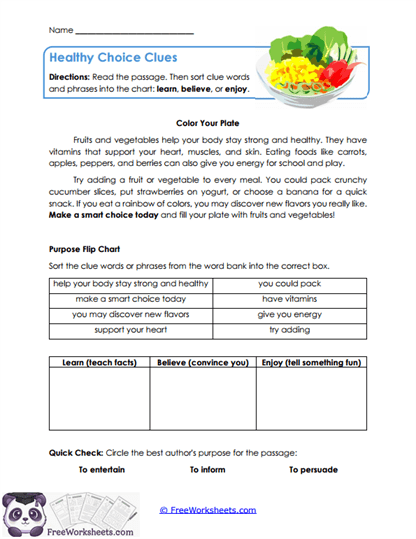
Healthy Choice Clues
- What Kids Do: Learners sort phrases from a health passage into categories like learn, believe, or enjoy to analyze intent.
- Target Skill: Develops categorization of language types and interpretation of persuasive techniques.
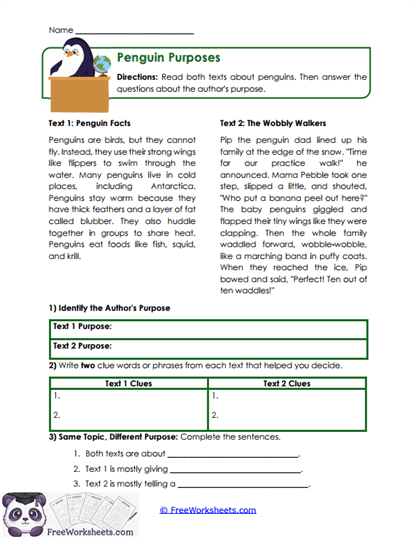
Penguin Purposes
- What Kids Do: Students compare two penguin texts-one factual and one narrative-and identify how each author’s intent differs.
- Target Skill: Builds comparative text analysis and recognition of structural differences across genres.
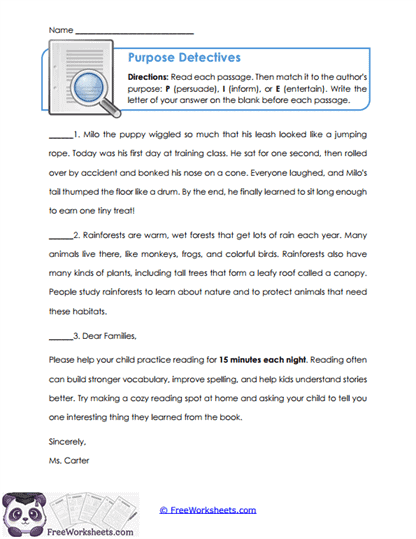
Purpose Detectives
- What Kids Do: Students read multiple short passages and classify each as entertaining, informing, or persuading.
- Target Skill: Strengthens foundational purpose identification through exposure to varied text types.
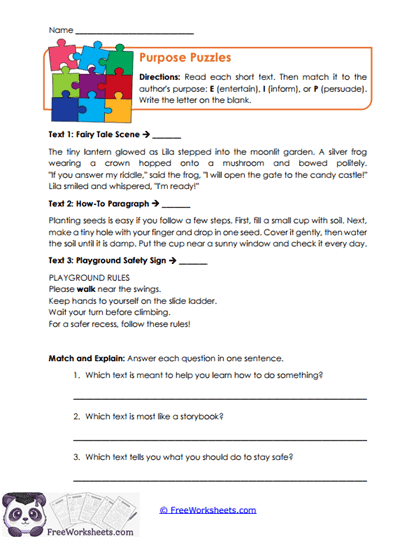
Purpose Puzzles
- What Kids Do: Learners match short texts to their purposes and explain their reasoning using textual evidence.
- Target Skill: Promotes analytical thinking and understanding of text structure-function relationships.
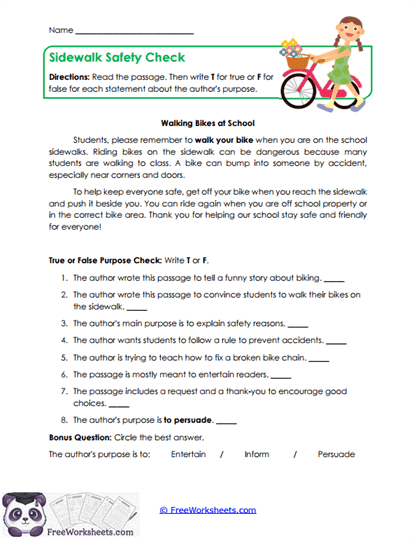
Sidewalk Safety Check
- What Kids Do: Students evaluate statements about a safety passage and determine whether they align with the author’s message.
- Target Skill: Develops critical evaluation of persuasive language and interpretation of author intent.
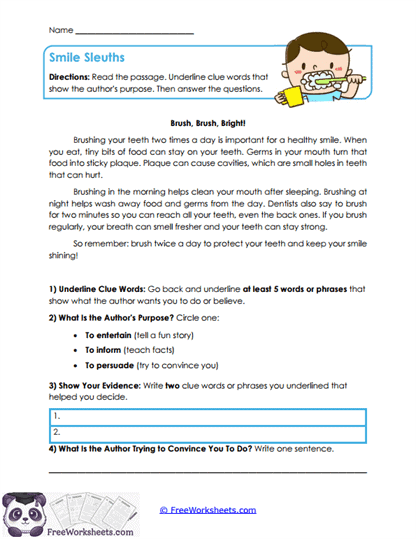
Smile Sleuths
- What Kids Do: Students underline key phrases in a dental health passage and explain how those clues reveal the purpose.
- Target Skill: Builds evidence-based reasoning and identification of informative writing signals.
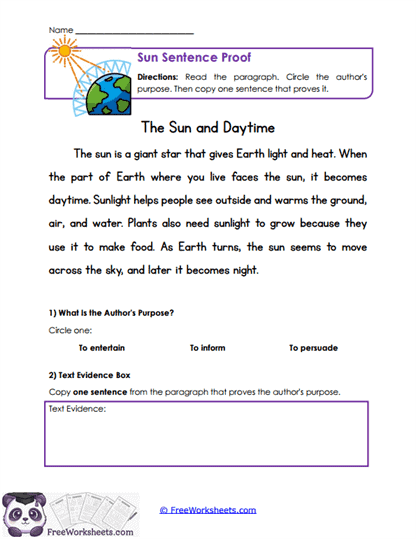
Sun Sentence Proof
- What Kids Do: Learners identify the author’s purpose in a passage about the sun and copy a sentence that supports their answer.
- Target Skill: Strengthens justification skills by linking textual evidence directly to analytical conclusions.
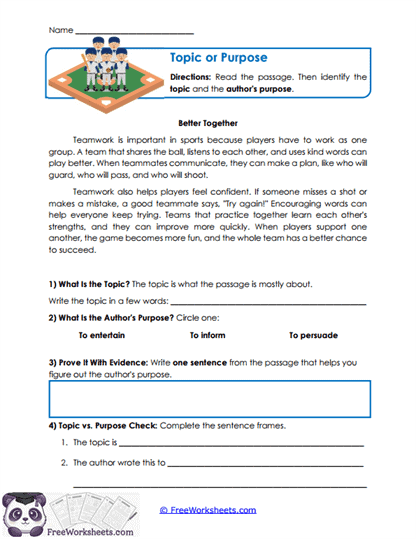
Topic or Purpose
- What Kids Do: Students read a teamwork passage and distinguish between the topic and the author’s reason for writing it.
- Target Skill: Develops differentiation between subject matter and intent, enhancing deeper comprehension.