
About This Worksheet
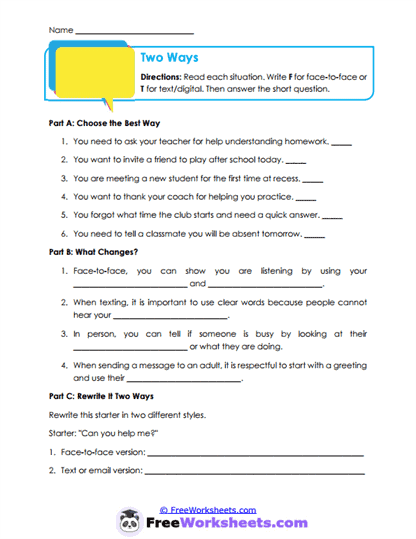
Two Ways is a communication comparison worksheet that teaches students how conversation starters differ between face-to-face and digital communication. Modern students must navigate both in-person interactions and text-based communication, and each requires different social cues. This worksheet helps students recognize that tone, clarity, and nonverbal cues change depending on the format.
Students analyze scenarios such as asking for help or inviting someone to an event, then determine whether face-to-face or text communication is most appropriate. The worksheet also asks students to reflect on what changes between the two formats, including body language, tone of voice, and clarity of wording. This strengthens digital citizenship and communication adaptability.
Curriculum and Grade Alignment
This worksheet aligns with SEL competencies in responsible decision-making and relationship skills. It supports Common Core SL.4.1-SL.12.1 standards related to adapting speech to context and task. It also aligns with TEKS ELAR standards addressing communication across media formats. Best suited for Grades 4-12, particularly in digital citizenship or advisory lessons.
Student Tasks
Students read various communication scenarios and determine whether face-to-face or text/email is the better option. They complete reflection questions about what changes between communication formats. Finally, they rewrite a conversation starter in both styles. This requires adaptability, clarity, and awareness of tone.
Common Challenges and Misconceptions
Students may assume texting is always easier. Some may not recognize how tone can be misinterpreted digitally. Others may underestimate the value of nonverbal cues in person. Teachers should emphasize examples where digital communication may cause confusion or appear abrupt.
Implementation Guidance
Teachers can use this worksheet in upper elementary through high school digital citizenship lessons. It works well as a discussion-based activity exploring communication differences. Role-play and mock text message comparisons enhance understanding. Parents may use it to reinforce respectful online communication.
Details and Features
The worksheet includes scenario-based decision making, reflection questions, and rewriting practice. The layout clearly separates face-to-face and digital considerations. It supports thoughtful comparison and real-life application.