
Blending And Segmenting Worksheets
These worksheets strengthen phonemic awareness through structured CVC practice and sound manipulation. These free, ready-to-print PDF worksheets are designed for immediate classroom use in phonics lessons and literacy centers. Students develop blending fluency, phoneme segmentation, sound substitution, and early encoding skills.
About This Collection of Worksheets
Blending and segmenting are cornerstone skills in Kindergarten reading development and directly support Common Core RF.K.2 phonological awareness standards. Students must learn to combine individual phonemes into whole words and break spoken words into separate sounds to build strong decoding and encoding pathways. These worksheets provide systematic, developmentally appropriate practice that reinforces short vowel recognition, consonant blending, and sound manipulation.
This collection works well during explicit phonics instruction, small-group intervention, RTI blocks, literacy centers, and formative assessments. Teachers can pair the worksheets with Elkonin boxes, sound chips, finger tapping, and guided oral modeling to deepen mastery. The activities progress from basic blending and segmentation to more advanced phoneme substitution and manipulation tasks.
Each printable PDF features clean layouts, structured sound boxes, and clearly organized tasks to support independent work and teacher observation. The focused CVC format encourages automaticity while minimizing visual distractions. With minimal prep required, these worksheets provide consistent reinforcement of foundational decoding and spelling readiness skills.

Paul’s Teacher Tip
These worksheets work best when students say every sound aloud before they write, so build in lots of oral practice first. Use finger tapping, counters, or sound boxes during your warm-up to help students feel each phoneme before moving to the page. For students who need extra support, keep the pace slow and focus on accuracy before speed, especially with medial vowel sounds. To extend learning, have students swap one sound and orally generate a new word before completing written tasks. As you circulate, listen closely for whether students are truly segmenting phonemes or slipping into syllable counting-those quick observations will tell you who needs more modeling.
Worksheet Collection Skill Spotlights
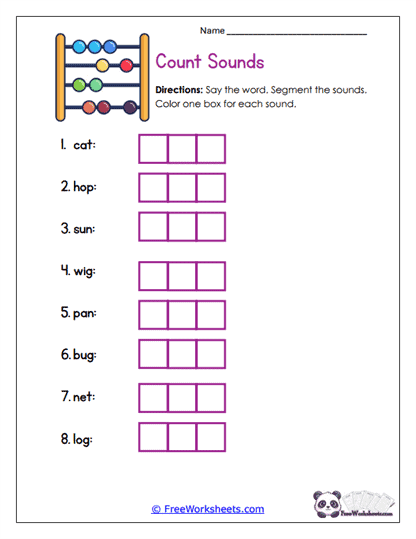
Count Sounds
• What Kids Do – Students say each CVC word slowly and color one box for each sound they hear.
• Target Skill – Builds phoneme segmentation and one-to-one sound counting.
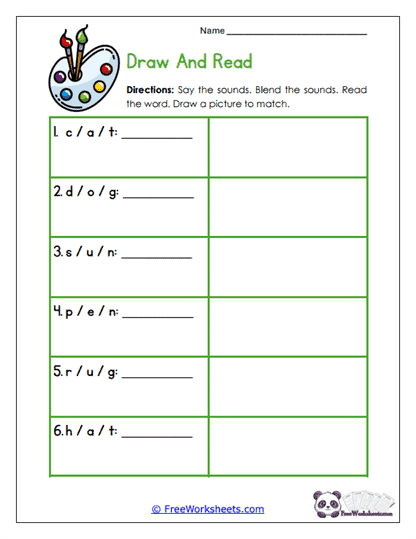
Draw and Read
• What Kids Do – Students blend segmented sounds into a word and draw a picture to match its meaning.
• Target Skill – Strengthens phoneme blending and word comprehension.
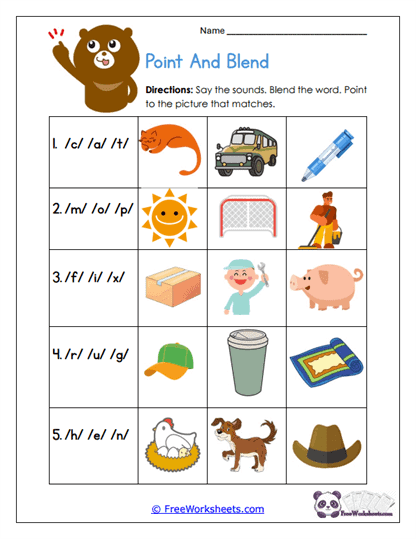
Point and Blend
• What Kids Do – Students blend the sounds in a CVC word and point to the picture that matches.
• Target Skill – Builds decoding accuracy and sound-to-image matching.
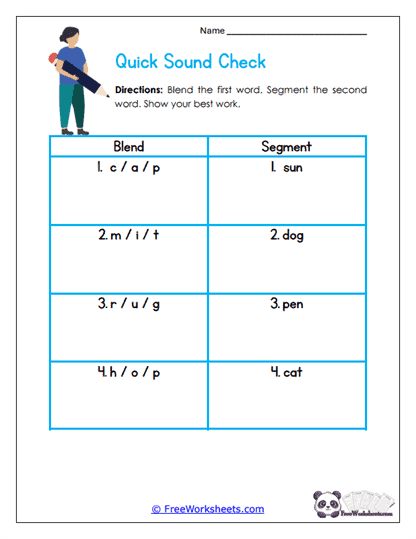
Quick Sound Check
• What Kids Do – Students blend sounds to make words and segment given words into individual phonemes on the same page.
• Target Skill – Develops phonological flexibility with blending and segmentation.
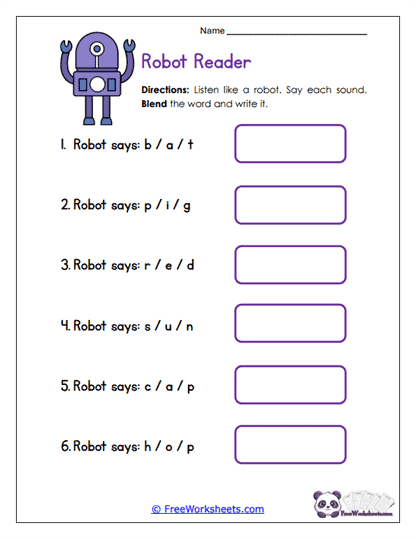
Robot Reader
• What Kids Do – Students say segmented sounds like a robot, blend them into a word, and write the word.
• Target Skill – Strengthens accurate blending and early encoding skills.
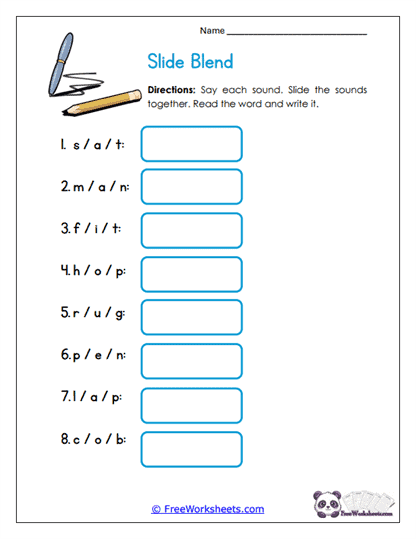
Slide Blend
• What Kids Do – Students slide sounds together smoothly and write the full CVC word after blending.
• Target Skill – Builds continuous blending and word recognition fluency.
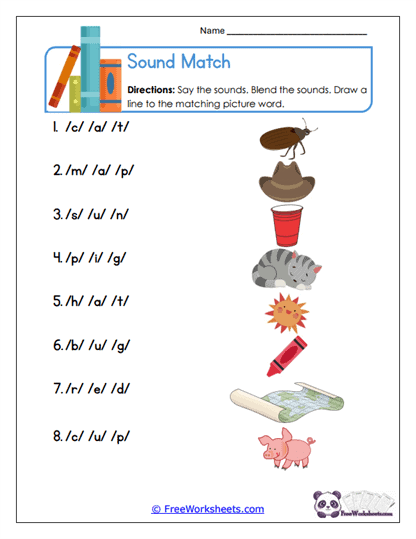
Sound Match
• What Kids Do – Students blend segmented sounds and choose the picture that matches the word they made.
• Target Skill – Develops CVC decoding and sound-to-meaning connections.
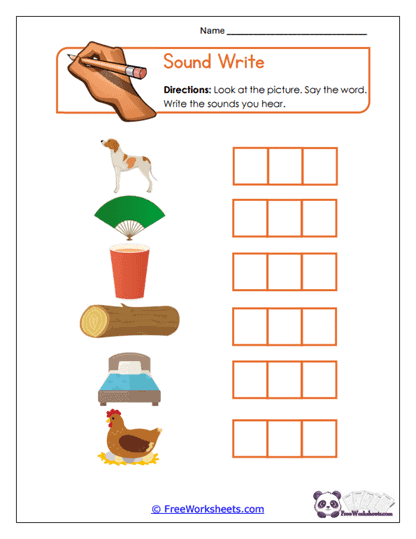
Sound Write
• What Kids Do – Students look at a picture, say the word, segment the sounds, and write one letter for each sound in boxes.
• Target Skill – Builds phoneme-grapheme correspondence and early spelling.
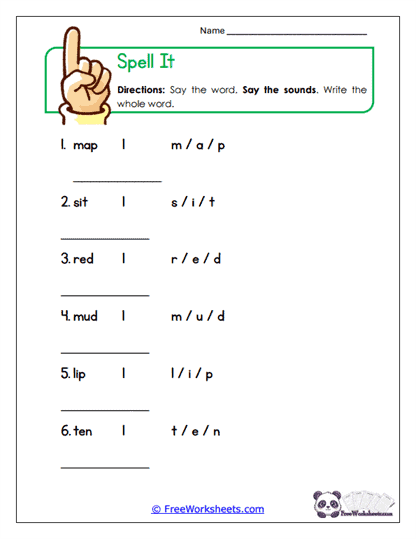
Spell It
• What Kids Do – Students listen to or read segmented sounds and write the complete CVC word on the line.
• Target Skill – Strengthens encoding and sound-by-sound spelling.
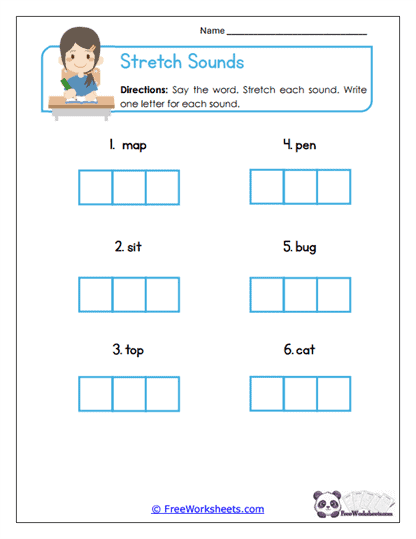
Stretch Sounds
• What Kids Do – Students stretch each CVC word slowly and write one letter in each sound box.
• Target Skill – Develops phoneme segmentation and sound-to-letter mapping.
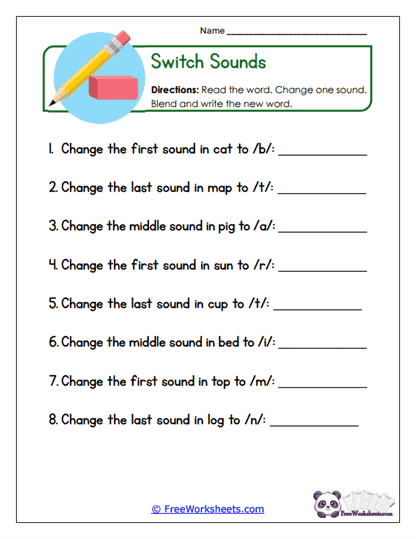
Switch Sounds
• What Kids Do – Students change one sound in a CVC word and blend the new sounds to make a different word.
• Target Skill – Builds phoneme substitution and phonological flexibility.
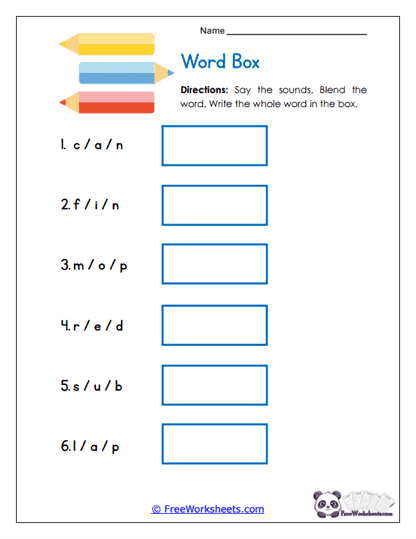
Word Box
• What Kids Do – Students blend segmented sounds and write the full word in the box without picture support.
• Target Skill – Strengthens independent decoding and encoding of CVC words.