
Grade 4 Reading Comprehension Worksheets
These worksheets strengthen higher-level Reading skills with engaging stories and nonfiction passages. These free, ready-to-print PDF worksheets are designed for immediate classroom use in centers, small groups, or independent practice. Students build skills in summarizing, text evidence, text structure, theme, point of view, vocabulary, and figurative language.
About This Collection of Worksheets
In Grade 4, students are expected to read longer texts with more complex ideas and explain their thinking using specific evidence. They practice determining main ideas and themes across multi-paragraph passages, analyzing relationships between events and ideas, interpreting academic vocabulary, and explaining how narration and word choice shape meaning. This collection supports that shift by requiring students to synthesize across paragraphs and respond with clear, text-based reasoning aligned to upper-elementary expectations.
These worksheets fit smoothly into guided reading, literacy centers, RTI, homework, and formative assessments. Many tasks go beyond selection by asking students to justify choices, underline or cite evidence, organize information in chains or maps, and write precise summaries. The mix of science, history, civics, and realistic fiction topics also supports knowledge-building while strengthening comprehension routines.
Each printable is ink-friendly, black-and-white, and organized with clear response frames that reduce cognitive overload while increasing rigor. Students have dedicated space to capture main ideas, list key details, explain relationships, and support inferences, making these pages effective for independent work and teacher feedback. The consistent structure also helps students build stamina and confidence with multi-paragraph reading tasks.
Paul’s Teacher Tip
When working with longer passages, teach students to pause after each paragraph and jot a quick note about what it adds-this makes multi-paragraph thinking much easier. Encourage them to look for patterns, like repeated ideas or changes in character behavior, to guide main idea and theme. For writing responses, model how to turn notes into full explanations using phrases like “This shows…” or “This is important because…”. You can also have students compare two answers and decide which one uses stronger evidence. Over time, this helps students move from basic answers to clear, thoughtful explanations.
Worksheet Collection Skill Spotlights
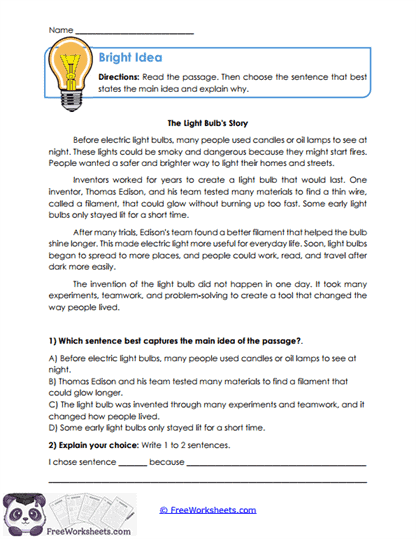
Bright Idea
• What Kids Do – Students choose the best main idea and explain their choice using details from the passage.
• Target Skill – Builds main idea selection and evidence-based justification.
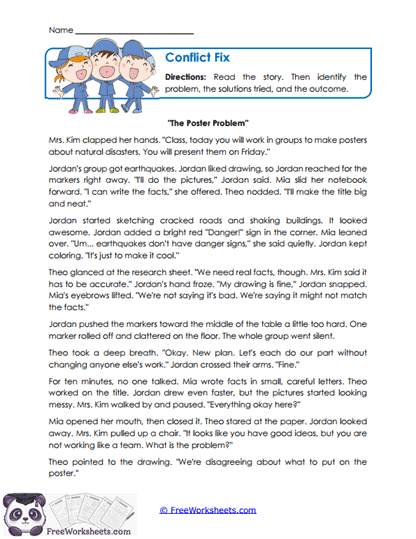
Conflict Fix
• What Kids Do – Students identify the main conflict, track attempts to solve it, and explain the outcome using text evidence.
• Target Skill – Develops analysis of conflict and resolution.
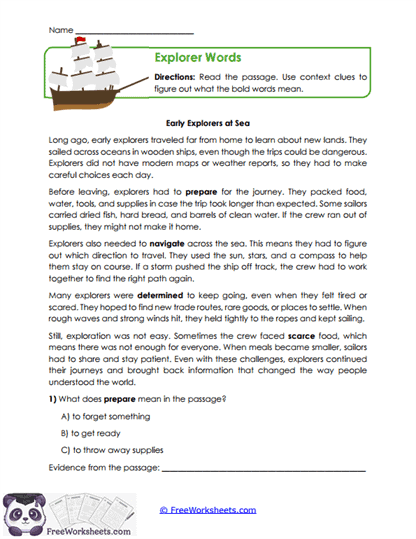
Explorer Words
• What Kids Do – Students use context clues to define vocabulary and cite phrases that support their meanings.
• Target Skill – Builds context-based vocabulary and evidence use.
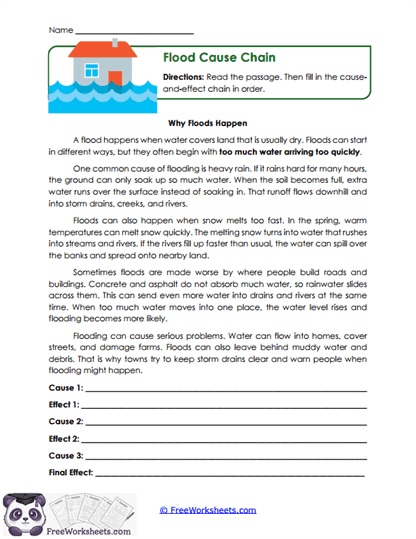
Flood Cause Chain
• What Kids Do – Students organize causes and effects into a chain showing how events lead to flooding.
• Target Skill – Develops multi-step cause-and-effect reasoning.
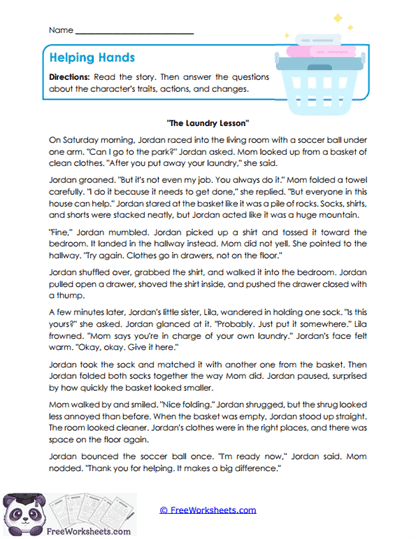
Helping Hands
• What Kids Do – Students describe a character’s traits and explain how actions show growth over time.
• Target Skill – Builds character analysis and development.
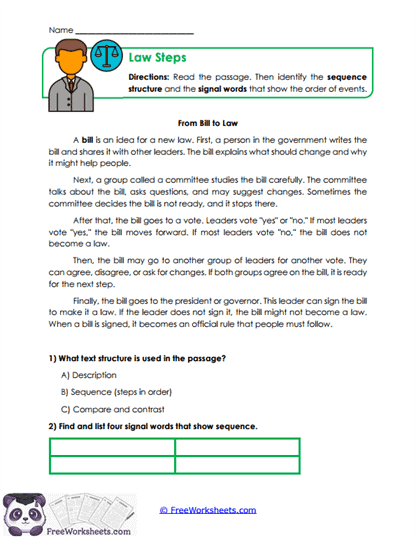
Law Steps
• What Kids Do – Students sequence steps in a process and explain the purpose of each one.
• Target Skill – Develops understanding of procedural text structure.
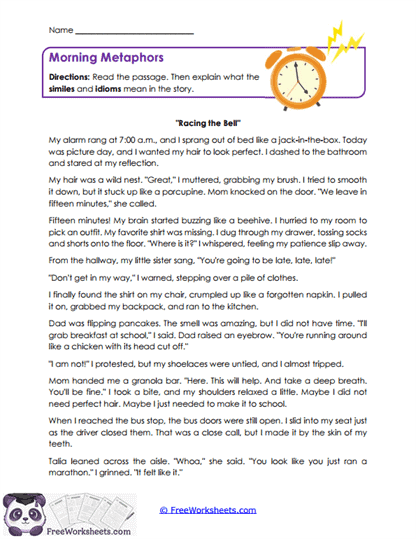
Morning Metaphors
• What Kids Do – Students identify figurative language and explain what each expression means in context.
• Target Skill – Builds interpretation of figurative language.
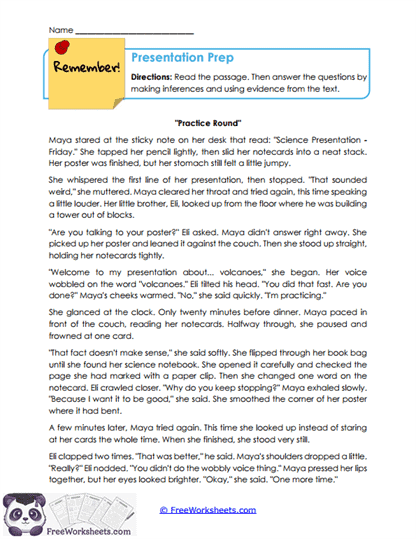
Presentation Prep
• What Kids Do – Students make inferences about a character and support each one with text evidence.
• Target Skill – Develops inference and evidence-based reasoning.
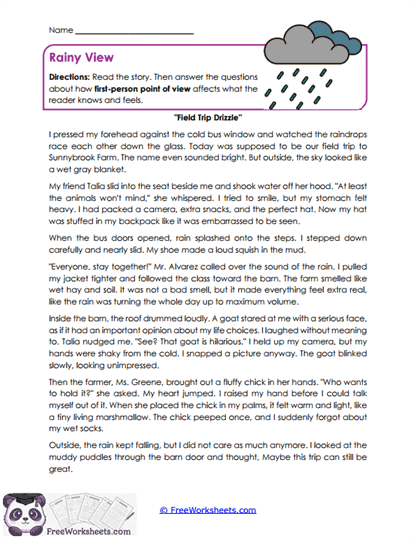
Rainy View
• What Kids Do – Students identify first-person narration clues and explain how perspective shapes meaning.
• Target Skill – Builds point of view analysis.
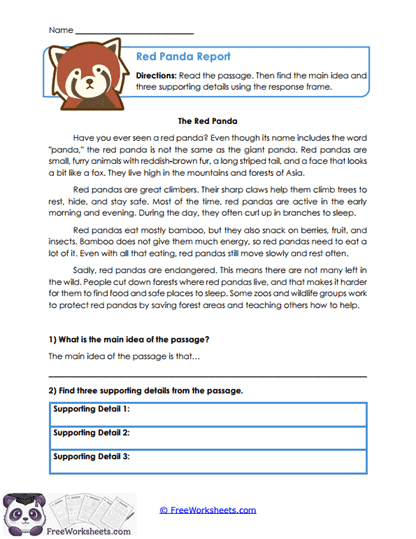
Red Panda Report
• What Kids Do – Students determine the main idea and select supporting details from across multiple paragraphs.
• Target Skill – Develops central idea synthesis across a text.
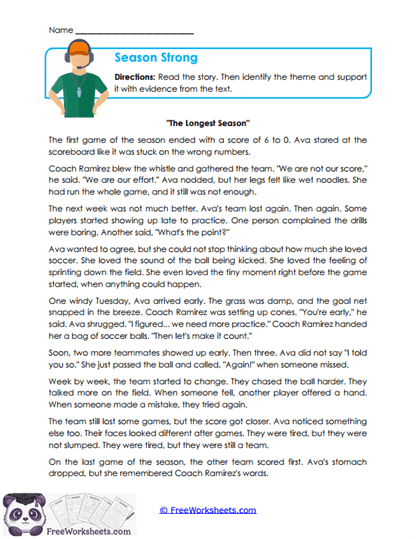
Season Strong
• What Kids Do – Students identify a theme and support it with evidence from events in the story.
• Target Skill – Builds theme analysis and evidence use.
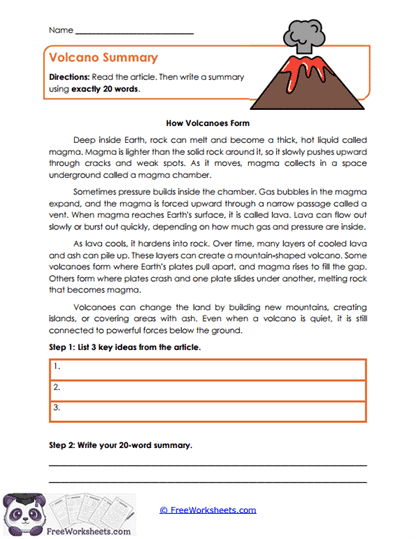
Volcano Summary
• What Kids Do – Students identify key ideas and write a short, precise summary within a word limit.
• Target Skill – Develops concise summarizing and prioritizing important information.