
Text Structure Worksheets
Grade 3 reading Text Structure worksheets help students identify how ideas are organized in fiction and nonfiction passages through targeted skill practice. These free, ready-to-print resources are provided in PDF format for immediate classroom use. Students strengthen sequencing, cause-and-effect analysis, and organizational text analysis skills aligned to curriculum standards.
About This Collection of Worksheets
Text structure is an essential reading skill in Grade 3 because students begin to read longer passages that are organized in different ways for different purposes. These worksheets help learners recognize structures such as sequence, cause and effect, compare and contrast, and problem and solution while aligning with Common Core standards like RI.3.3, RI.3.5, RI.3.8, and RL.3.3. As students learn to notice signal words and patterns in organization, they become better at understanding meaning, summarizing information, and explaining how ideas connect.
This collection is flexible enough for morning work, homework, RTI support, literacy centers, small group instruction, and quick comprehension checks. Teachers can use these worksheets to introduce a structure, reinforce it through guided practice, or assess whether students can recognize it independently. Because the set includes narrative and informational formats, students gain repeated exposure to structure across multiple reading situations.
Each worksheet is designed for strong print clarity, low ink use, and easy student access in both classroom and homeschool settings. The layouts are simple, organized, and low-prep, allowing teachers to implement them quickly without extra materials. With clear directions and focused response areas, these worksheets support independent work while still fitting smoothly into guided instruction.
Paul’s Teacher Tip
When teaching text structure, start by helping students notice clue words like first, because, finally, problem, and solution before asking them to name the structure. Many Grade 3 students can answer questions about a passage but still struggle to explain how the text is organized, so anchor charts and repeated examples are very helpful. Use short passages to compare structures side by side, especially sequence versus cause and effect, since those are often confused. For students who need support, provide signal-word banks or graphic organizers, and for stronger readers, ask them to explain why another structure does not fit. The more students practice naming and justifying structure, the more confidently they will read and organize information on their own.
Worksheet Collection Skill Spotlights
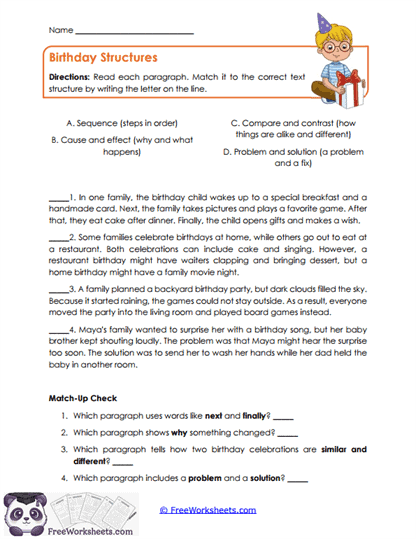
Birthday Structures
- What Kids Do:
Students read several short birthday-themed paragraphs, match each one to a structure type, and explain which clue words helped them decide. - Target Skill:
Builds multi-structure recognition by distinguishing organizational patterns such as sequence, comparison, cause and effect, and problem resolution.
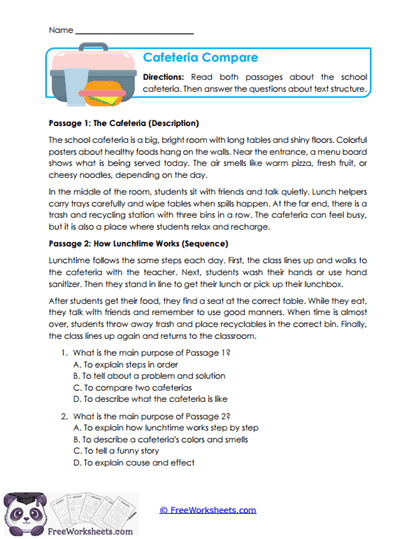
Cafeteria Compare
- What Kids Do:
Learners examine two cafeteria passages, compare their purposes, and determine how each one is organized differently. - Target Skill:
Strengthens structural comparison by analyzing how authors present similar topics through different formats and purposes.
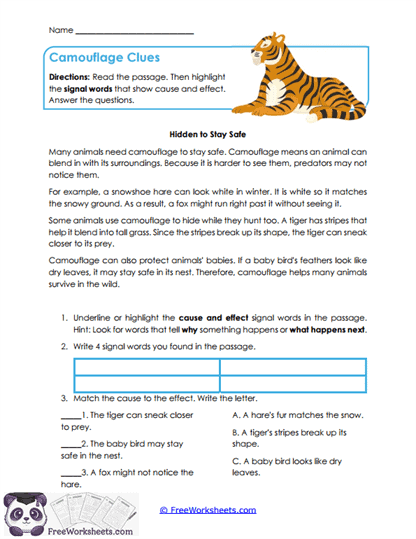
Camouflage Clues
- What Kids Do:
Students read an animal passage, highlight signal words, and match events to show why something happens and what happens next. - Target Skill:
Develops causal reasoning by identifying relationships between actions and outcomes in informational text.
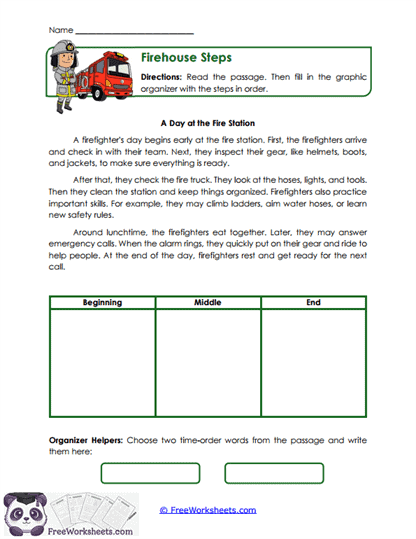
Firehouse Steps
- What Kids Do:
Students read about a firefighter’s day and sort details into beginning, middle, and end while noticing time-order cues. - Target Skill:
Builds chronological understanding by organizing events according to sequence and recognizing temporal transition words.
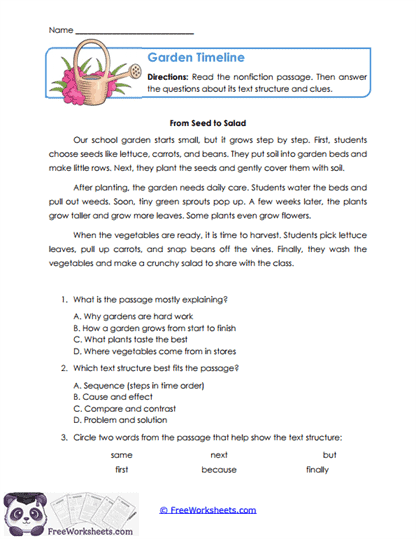
Garden Timeline
- What Kids Do:
Learners read a nonfiction gardening passage, answer questions about its organization, and identify words that signal order over time. - Target Skill:
Enhances recognition of procedural structure by analyzing how informational texts present steps in a logical progression.
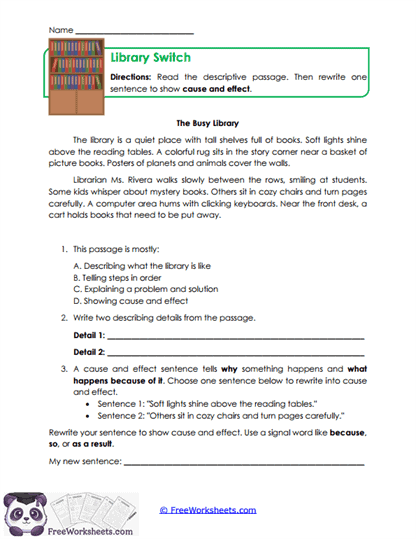
Library Switch
- What Kids Do:
Students read a descriptive library passage, identify its original structure, and rewrite an idea to show a cause-and-effect relationship. - Target Skill:
Develops structural flexibility by transforming information from one organizational form into another with clear logical connections.
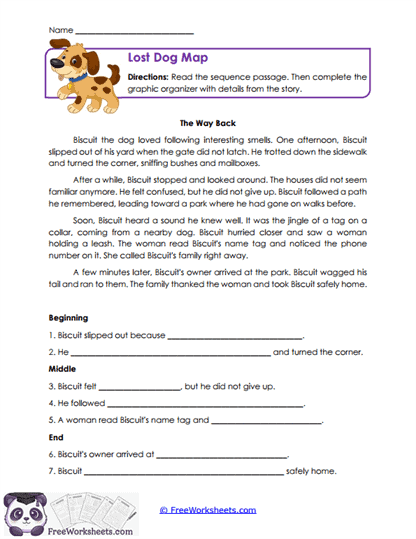
Lost Dog Map
- What Kids Do:
Students read a story about a missing dog and place important events into beginning, middle, and end sections of a graphic organizer. - Target Skill:
Strengthens narrative sequencing by tracking how story events unfold across the arc of a passage.
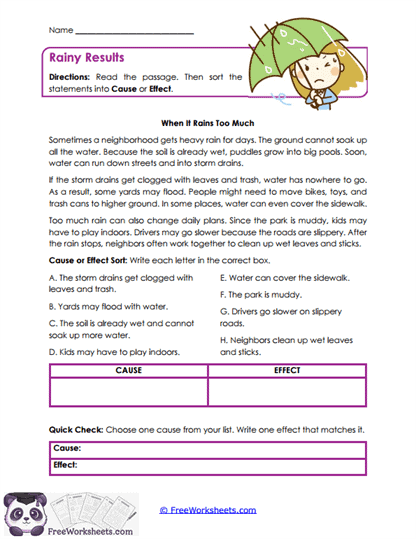
Rainy Results
- What Kids Do:
Learners read about rainy weather, sort statements into cause and effect categories, and create their own related example pair. - Target Skill:
Builds relationship analysis by separating initiating events from resulting outcomes in connected ideas.
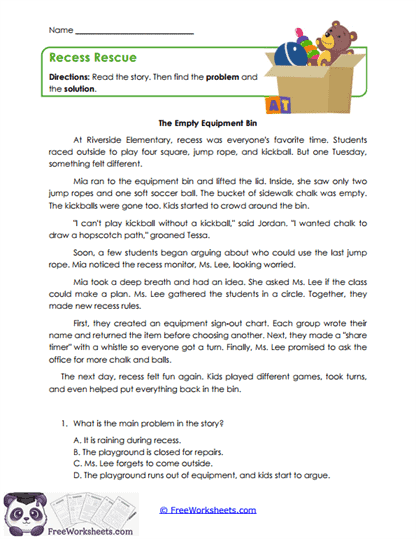
Recess Rescue
- What Kids Do:
Students read a recess story, identify the main problem, and determine how the issue is resolved through story events. - Target Skill:
Develops understanding of problem-and-solution structure by focusing on central conflict and resolution in narrative text.
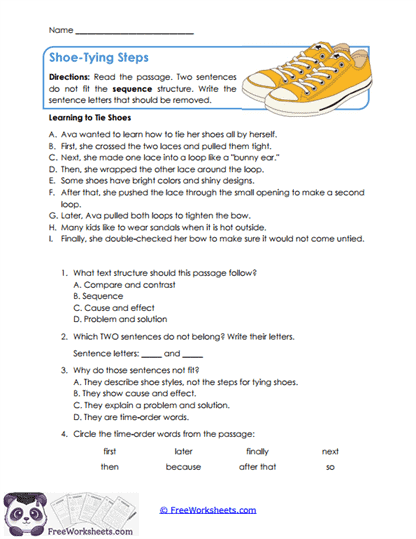
Shoe-Tying Steps
- What Kids Do:
Students read a step-by-step passage, identify details that do not belong, and explain why those sentences interrupt the order. - Target Skill:
Strengthens sequence evaluation by recognizing relevant procedural details and excluding unrelated information.
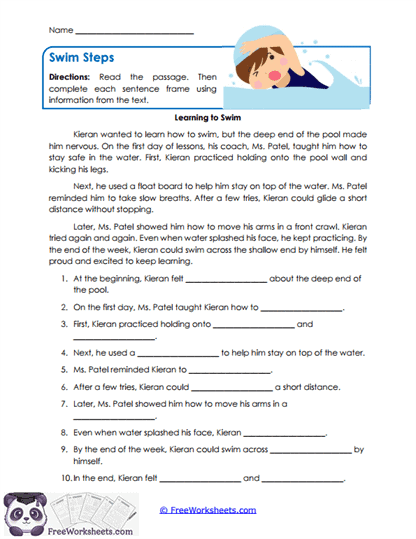
Swim Steps
- What Kids Do:
Learners read a passage about swimming lessons and complete sequence-based sentences using details from the story in correct order. - Target Skill:
Builds recall and event ordering by tracing how experiences develop across a text from start to finish.
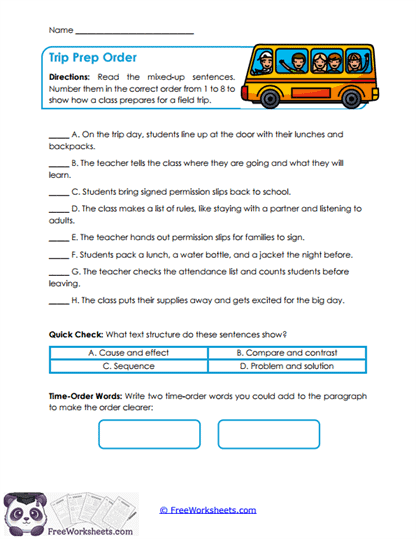
Trip Prep Order
- What Kids Do:
Students reorder mixed-up field trip sentences, number each step correctly, and identify the organizational pattern shown. - Target Skill:
Develops logical sequencing by reconstructing events into a coherent chronological structure.