
Sensory Details Worksheets
Grade 3 reading Sensory Details worksheets help students explore descriptive language, imagery, and five-senses vocabulary through engaging text-based activities. These free, ready-to-print resources are provided in PDF format for immediate classroom use. Students build vocabulary, visualization, and descriptive language analysis skills aligned to Common Core standards.
About This Collection of Worksheets
Sensory details are an important part of reading development in Grade 3 because they help students notice how authors make text vivid, meaningful, and easier to imagine. These worksheets support that growth by aligning with Common Core expectations such as RL.3.1, RL.3.4, RL.3.7, and W.3.3, guiding students to identify descriptive language, connect words to the five senses, and explain how details shape meaning. As students practice with sensory-rich passages and writing tasks, they become stronger readers and more expressive writers.
This collection works well across many instructional settings, including morning work, homework, RTI support, literacy centers, small groups, and informal assessments. Teachers can use these activities to reinforce comprehension, descriptive vocabulary, and visualization strategies while also supporting writing development. Because the worksheets include sorting, classification, multiple-choice, reflection, and revision tasks, students get varied practice without losing focus or interest.
Each worksheet is designed for strong print quality, low ink use, and easy readability in both classroom and home settings. The layouts are clear, student-friendly, and accessible, allowing learners to focus on the skill rather than navigating cluttered pages. With low-prep implementation, these resources can be added quickly to daily lessons, intervention plans, or independent practice routines.
Paul’s Teacher Tip
When teaching sensory details, model how to stop during reading and ask, “What can I see, hear, smell, taste, or feel in this sentence?” Many Grade 3 students can spot descriptive words, but they often need support deciding which sense a detail matches or explaining why it matters. Use color-coding, anchor charts, and think-alouds to help students sort details accurately and connect them to imagery. For students who need extra support, start with one or two senses before moving to all five, and for stronger readers, ask them to compare weak versus vivid descriptions. Sensory detail practice becomes even more powerful when students apply it to their own sentences after analyzing it in reading.
Worksheet Collection Skill Spotlights
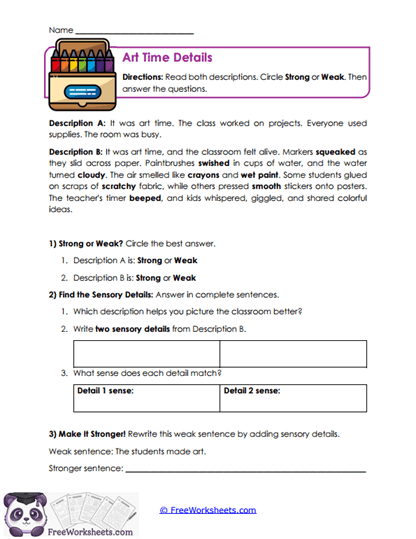
Art Time Details
- What Kids Do:
Students compare two descriptions, decide which one uses stronger imagery, identify vivid phrases, and rewrite a weaker sentence with more descriptive language. - Target Skill:
Develops evaluative reading and descriptive revision by analyzing how sensory language strengthens meaning, clarity, and reader engagement.
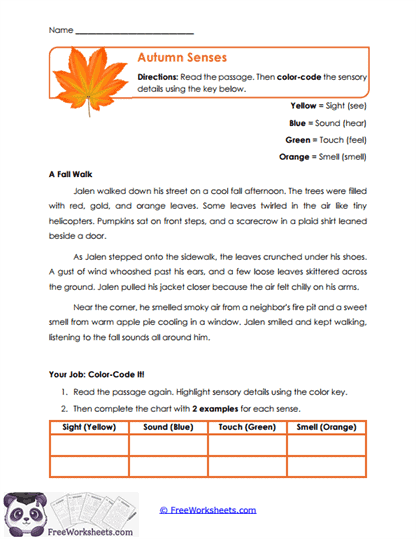
Autumn Senses
- What Kids Do:
Learners read a seasonal passage, highlight descriptive phrases with a color key, and organize examples into categories for sight, sound, touch, and smell. - Target Skill:
Builds visual-text analysis by identifying imagery across multiple senses and classifying supporting details with precision.
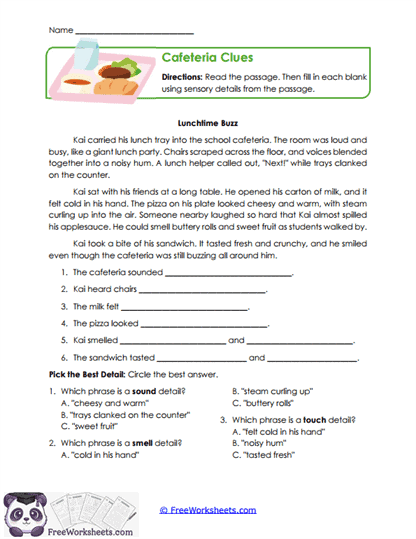
Cafeteria Clues
- What Kids Do:
Students read a lunchroom passage, complete sentence prompts using details from the text, and answer questions about which descriptions fit each sense. - Target Skill:
Strengthens contextual comprehension by retrieving sensory evidence from a passage and applying it accurately in written responses.
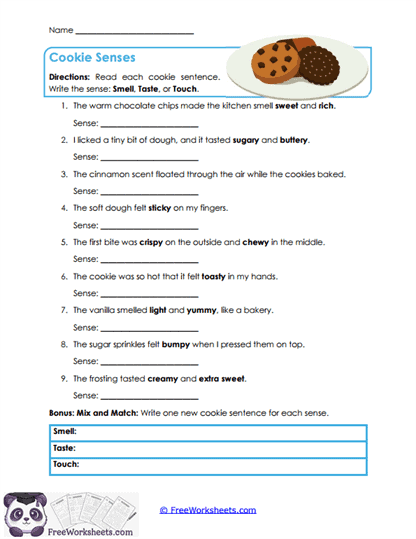
Cookie Senses
- What Kids Do:
Students examine cookie-themed descriptions, match each one to taste, smell, or touch, and create their own original sensory sentences. - Target Skill:
Develops sensory classification and vocabulary application by connecting descriptive phrases to specific physical experiences.
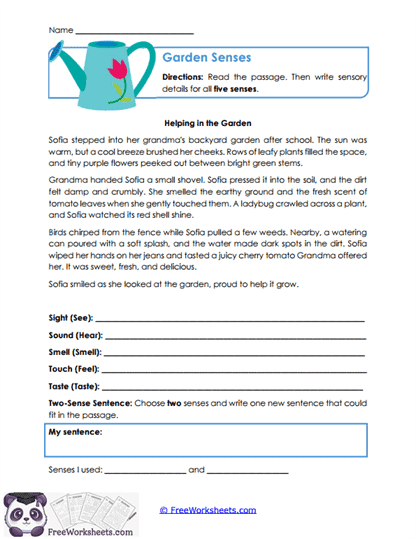
Garden Senses
- What Kids Do:
Learners read a garden passage, locate examples for all five senses, and write a new sentence that combines multiple sensory impressions. - Target Skill:
Enhances five-sense analysis by identifying varied descriptive details and applying them in original sentence construction.
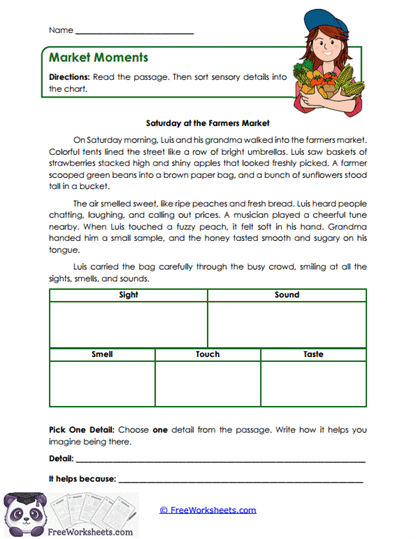
Market Moments
- What Kids Do:
Students read about a farmers market, sort sensory details into a chart, and explain how one selected detail improves the passage. - Target Skill:
Builds close reading and explanation skills by connecting sensory evidence to author’s craft and text impact.
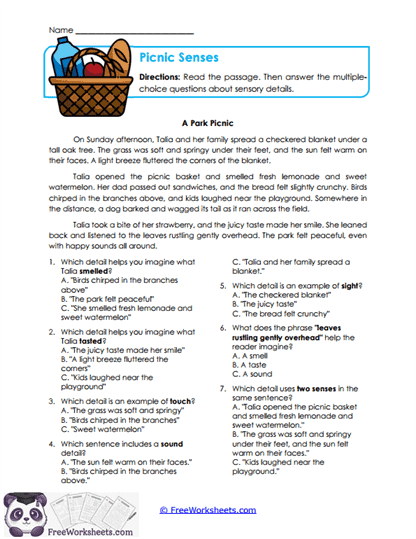
Picnic Senses
- What Kids Do:
Students read a picnic passage and answer multiple-choice questions about which sensory details create the clearest imagery. - Target Skill:
Strengthens evidence-based interpretation by analyzing how descriptive language contributes to meaning and mental pictures.
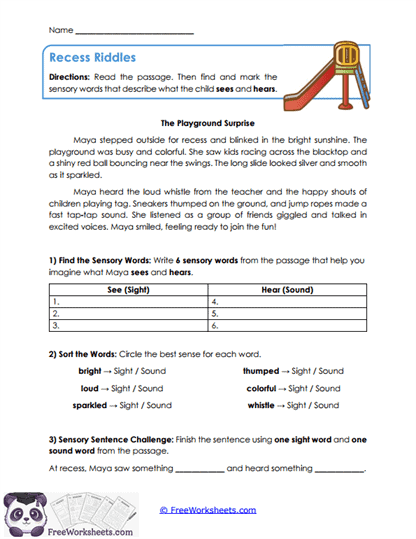
Recess Riddles
- What Kids Do:
Learners read a playground narrative, identify sensory words, and sort them into sight and sound categories using structured response sections. - Target Skill:
Develops foundational imagery recognition by linking descriptive vocabulary to sensory experiences in context.
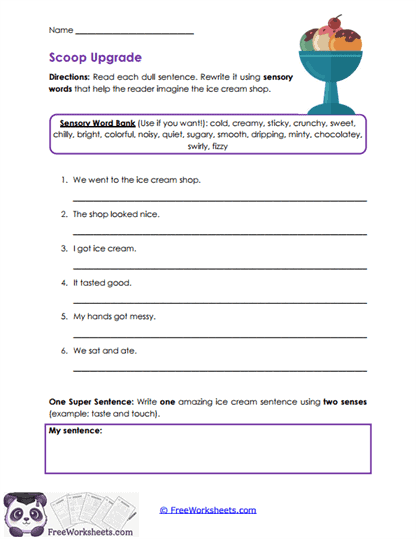
Scoop Upgrade
- What Kids Do:
Students revise plain ice-cream sentences with a sensory word bank and craft a stronger original sentence using at least two senses. - Target Skill:
Builds descriptive writing fluency by expanding simple ideas into vivid sentences with precise sensory language.
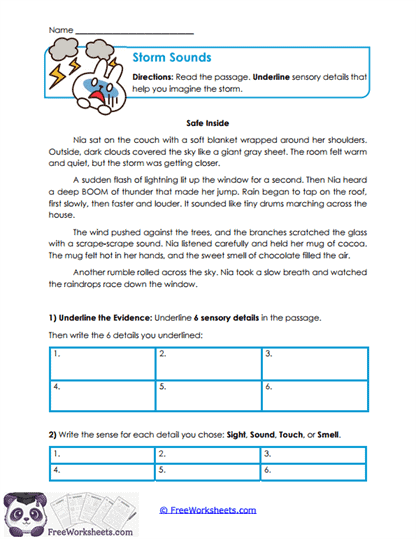
Storm Sounds
- What Kids Do:
Students read a storm passage, underline six sensory details, list them, and label each one by the sense it appeals to. - Target Skill:
Strengthens textual evidence analysis by identifying sensory imagery and categorizing details drawn directly from narrative language.
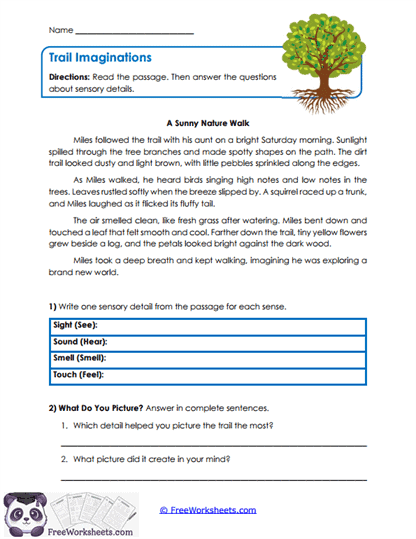
Trail Imaginations
- What Kids Do:
Learners read a nature passage, identify one detail for each sense, and describe the mental picture they formed while reading. - Target Skill:
Develops visualization and reflective comprehension by connecting sensory cues in text to internal imagery.
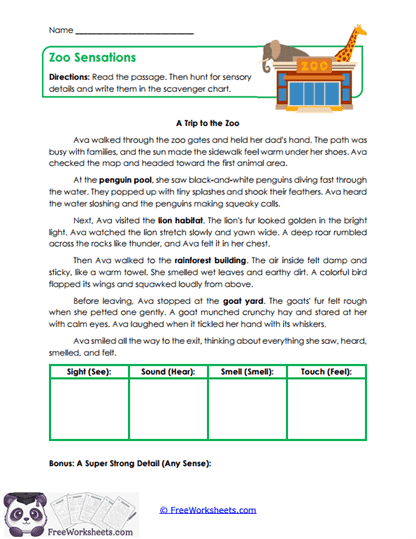
Zoo Sensations
- What Kids Do:
Students read a zoo narrative, find descriptive details, sort them by sense, and choose one especially strong example for further thinking. - Target Skill:
Enhances organizational comprehension by grouping sensory information and recognizing effective descriptive choices within a passage.