
Grade 3 Worksheets
These worksheets build deeper comprehension through focused main idea and evidence-based practice. These free, ready-to-print PDF worksheets are designed for immediate classroom use in centers, small groups, or independent work. Students strengthen summarizing, inference, theme analysis, point of view, and text-based reasoning skills.
About This Collection of Worksheets
In Grade 3, reading shifts from basic comprehension toward deeper analysis of both literary and informational texts. Students are expected to identify main ideas, explain themes, describe how details support central messages, and cite evidence directly from the text. This developmental stage requires learners to move beyond surface-level answers and begin justifying their thinking with specific examples, structured summaries, and thoughtful explanations.
Beyond comprehension, Grade 3 learners strengthen a wide range of literacy skills aligned to the Common Core State Standards. In literature, students describe characters’ traits, motivations, and feelings; explain how characters’ actions contribute to events; compare and contrast themes, settings, and plots; distinguish their own point of view from that of a narrator or characters; and refer explicitly to parts of a text when speaking or writing. They explore poetry, drama, and prose, building an understanding of text structure and genre.
In informational texts, students determine the main idea and explain how key details support it. They describe relationships between historical events, scientific ideas, or steps in technical procedures. Learners interpret text features such as headings, bold print, captions, diagrams, and charts, and use them to locate information efficiently. They compare and contrast important points across two texts on the same topic and develop the ability to synthesize information.
Foundational reading skills continue to develop in Grade 3. Students apply phonics and word analysis skills to decode multisyllabic words, read grade-level text with accuracy and fluency, and use context clues to determine the meaning of unfamiliar words. Vocabulary instruction emphasizes literal and nonliteral meanings, shades of meaning, prefixes and suffixes, root words, and domain-specific language.
Writing expectations also expand significantly in Grade 3. Students produce opinion pieces that introduce a topic, state an opinion, provide reasons supported by facts and details, and include a clear conclusion. They write informative/explanatory texts to examine a topic and convey ideas clearly. Narrative writing focuses on establishing a situation, developing characters and events using dialogue and descriptive details, and providing a sense of closure. Students engage in the writing process by planning, revising, editing, and publishing their work.
Language standards are embedded throughout the worksheets. Students practice using correct grammar, subject-verb agreement, verb tenses, pronouns, adjectives, adverbs, conjunctions, capitalization, punctuation, and spelling patterns. They build academic vocabulary and apply conventions of standard English in both writing and speaking.
Speaking and listening skills are reinforced through structured discussion prompts, collaborative conversations, and oral presentations. Students prepare for discussions by reading or studying material in advance, ask and answer questions to deepen understanding, and report on a topic with appropriate facts and relevant details.
These worksheets fit naturally into literacy centers, guided reading groups, writing workshops, homework assignments, RTI blocks, and quick formative assessments. Teachers can use them to model close reading strategies, teach text-dependent questioning, guide evidence-based discussions, scaffold writing development, and reinforce grammar and vocabulary routines. The structured question formats support independent practice while maintaining alignment with key Grade 3 ELA standards.
Each printable is designed with clear directions, uncluttered layouts, and ink-friendly black-and-white formatting for easy copying. Student response spaces are thoughtfully organized to encourage complete, organized answers without overwhelming developing writers. Because the PDFs are low-prep and classroom-ready, they can be implemented immediately to support instruction across reading, writing, language, speaking, and listening domains.
A Look At The Categories of Worksheets
Grade 3 Reading Comprehension
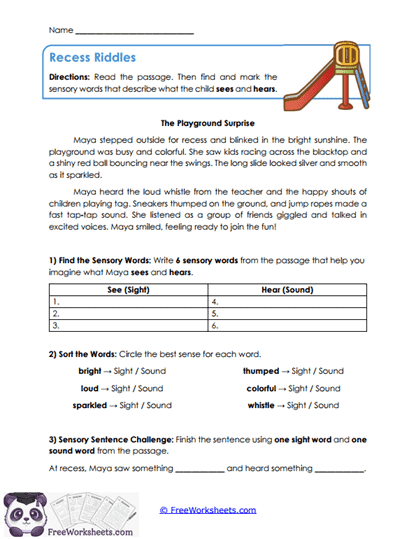
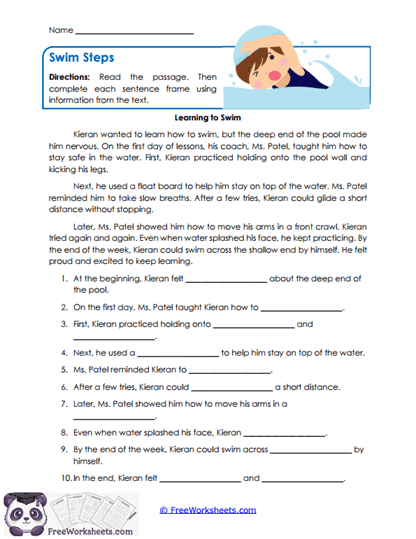
This comprehensive collection of Grade 3 reading comprehension worksheets supports students in analyzing both fiction and nonfiction texts. Activities focus on skills such as identifying themes, describing characters, determining main ideas, using text evidence, and understanding vocabulary in context. Clear directions and organized response spaces make these printables ideal for literacy centers, guided reading, homework, and skill reinforcement aligned to Common Core standards.
Main Idea
This worksheet collection helps students identify the main idea of a passage and explain how key details support it. Through engaging literary and informational texts, students practice distinguishing between important information and interesting but unrelated details. Structured response questions guide learners to cite evidence directly from the text and clearly explain their thinking in complete sentences.