
Inference and Theme Worksheets
Grade 3 reading Inference and Theme worksheets help students analyze clues, draw conclusions, and identify messages across engaging passages and activities. These free, ready-to-print resources are provided in PDF format for immediate classroom use. Students strengthen inferencing, theme identification, and evidence-based reasoning aligned to Common Core standards.
About This Collection of Worksheets
Inference and theme are essential comprehension skills in Grade 3, as students begin to move beyond literal understanding and interpret deeper meanings in text. These worksheets align with Common Core standards such as RL.3.1 and RL.3.2, guiding students to use textual evidence, identify central messages, and explain how details support meaning. Through structured practice, students learn to combine clues with prior knowledge to make logical conclusions.
This collection is ideal for classroom use across multiple settings, including morning work, homework, RTI support, literacy centers, and small group instruction. Teachers can also use these worksheets for formative assessments to evaluate how well students understand inference and theme. The variety of activities ensures students engage with both narrative and situational texts in meaningful ways.
Each worksheet is designed with clean formatting for easy printing and minimal ink use, making them practical for daily instruction. The accessible layout supports all learners, allowing students to focus on comprehension tasks without distraction. With little to no prep required, teachers can seamlessly incorporate these resources into lessons.
Paul’s Teacher Tip
Inference and theme can be challenging for Grade 3 students because both require thinking beyond what is directly stated. Start by modeling how to identify clues in the text and connect them to what students already know, using think-aloud strategies. Many students confuse theme with topic, so consistently reinforce that theme is the lesson or message, not just what the story is about. Use sentence frames like “This shows…” or “The lesson is…” to support struggling learners, and encourage advanced students to justify answers with multiple pieces of evidence. Frequent guided practice and discussion will help students build confidence and accuracy in these skills.
Worksheet Collection Skill Spotlights
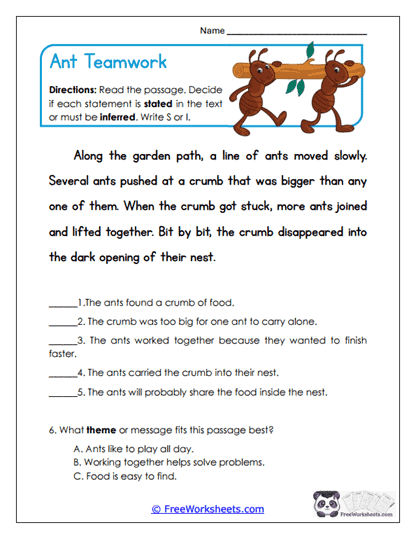
Ant Teamwork
- What Kids Do:
Students examine a passage about ants and categorize ideas as directly stated or implied before selecting an appropriate message. - Target Skill:
Develops analytical reading by distinguishing explicit information from implied meaning while identifying central lessons.
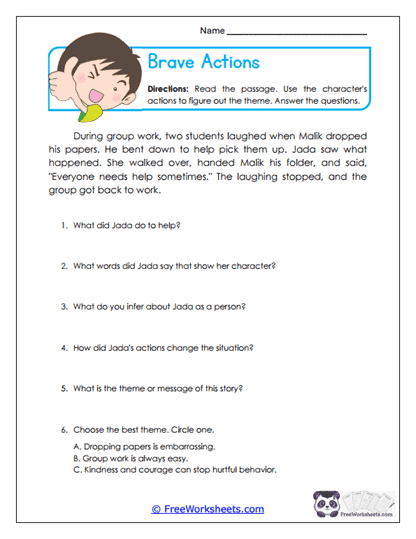
Brave Actions
- What Kids Do:
Learners analyze a character’s behavior in a challenging situation and determine what those actions reveal about the story’s message. - Target Skill:
Strengthens interpretation of character-driven evidence to uncover underlying themes and moral understanding.
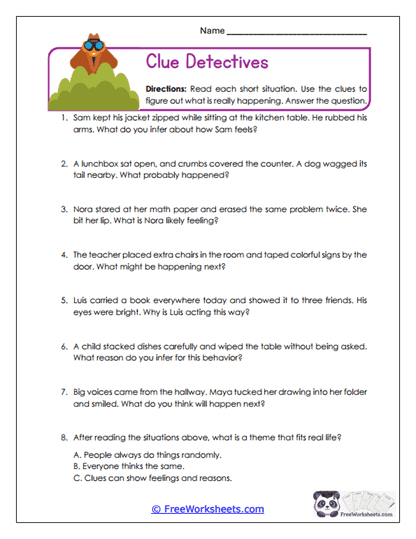
Clue Detectives
- What Kids Do:
Students read multiple short scenarios and determine what is happening or how characters feel using small contextual hints. - Target Skill:
Builds flexible inferencing by synthesizing clues across varied situations to construct meaning.
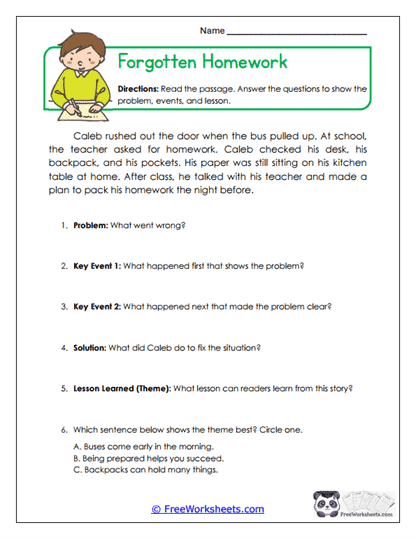
Forgotten Homework
- What Kids Do:
Students track a story’s events from problem to resolution and explain the lesson learned based on those events. - Target Skill:
Enhances comprehension of narrative structure while connecting outcomes to overarching messages.
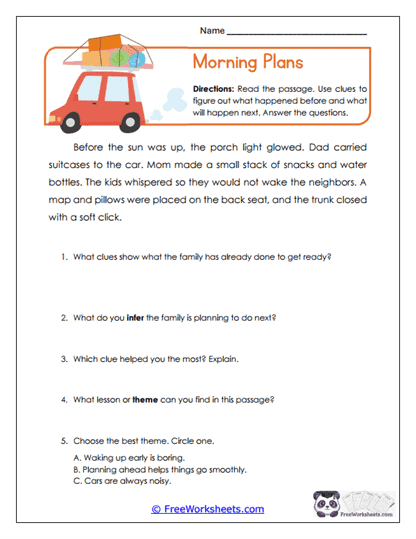
Morning Plans
- What Kids Do:
Learners interpret clues within a passage to determine what occurred before and what will happen next. - Target Skill:
Develops temporal reasoning by linking textual hints to sequence-based inferences and thematic understanding.
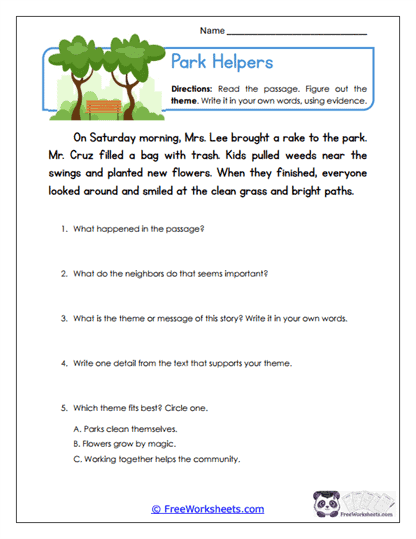
Park Helpers
- What Kids Do:
Students read a short passage about community actions and identify the message supported by key details. - Target Skill:
Strengthens ability to articulate central ideas in their own words using supporting evidence from the text.
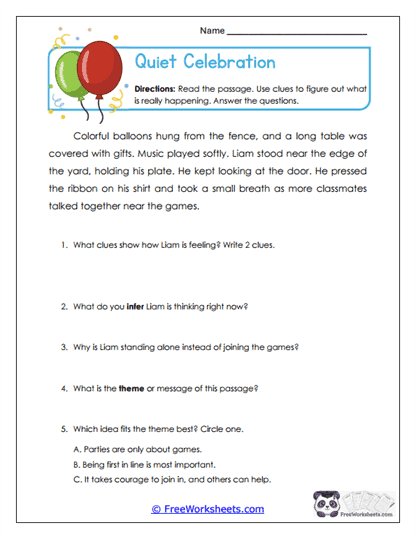
Quiet Celebration
- What Kids Do:
Students analyze subtle character actions and body language to determine emotions and select the most fitting message. - Target Skill:
Improves emotional inference by interpreting indirect cues and aligning them with appropriate themes.
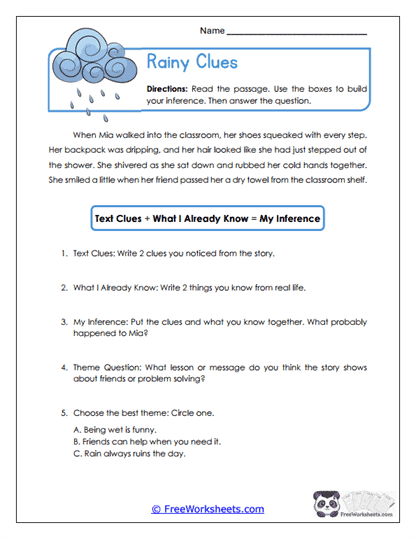
Rainy Clues
- What Kids Do:
Learners gather evidence from a passage and combine it with background knowledge to determine what is implied. - Target Skill:
Builds inferential thinking by integrating textual clues with prior experiences to construct meaning.
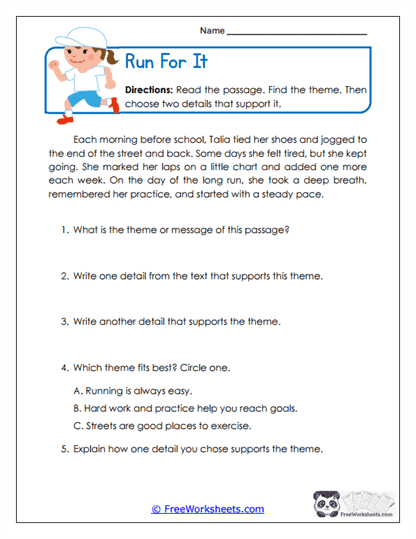
Run For It
- What Kids Do:
Students identify the main message of a story and support it with multiple details from the passage. - Target Skill:
Develops theme analysis by connecting specific evidence to broader ideas about perseverance and growth.
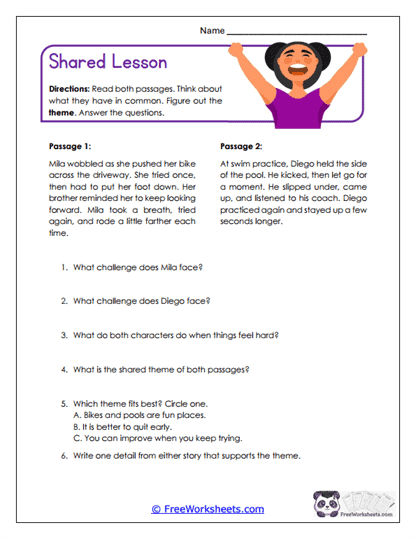
Shared Lesson
- What Kids Do:
Students read two short texts and determine the common message shared across both scenarios. - Target Skill:
Enhances cross-text analysis by comparing narratives to identify consistent thematic elements.
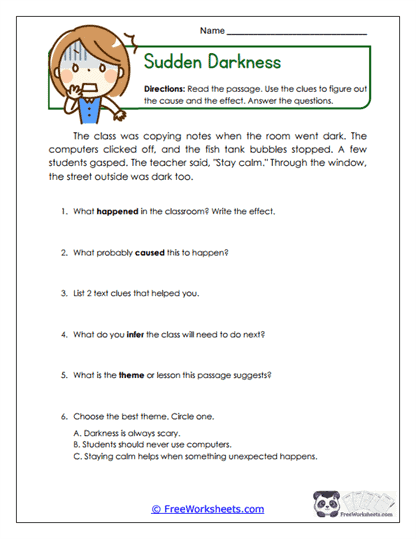
Sudden Darkness
- What Kids Do:
Learners examine a surprising event and determine its cause and possible outcome using contextual hints. - Target Skill:
Strengthens cause-and-effect reasoning through evidence-based inference and thematic interpretation.
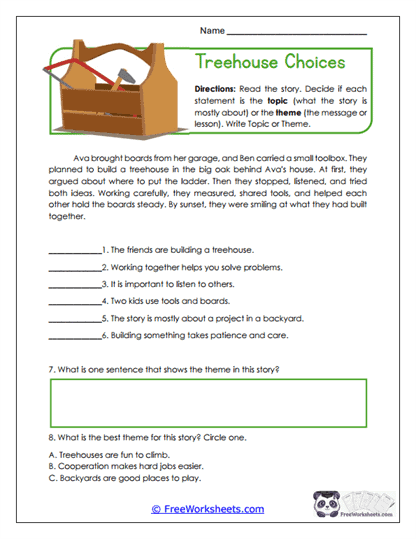
Treehouse Choices
- What Kids Do:
Students differentiate between what a story is about and the lesson it teaches by evaluating multiple statements. - Target Skill:
Builds conceptual clarity by distinguishing topic from theme using structured comparison and reasoning.