
Author's Perspective Worksheets
Grade 3 Reading Author's Perspective worksheets help students analyze how authors express opinions and viewpoints within different types of texts. These free, ready-to-print PDF worksheets are designed for immediate classroom use and support structured literacy instruction. Students develop key skills such as identifying opinion language, analyzing tone, and using evidence to support understanding of perspective.
About This Collection of Worksheets
Understanding an author’s perspective is a critical reading skill for Grade 3 students as they move beyond basic comprehension into deeper text analysis. At this stage, learners begin to recognize how word choice, tone, and supporting details reveal an author’s beliefs and intentions. These worksheets are aligned with Common Core standards and support the developmental progression of distinguishing fact from opinion, analyzing point of view, and interpreting meaning within both narrative and informational texts.
This collection is highly versatile for classroom use, making it ideal for morning work, homework assignments, literacy centers, guided reading groups, RTI support, and formative assessments. Each worksheet encourages students to engage with text through structured questioning, evidence-based responses, and critical thinking tasks. Teachers can seamlessly integrate these activities into lessons focused on comprehension, author’s purpose, and analytical reading strategies.
Designed with practicality in mind, these worksheets feature clean, ink-friendly layouts and accessible formatting for diverse learners. The materials require minimal prep, allowing educators and parents to quickly implement effective reading practice. Whether used for independent work or collaborative discussion, these resources support consistent skill development and meaningful engagement with text.
Paul’s Teacher Tip
When teaching author’s perspective in Grade 3, focus on helping students recognize the difference between what the author says and how the author feels about it. Encourage students to look for signal phrases such as “I think,” “I believe,” or emotionally charged words that reveal opinion. Model how to connect these clues to the author’s overall message before asking students to work independently. It’s also helpful to have students justify their answers using specific text evidence, which strengthens both comprehension and reasoning. For differentiation, provide sentence starters or guided highlighting for students who need additional support.
Worksheet Collection Skill Spotlights
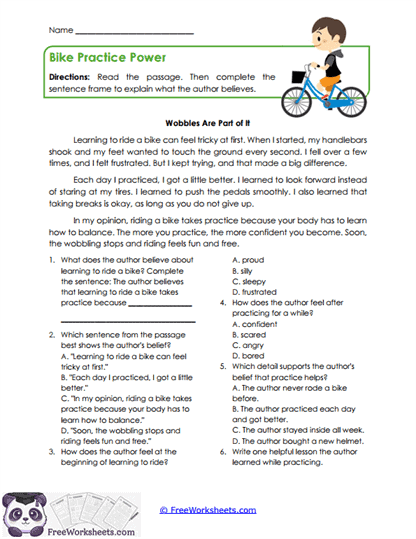
Bike Practice Power
- What Kids Do:
Students trace how a narrator’s experiences evolve over time by examining shifts in language that reflect struggle, persistence, and eventual confidence during skill development. - Target Skill:
Develops the ability to analyze how personal experiences shape viewpoint by interpreting narrative progression, emotional transitions, and reflective meaning construction.
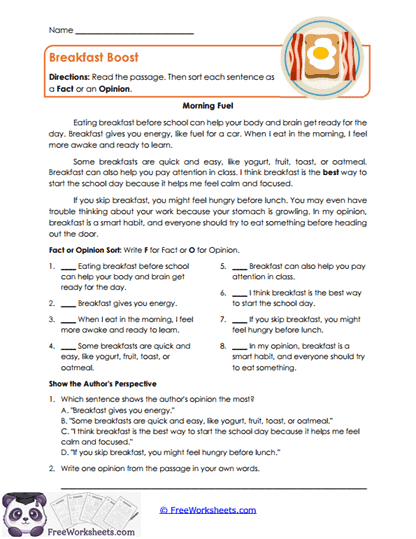
Breakfast Boost
- What Kids Do:
Students categorize statements within an informational passage by distinguishing verifiable facts from belief-based assertions tied to healthy habits. - Target Skill:
Strengthens critical evaluation skills by differentiating objective information from subjective claims while interpreting how mixed evidence supports an author’s stance.
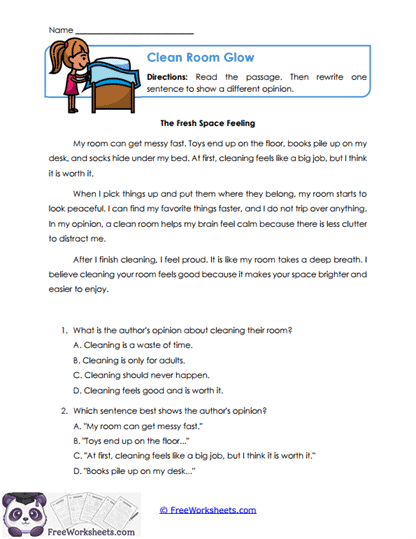
Clean Room Glow
- What Kids Do:
Students examine how a narrator’s attitude changes across a sequence of events by identifying language that signals frustration shifting into satisfaction. - Target Skill:
Builds understanding of evolving perspective through analysis of tone shifts, reflective thinking, and how experiences influence concluding viewpoints.
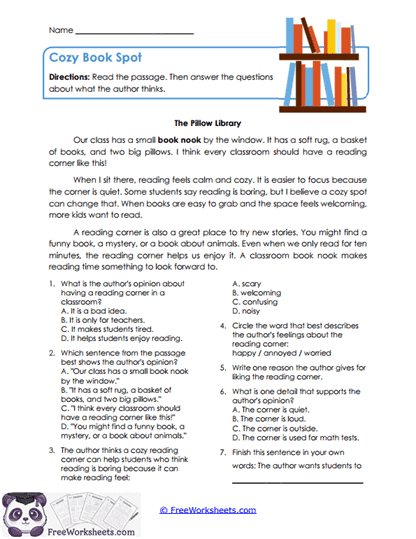
Cozy Book Spot
- What Kids Do:
Students identify opinion-based statements embedded within descriptive text by locating phrases that reveal personal beliefs about reading environments. - Target Skill:
Enhances recognition of author viewpoint by analyzing how opinion cues and descriptive details combine to communicate perspective.
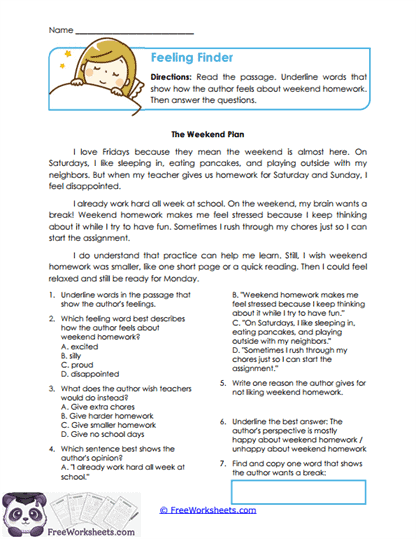
Feeling Finder
- What Kids Do:
Students highlight emotionally charged vocabulary within a passage to uncover how word choice conveys the writer’s attitude toward a topic. - Target Skill:
Develops tone analysis by connecting expressive language to inferred meaning and understanding how emotions shape interpretation.
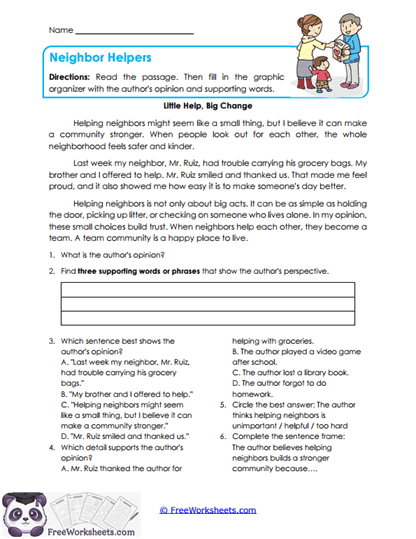
Neighbor Helpers
- What Kids Do:
Students identify key belief statements and match them with supporting examples that illustrate community-based actions within an informational text. - Target Skill:
Improves reasoning by linking central ideas to supporting details and evaluating how examples reinforce an author’s argument.
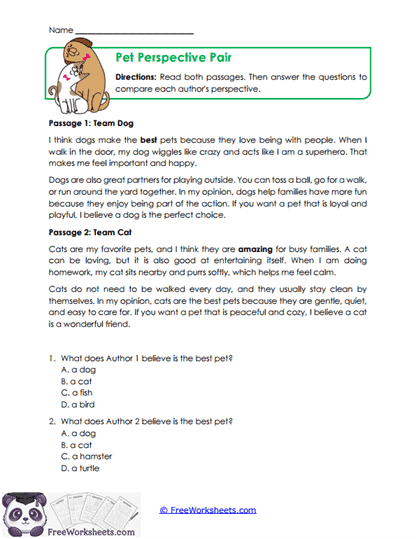
Pet Perspective Pair
- What Kids Do:
Students compare two contrasting passages by identifying each author’s claim and separating supporting details tied to different viewpoints. - Target Skill:
Strengthens comparative analysis by evaluating multiple perspectives and distinguishing how different authors construct arguments around the same topic.
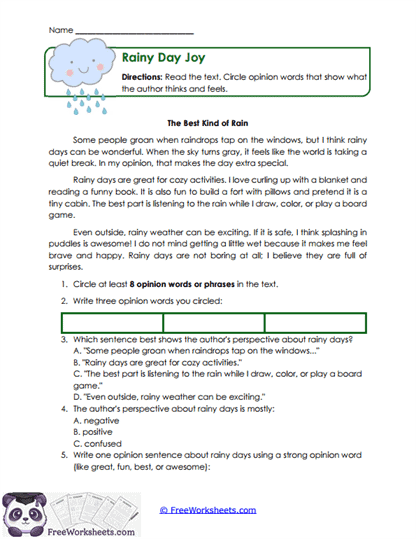
Rainy Day Joy
- What Kids Do:
Students locate descriptive phrases that express positive attitudes toward a scenario and interpret how imagery communicates enjoyment. - Target Skill:
Builds interpretation of expressive language by analyzing how descriptive word choice conveys opinion and shapes reader perception.
Recess Debate
- What Kids Do:
Students analyze a persuasive passage by identifying claims, supporting reasons, and alternative viewpoints presented within an argument. - Target Skill:
Enhances argument analysis by evaluating how reasoning, justification, and opposing ideas contribute to persuasive effectiveness.
Teamwork Wins
- What Kids Do:
Students connect personal experiences described in a narrative to statements that express beliefs about collaboration and shared responsibility. - Target Skill:
Develops comprehension of supported opinion by examining how experiences and examples reinforce a central viewpoint.
Tasty Tryouts
- What Kids Do:
Students identify the central message in a persuasive text and determine which details encourage readers to adopt new behaviors. - Target Skill:
Strengthens main idea identification by analyzing how supporting reasons and examples promote an author’s intended message.
Trip Day Buzz
- What Kids Do:
Students track emotional cues across a narrative by identifying words that reflect anticipation, excitement, and nervousness before and during an event. - Target Skill:
Builds emotional inference skills by connecting feeling-based language to perspective development and understanding narrative tone progression.