
Text Features Worksheets
Grade 4 Reading Text Features worksheets help students navigate informational texts, understand how nonfiction is organized, and use visual and structural tools to improve comprehension. These free, ready-to-print worksheets are available in PDF format for easy classroom, homeschool, or at-home use. Students practice using headings, captions, glossaries, diagrams, and other nonfiction features through standards-aligned reading activities.
About This Collection of Worksheets
Text features become increasingly important in Grade 4 as students are expected to read more complex informational texts with greater independence. At this level, readers must do more than notice headings or bold words. They need to understand how these features guide attention, organize ideas, clarify vocabulary, and help them locate information efficiently. This collection supports that work by giving students repeated practice with the features they are most likely to encounter in science, social studies, and general nonfiction reading.
These worksheets fit easily into many instructional settings. Teachers can use them during nonfiction units, reading workshop, small-group instruction, literacy centers, intervention, homework, or review before assessments. Because the set includes matching tasks, navigation practice, caption analysis, vocabulary work, written explanations, and even student-created informational writing, it offers a strong range of activities that reinforce the same core concepts in different ways.
Each worksheet is designed for clear use and practical classroom implementation. The pages are print-friendly, organized, and simple for students to follow without extra setup. Whether learners are matching a text feature to its purpose, scanning headings to find an answer, or explaining how a caption adds meaning to an image, this collection gives Grade 4 students meaningful practice with essential nonfiction reading tools.

Paul’s Teacher Tip
When teaching text features, make sure students understand that these features are there to help them read smarter, not just read more. Many students can name a heading or caption, but they need modeling to explain how that feature helps them find information, understand a picture, or learn an important word. For differentiation, some students may benefit from matching features to their purposes first, while others are ready to explain how multiple features work together in one text. At home, families can support this skill by flipping through a nonfiction book together and asking how each feature helps the reader.
Worksheet Collection Skill Spotlights
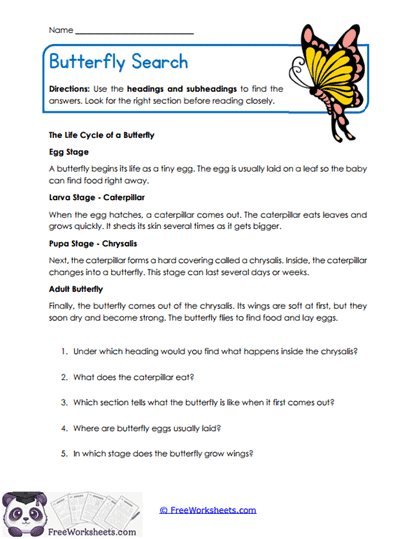
Butterfly Search
- What Kids Do:
Students read a passage about butterfly stages and use headings to find the section that answers each question. They practice scanning for the right part of the text instead of reading every line from start to finish. - Target Skill:
This worksheet builds nonfiction navigation and teaches students how headings help readers locate information quickly. It also strengthens efficient research habits when working with informational text.
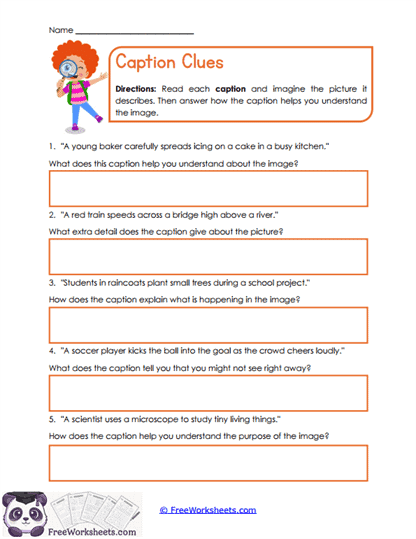
Caption Clues
- What Kids Do:
Students read captions and explain how each one adds information that a picture alone might not show clearly. They focus on how captions help readers better understand actions, details, or context. - Target Skill:
This activity develops understanding of how text and visuals work together in nonfiction. It also helps students explain the purpose of captions instead of just repeating what they say.
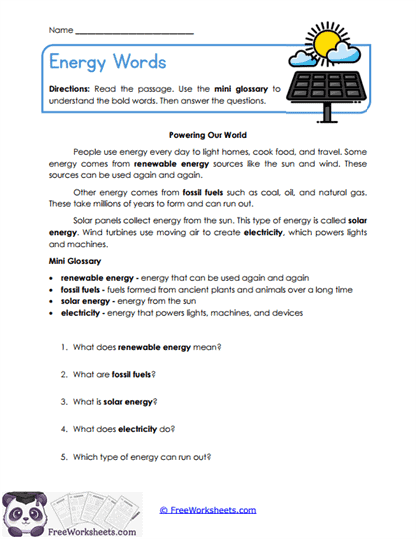
Energy Words
- What Kids Do:
Students read a passage about energy and use both context clues and a mini glossary to figure out the meanings of bold vocabulary words. They connect each definition to how the word is used in the text. - Target Skill:
This worksheet strengthens academic vocabulary and teaches students to use text features as reading tools. It also supports stronger comprehension of domain-specific nonfiction language.
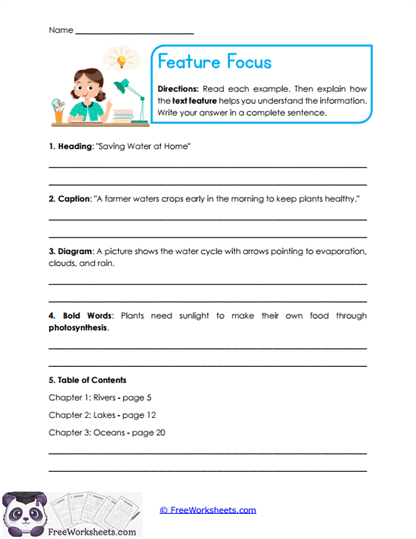
Feature Focus
- What Kids Do:
Students look at examples of headings, captions, diagrams, and bold words, then write complete sentences explaining how each feature helps the reader. They move beyond naming the feature to explaining its value. - Target Skill:
This worksheet builds written explanation skills and deeper understanding of text feature purpose. It helps students connect nonfiction structure directly to comprehension.
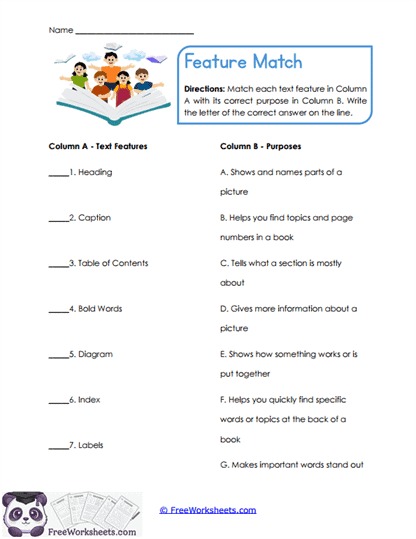
Feature Match
- What Kids Do:
Students match common text features such as headings, captions, and diagrams to the purpose each one serves in an informational text. They learn how each feature supports reading in a different way. - Target Skill:
This activity builds foundational knowledge of nonfiction text features and their functions. It gives students a clear starting point for recognizing how informational texts are organized.
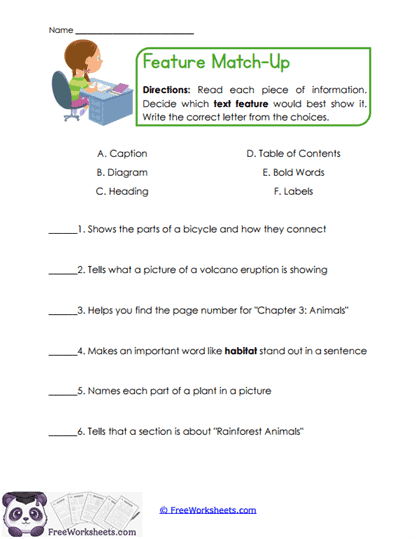
Feature Match-Up
- What Kids Do:
Students read descriptions of different kinds of information and decide which text feature would present that information best. They use a word bank to connect each task to the correct feature. - Target Skill:
This worksheet strengthens application of text feature knowledge in realistic reading situations. It helps students think about why one feature works better than another for a specific purpose.
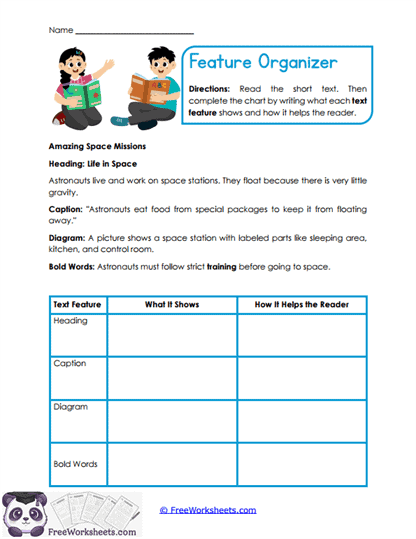
Feature Organizer
- What Kids Do:
Students read a short informational text and complete a chart explaining what each feature shows and how it helps readers understand the text better. They analyze more than one feature within the same reading passage. - Target Skill:
This activity develops analytical thinking about nonfiction structure and purpose. It also helps students organize their ideas clearly when explaining how text features support understanding.
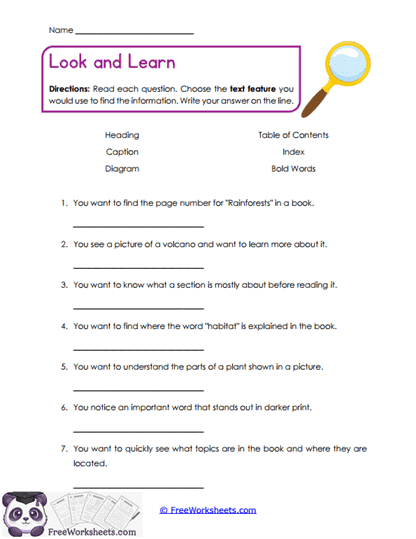
Look and Learn
- What Kids Do:
Students read short scenarios about finding information in a book and choose the best text feature to use for each task. They apply what they know about features like indexes, diagrams, and tables of contents. - Target Skill:
This worksheet builds practical nonfiction reading skills by showing students when to use specific text features. It also improves their ability to solve real reading and research problems efficiently.
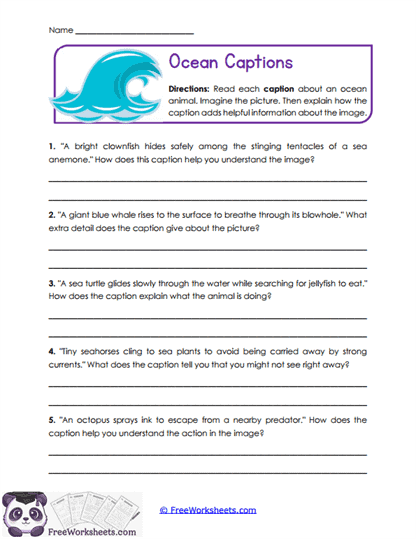
Ocean Captions
- What Kids Do:
Students read ocean-themed captions and explain how each one gives helpful information about an imagined image. They think about what the caption reveals that may not be obvious right away. - Target Skill:
This activity strengthens caption analysis and visual-text integration. It also helps students explain how captions add clarity, detail, and meaning in informational texts.
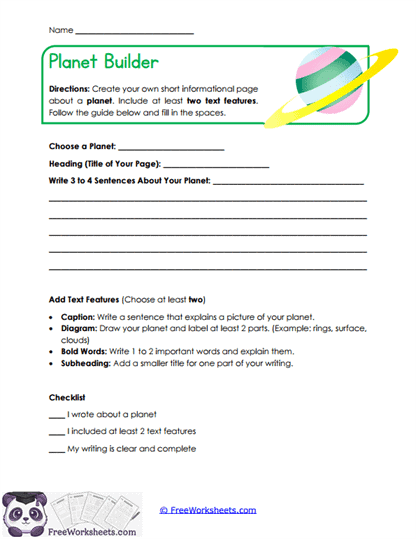
Planet Builder
- What Kids Do:
Students create their own short informational page about a planet and include text features such as headings, captions, or diagrams. They combine writing with nonfiction structure to present information clearly. - Target Skill:
This worksheet helps students apply text feature knowledge in their own informative writing. It reinforces the idea that text features are useful tools for both readers and writers.
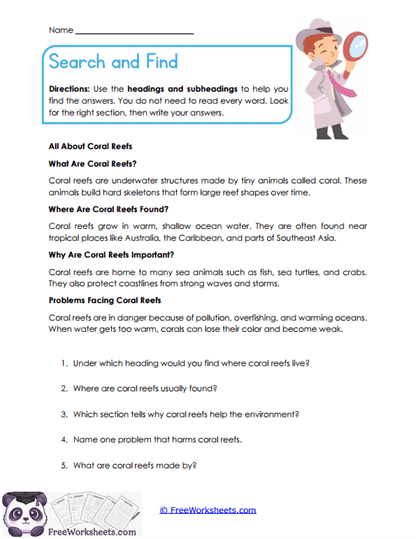
Search and Find
- What Kids Do:
Students use headings and subheadings in a coral reef passage to locate answers to specific questions. They practice scanning the structure of the text to find information quickly. - Target Skill:
This worksheet builds strategic nonfiction reading and teaches students how text organization supports efficient comprehension. It also strengthens confidence with section-based reading.
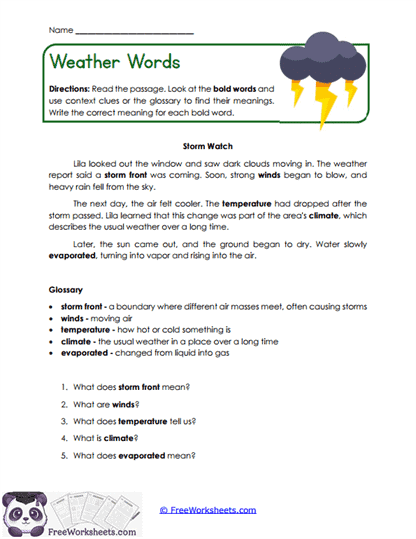
Weather Words
- What Kids Do:
Students read a weather passage, study bold vocabulary words, and use both a glossary and context clues to answer meaning questions. They learn to connect reference tools with what the passage is saying. - Target Skill:
This activity supports vocabulary growth and helps students use nonfiction text features to make sense of unfamiliar words. It also reinforces the habit of checking both context and definitions before answering.