
Reading Sequences Worksheets
Grade 2 Reading Sequences worksheets help students understand how events unfold in logical order within stories and informational texts. These free, ready-to-print PDF worksheets are designed for immediate classroom use during reading comprehension lessons and literacy centers. Students practice identifying chronological order, recognizing sequence signal words, comparing event structures, and retelling stories accurately.
About This Collection of Worksheets
Sequencing events is a core comprehension skill in Grade 2 reading instruction. Students move beyond identifying isolated details and begin understanding how actions and ideas connect over time. Recognizing chronological order helps students follow narratives, understand procedures, and summarize texts accurately. These worksheets provide structured practice that strengthens students’ ability to track events from beginning to end and analyze how they are organized.
This collection supports both narrative and informational text comprehension aligned with Common Core Reading Literature (RL) and Reading Informational (RI) standards. Activities include ordering events, identifying sequence signal words, categorizing story structure, comparing event sequences across texts, and retelling passages in students’ own words. The tasks encourage close reading, rereading, and thoughtful analysis of textual clues.
Each printable PDF features short, developmentally appropriate passages with clear instructions and structured response formats. Students may number events, sort story stages, answer sequencing questions, or write short retells. These varied formats build comprehension while strengthening organizational thinking and writing skills.
Teachers can use these worksheets for guided reading groups, independent comprehension practice, literacy centers, or formative assessment. The consistent focus on chronological structure supports both reading and writing development, helping students become stronger storytellers and more careful readers.
Paul’s Teacher Tip
Before students complete these worksheets, model sequencing out loud using a simple daily routine (like getting ready for school). This helps them connect sequencing to real life. Encourage students to look for signal words as “clues” rather than guessing the order. For extra support, have students act out events or draw quick sketches before writing answers. You can also ask students to explain why one event comes before another to deepen their thinking. Over time, this builds stronger readers who understand how events connect logically.
Worksheet Collection Skill Spotlights
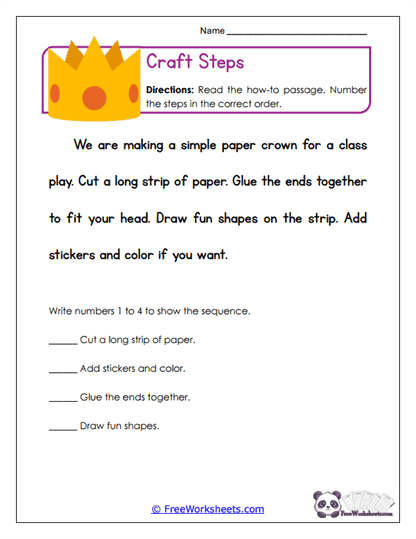
Craft Steps
• What Kids Do – Students read a how-to passage and number the steps in the correct order.
• Target Skill – Builds understanding of sequence in procedural texts.
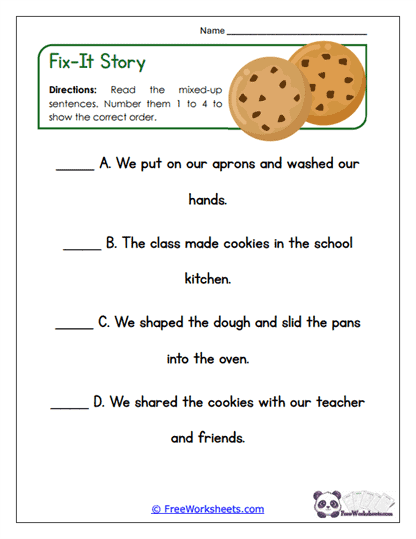
Fix-It Story
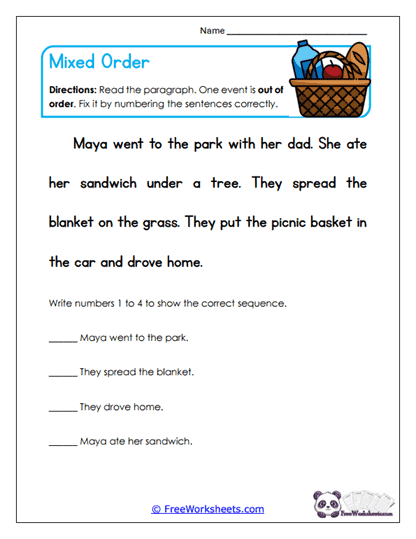
• What Kids Do – Students read scrambled sentences and put them in the correct order.
• Target Skill – Develops chronological sequencing and cause-and-effect thinking.
Morning Steps
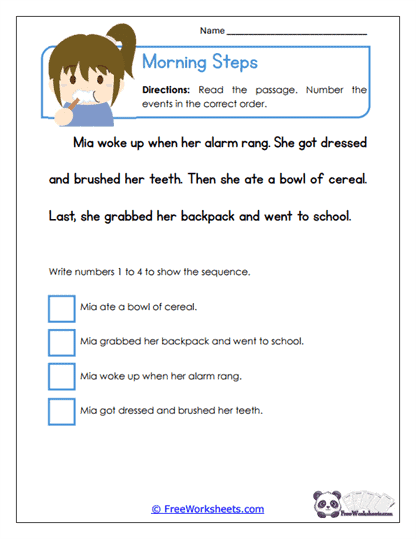
• What Kids Do – Students read a short story and number events in the order they happen.
• Target Skill – Builds sequencing of events in narrative text.
Order Clues
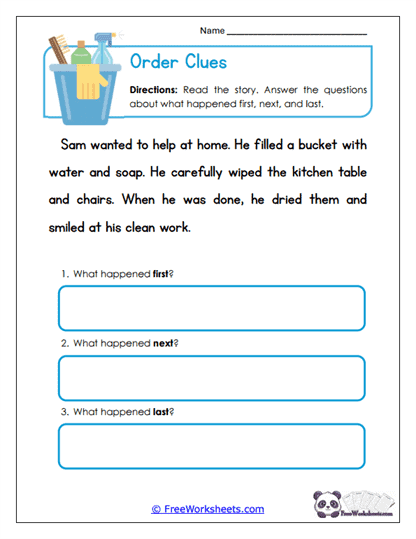
• What Kids Do – Students read a paragraph and identify what happened first, next, and last.
• Target Skill – Develops understanding of chronological order using text clues.
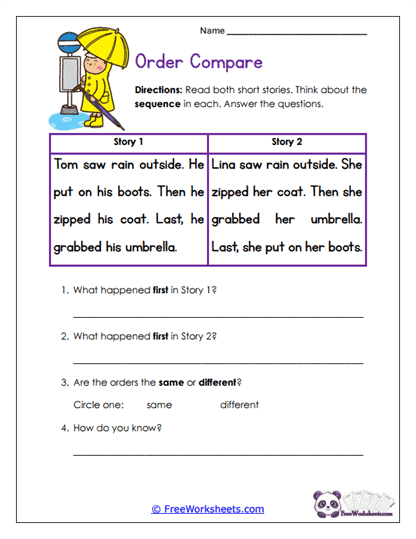
Order Compare
• What Kids Do – Students read two passages and compare how the events are ordered in each.
• Target Skill – Builds comparison of event sequences across texts.
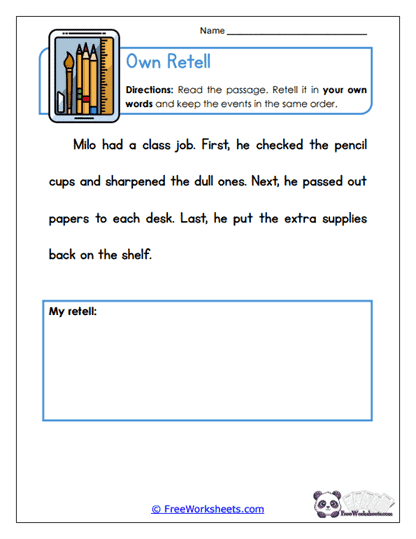
Own Retell
• What Kids Do – Students read a story and retell it in their own words in the correct order.
• Target Skill – Develops retelling and sequencing skills.
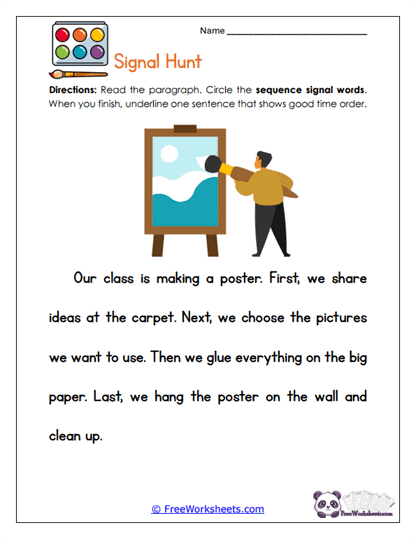
Signal Hunt
• What Kids Do – Students find and circle sequence words like first, next, and last in a paragraph.
• Target Skill – Builds recognition of sequence signal words.
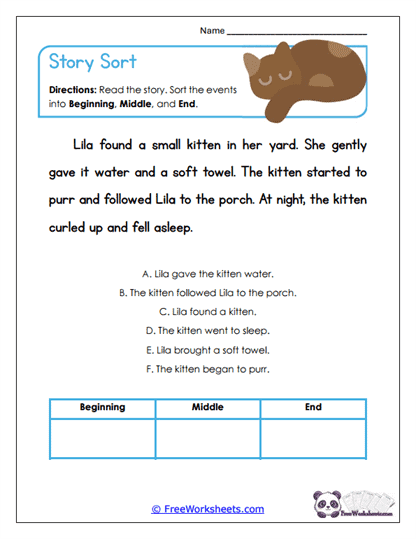
Story Sort
• What Kids Do – Students read a story and sort events into beginning, middle, and end.
• Target Skill – Develops understanding of story structure and event order.