
About This Worksheet
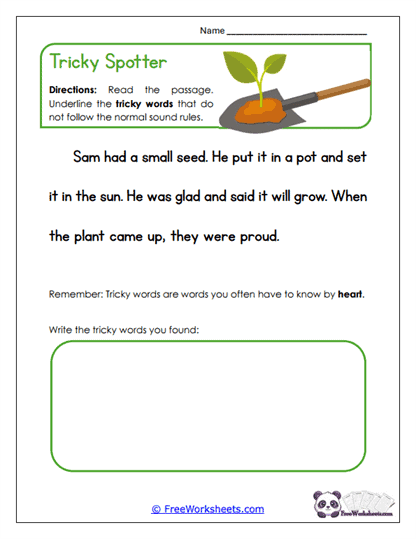
This worksheet is a sight word and irregular word identification activity designed to strengthen recognition of high-frequency “tricky” words. Students read a short decodable passage and underline words that do not follow typical phonics rules. Intended for kindergarten through second grade learners, it supports automatic sight word recognition within connected text. The activity emphasizes identifying words that must be known “by heart.” For example, words like said or they may not follow standard decoding patterns. This structured format reinforces the balance between phonics decoding and memorized high-frequency words.
Curriculum and Grade Alignment
This worksheet aligns with foundational reading standards focused on sight word recognition and decoding accuracy. The primary learning objective is helping students distinguish between decodable words and irregular high-frequency words. Students should already have exposure to common sight words before completing this activity. The content supports Common Core Standard RF.1.3.G, which addresses recognizing and reading irregularly spelled words. It also reinforces RF.1.4 for fluency and accuracy in reading connected text. This resource strengthens word recognition strategies essential for fluent reading.
Student Tasks
On this worksheet, students will read a short decodable passage carefully. They underline all tricky words that do not follow normal sound rules. After identifying them, students write the tricky words in the provided box. Careful analysis is required to separate regular phonics words from irregular ones. Learners practice applying phonics knowledge while recognizing exceptions. The task strengthens sight word awareness and reading confidence.
Common Challenges and Misconceptions
Students may underline regular phonics words by mistake. Some learners might skip tricky words if they read too quickly. Others may confuse unfamiliar vocabulary with irregular words. Confusion can arise when students are unsure which words are decodable. Additionally, students may forget to transfer underlined words to the writing box. Teachers can review previously taught sight words before beginning the activity.
Implementation Guidance
Teachers can use this worksheet during phonics and word study centers. It works effectively as a follow-up activity after introducing new sight words. Small-group instruction allows teachers to clarify which words are irregular. Parents and homeschool educators may use this worksheet to reinforce sight word mastery at home. Encouraging students to read the passage aloud supports fluency. This activity also serves as a formative check for sight word recognition.
Details and Features
The worksheet includes a short, controlled passage for reading practice. A reminder explains what makes a word “tricky.” A large response box allows students to list the words they found. The layout is clean and accessible for early readers. The black-and-white printable format supports classroom copying. Its design reinforces both decoding and memorization strategies.