
About This Worksheet
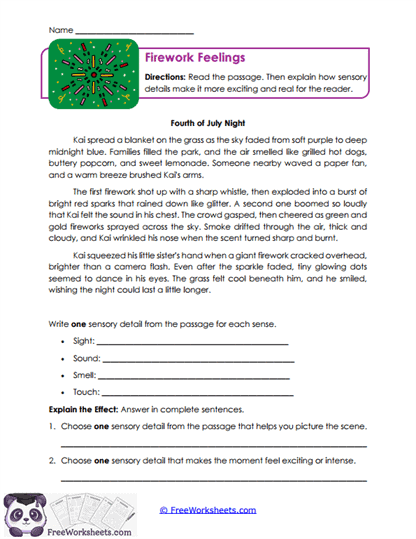
This worksheet is a sensory analysis activity that helps students explore how descriptive details create excitement and realism in writing. It focuses on identifying sensory language tied to a vivid Fourth of July scene. Students learn how authors use the five senses to make moments feel more alive and engaging for the reader.
Curriculum and Grade Alignment
This activity supports Grade 5 students in analyzing sensory details and explaining their effect on the reader.
- Primary focus: identifying sensory language and explaining impact
- Builds toward: connecting description to mood and intensity
- Standards: CCSS RL.5.4, TEKS ELAR 5.6(E)
Student Tasks
- Read a descriptive passage about fireworks
- Identify one sensory detail for each sense
- Explain how a chosen detail helps visualize the scene
- Explain how a detail increases excitement or intensity
Common Challenges and Misconceptions
- Students may list details without connecting them to a sense
- Some may struggle to explain why a detail matters
- Others may confuse mood with sensory description
- Encourage students to think: “What do I see, hear, feel, smell?”
Implementation Guidance
- Model one strong example (e.g., sound or sight) before independent work
- Encourage students to visualize the scene as they read
- Have students share which detail felt most vivid and why
- This worksheet is especially effective for showing how sensory details increase emotional impact and reader engagement
Details and Features
- High-interest holiday-themed passage to boost engagement
- Clearly structured sections for each of the five senses
- Built-in explanation prompts to move beyond simple identification
- Encourages both comprehension and analytical thinking
- Ideal for independent practice, centers, or writing prep