
About This Worksheet
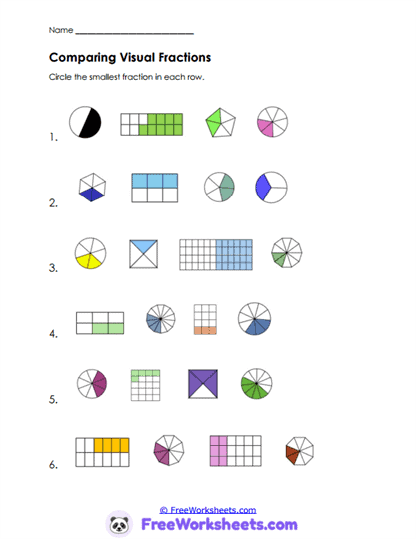
This worksheet teaches students how to compare visual fractions by identifying the smallest fraction in each row. Learners examine several fraction models and determine which picture represents the least amount of the whole. Visual comparison activities help students strengthen fraction sense and understanding of part-to-whole relationships. For example, a model showing 1/8 shaded is smaller than a model showing 1/4 shaded because less of the shape is covered. This activity supports deeper understanding of fraction size through pictures.
Curriculum and Grade Alignment
This worksheet supports visual fraction comparison and fraction reasoning skills. Students should already understand how shaded sections represent fractions before completing this activity. The learning goal is helping learners compare multiple visual fraction models accurately and identify the smallest fraction. After this skill, students are often introduced to ordering fractions numerically. The worksheet aligns with Common Core standard 5.NF.A.1 and TEKS 5.3D involving fraction comparison and representation.
Student Tasks
On this worksheet, students will
study rows of visual fraction models and identify the smallest fraction shown. Students compare shaded sections of circles, rectangles, and divided shapes to determine which represents the least amount. Learners circle the correct model in each row after comparing all options carefully. Several problems encourage students to think about both the number and size of the pieces shown. Students also practice using visual reasoning to support fraction understanding.
Common Challenges and Misconceptions
Some students assume shapes with more shaded pieces are always larger fractions without considering piece size. Others struggle when comparing different types of visual models on the same row. Learners may rush through the worksheet and overlook important details in the shading. Students can also become confused when the fractions are close in size. Teachers can help by encouraging students to estimate visually before making a final choice.
Implementation Guidance
Teachers can use this worksheet during guided math lessons, centers, or visual fraction review activities. It works well for supporting students who need extra practice connecting pictures to fraction values. Parents and homeschool educators may discuss one row at a time with children to build confidence gradually. Fraction manipulatives and drawings can provide additional support for struggling learners. The worksheet also works well as enrichment or intervention practice.
Details and Features
This printable worksheet includes multiple rows of visual fraction comparison problems. Students compare colorful fraction models and identify the smallest fraction in each set. The page layout is clean and organized to support focused learning. Kid-friendly illustrations create a welcoming appearance while maintaining strong educational value. The worksheet prints clearly for classroom, tutoring, or homeschool use.