
Preschool Vocabulary Worksheets
These worksheets build early word knowledge through listening, speaking, and hands-on application. These free, ready-to-print PDF worksheets are designed for immediate classroom or home use with minimal preparation. Students strengthen word meaning, categorization, descriptive language, verb recognition, and contextual understanding skills.
About This Collection of Worksheets
Vocabulary development in preschool lays the foundation for later reading comprehension, expressive language, and academic success. At this stage, children need explicit, repeated, and multi-sensory exposure to new words in meaningful contexts aligned with early Common Core readiness skills. These Preschool Vocabulary worksheets support growth in word meaning, descriptive language, categorization, verb understanding, and listening comprehension.
This collection works well during circle time, small-group literacy instruction, learning centers, and targeted intervention. Teachers can incorporate movement, discussion, modeling, and real-world examples to deepen understanding. The worksheets also support home reinforcement, allowing parents to extend vocabulary practice through conversation and daily routines.
Each printable PDF features a clear, developmentally appropriate layout with uncluttered design and simple directions. Activities encourage repetition, drawing, tracing, sorting, matching, and contextual reasoning to promote deep word ownership. With minimal prep required, educators can easily integrate these resources into daily literacy instruction.
Paul’s Teacher Tip
Bring these vocabulary words to life by pairing each worksheet with quick, real-world connections-act out verbs, point to classroom objects, or relate words to students’ daily routines. During instruction, pause often and have students repeat new words in complete sentences to build expressive language. For added support, keep a simple word wall with pictures so students can revisit vocabulary throughout the week. Encourage students to use new words during play or conversation to reinforce retention. You can also revisit favorite words during transitions for quick oral review and stronger long-term memory.
Worksheet Collection Skill Spotlights
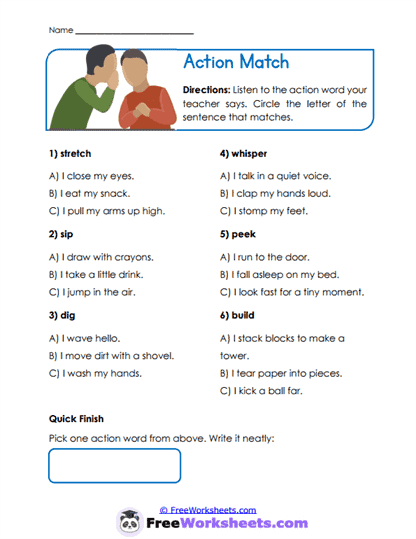
Action Match
• What Kids Do – Students read or hear action words and choose the sentence that correctly describes each one, then complete a short writing task.
• Target Skill – Builds verb comprehension and sentence-level meaning.
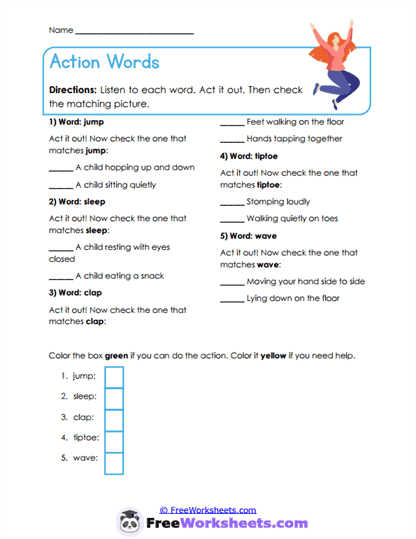
Action Words
• What Kids Do – Students act out verbs, then choose the picture that matches each action word.
• Target Skill – Strengthens verb understanding through kinesthetic learning and word-to-action connection.
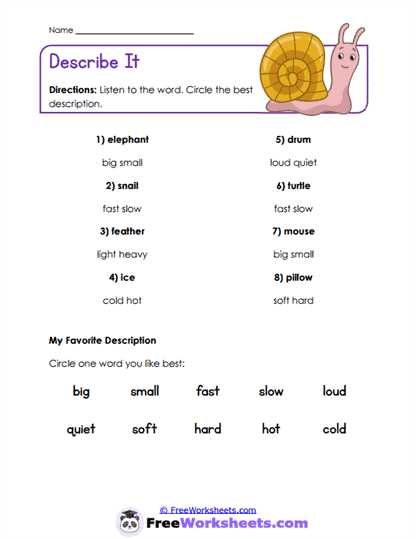
Describe It
• What Kids Do – Students compare opposite adjectives and circle the word that best describes each object.
• Target Skill – Develops descriptive vocabulary and semantic reasoning using contrasts.
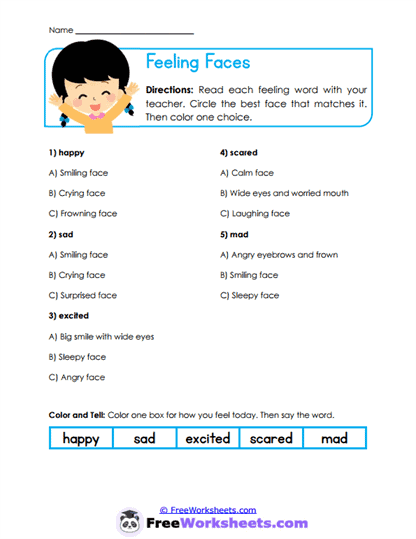
Feeling Faces
• What Kids Do – Students match emotion words to facial expressions and reflect on their own feelings.
• Target Skill – Builds emotional vocabulary and visual-emotional recognition.
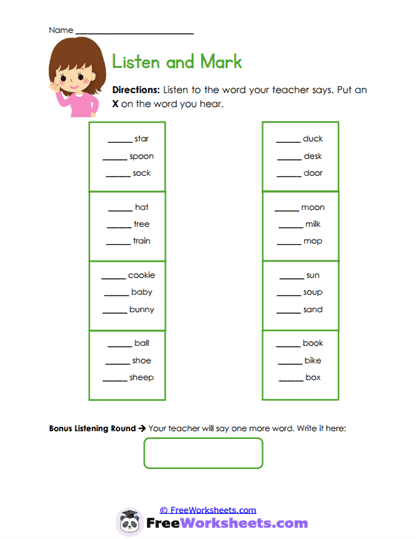
Listen and Mark
• What Kids Do – Students listen to a word and choose the correct option from similar-sounding choices.
• Target Skill – Strengthens auditory discrimination and listening accuracy.
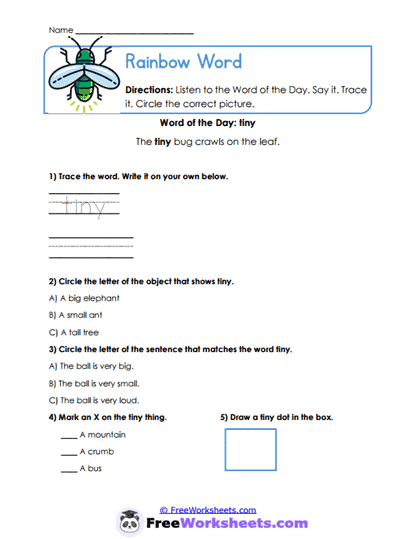
Rainbow Word
• What Kids Do – Students trace, write, match, and draw to explore one focus word in multiple ways.
• Target Skill – Supports deep vocabulary acquisition through repetition and multi-modal practice.
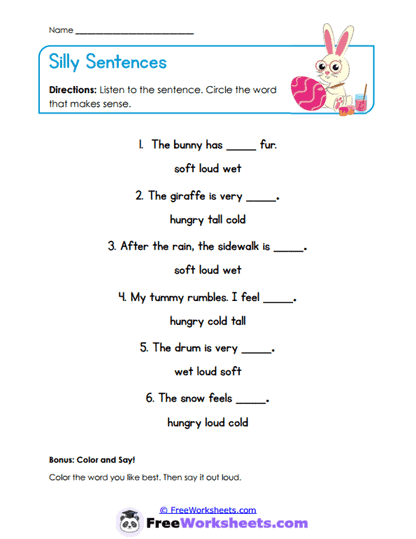
Silly Sentences
• What Kids Do – Students choose the word that makes sense to complete each sentence using real-world logic.
• Target Skill – Builds contextual understanding and semantic reasoning.
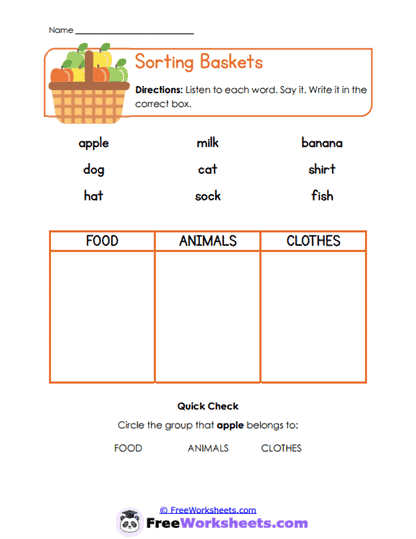
Sorting Baskets
• What Kids Do – Students sort words into categories like food, animals, or clothes using a chart.
• Target Skill – Develops categorization and conceptual organization skills.
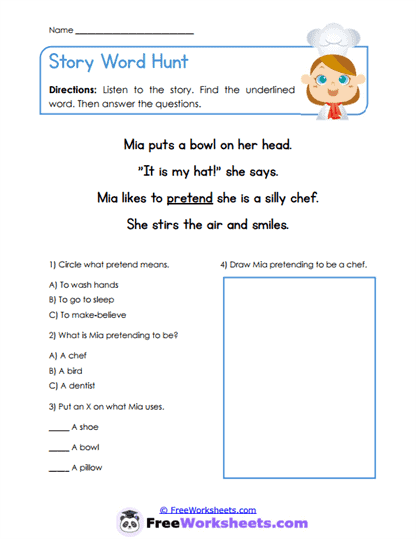
Story Word Hunt
• What Kids Do – Students listen to or read a short story and use clues to figure out the meaning of a highlighted word.
• Target Skill – Builds context clue usage and vocabulary comprehension.
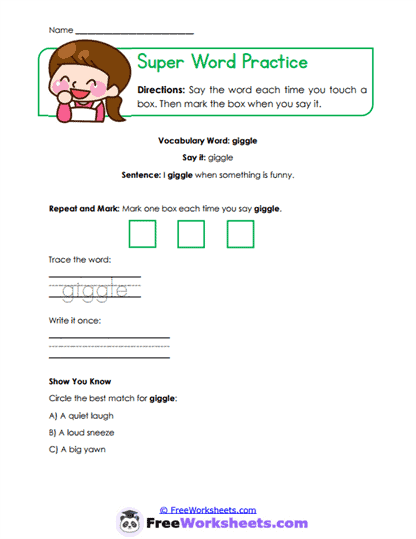
Super Word Practice
• What Kids Do – Students repeat, trace, write, and explain a target word through guided activities.
• Target Skill – Strengthens expressive and receptive vocabulary through repeated practice.
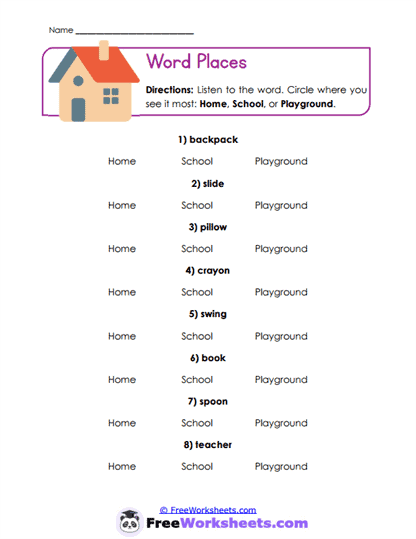
Word Places
• What Kids Do – Students decide where items belong (home, school, or playground) and sort them accordingly.
• Target Skill – Builds word-to-context connections and real-world vocabulary understanding.
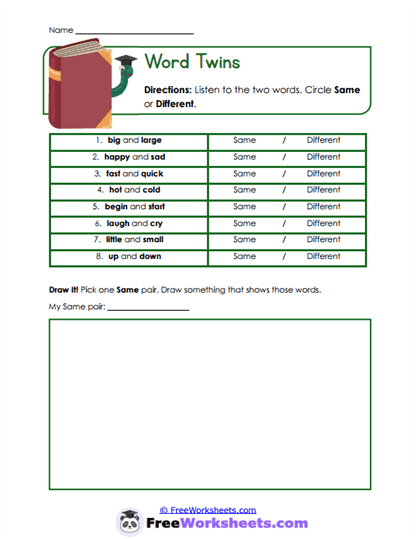
Word Twins
• What Kids Do – Students listen to word pairs and decide if they mean the same or something different, then draw an example.
• Target Skill – Develops understanding of synonyms and opposites.