
Letter Identification Worksheets
These worksheets help preschool learners recognize letters by sight, match uppercase and lowercase forms, and practice early handwriting skills. These printable activities build alphabet awareness through fun tasks like circling target letters, tracing letter shapes, matching letter partners, and connecting letters to beginning sounds.
About This Collection of Worksheets
Preschool letter identification is the ability to notice, name, and distinguish letters accurately-an essential pre-reading skill. Before children can connect letters to sounds and begin decoding, they need repeated practice seeing letters in different fonts, sizes, and formats. These worksheets strengthen visual discrimination, attention to detail, and left-to-right tracking while also supporting fine motor development.
This collection supports early literacy readiness goals aligned to Common Core RF.K.1.D (readiness) and RF.K.3.A (readiness), along with TEKS Prekindergarten ELAR IV.A.2 (letter recognition) and IV.B.1 (beginning sound awareness). Activities include single-letter focus pages (finding S, tracing T, coloring B), letter matching (uppercase-to-uppercase and uppercase-to-lowercase), visual discrimination games (finding the different letter, locating lowercase letters), and letter-sound picture hunts.
Many worksheets use simple marking tools-crayons, dot markers, highlighters, or scissors and glue-so children practice literacy skills alongside fine motor control. The formats are predictable and uncluttered to support early learners and allow for quick teacher check-ins or informal assessment.
Paul’s Teacher Tip
Turn these worksheets into a quick multi-sensory warm-up by having students say each letter name or sound aloud as they work. For differentiation, cover parts of the page for students who need fewer choices, while encouraging others to explain their thinking or create their own examples. Extend learning by asking students to find the target letter or sound in classroom objects or their names. Build oral language by having students use a word with the target sound in a sentence. Use student responses as quick observations to guide small-group reteaching.
Worksheet Collection Skill Spotlights
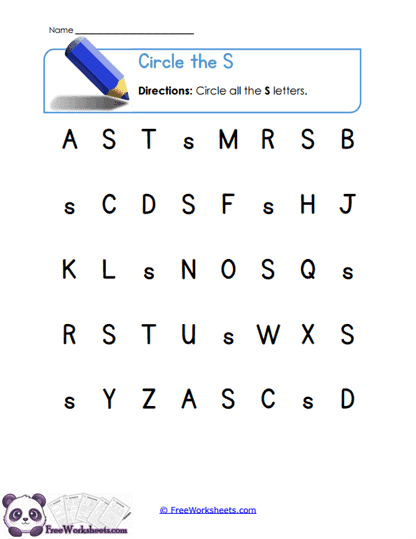
Circle the S
• What Kids Do – Students scan mixed uppercase and lowercase letters and circle every S and s they find.
• Target Skill – Strengthening visual discrimination and letter recognition through focused scanning.
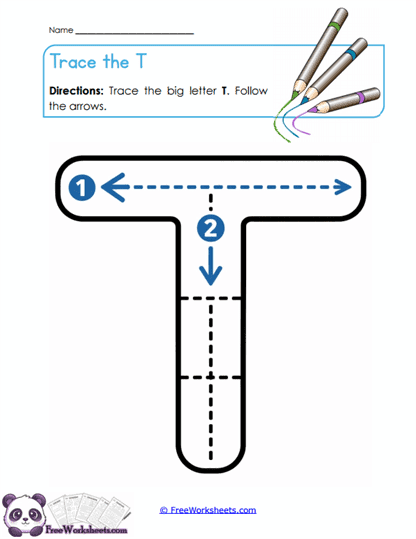
Trace the T
• What Kids Do – Students trace an uppercase T using guided arrows and numbered stroke steps.
• Target Skill – Developing proper letter formation and fine motor control through structured handwriting practice.
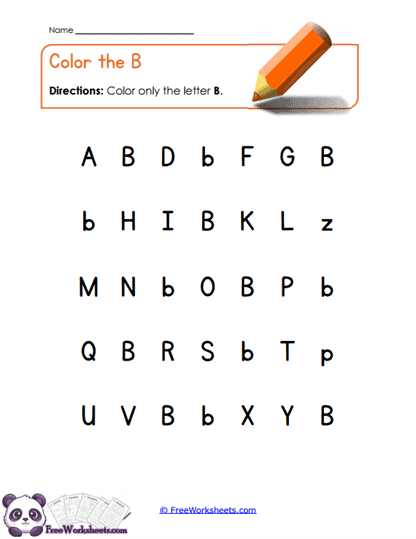
Color the B
• What Kids Do – Students identify and color only uppercase B and lowercase b within a group of mixed letters.
• Target Skill – Enhancing letter discrimination and visual differentiation of similar letter forms.
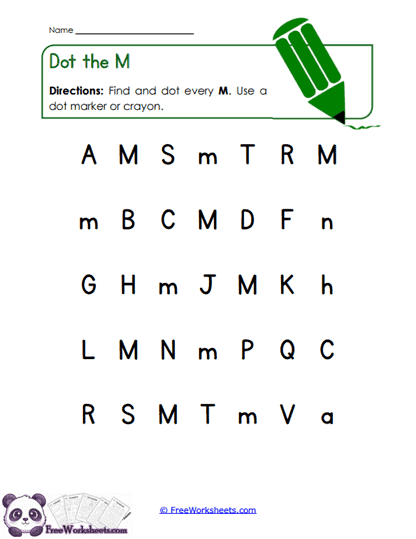
Dot the M
• What Kids Do – Students use dot markers or crayons to mark every M and m they see.
• Target Skill – Reinforcing letter recognition while building fine motor precision and control.
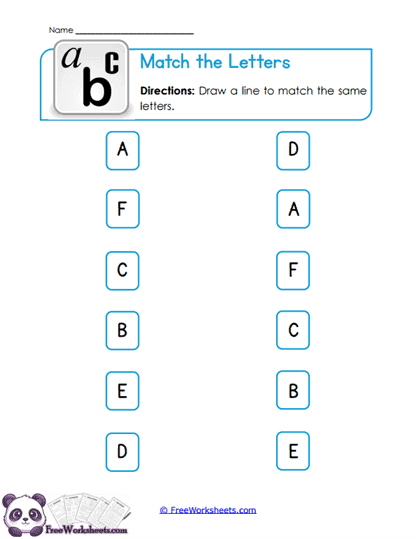
Match the Letters
• What Kids Do – Students draw lines to connect identical uppercase letters across two columns.
• Target Skill – Strengthening visual matching and left-to-right tracking skills.
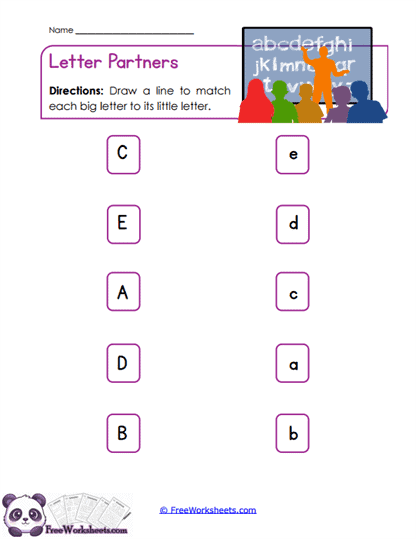
Letter Partners
• What Kids Do – Students match uppercase letters to their lowercase partners by drawing connecting lines.
• Target Skill – Building understanding of letter case relationships and symbolic representation.
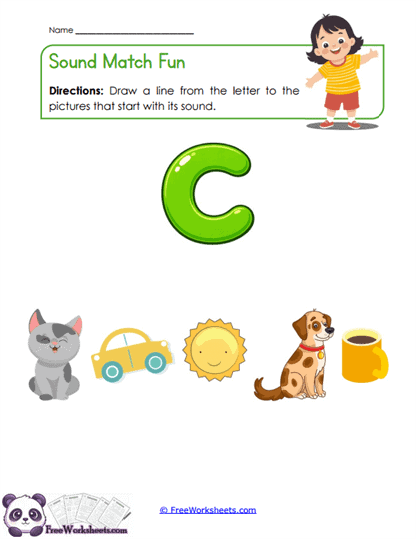
Sound Match Fun
• What Kids Do – Students connect a target letter to pictures that begin with its corresponding sound.
• Target Skill – Developing phonemic awareness and beginning sound identification.
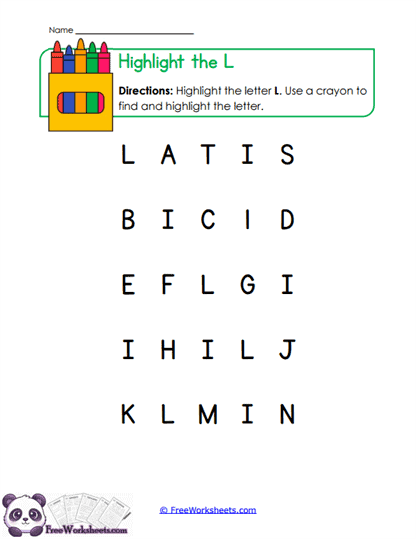
Highlight the L
• What Kids Do – Students scan rows of letters and highlight every uppercase L they find.
• Target Skill – Improving attention to detail and visual discrimination among similar letter shapes.
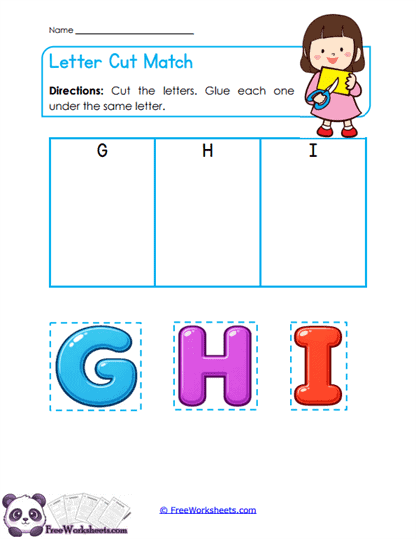
Letter Cut Match
• What Kids Do – Students cut out letter pieces and glue them under matching uppercase headings.
• Target Skill – Supporting kinesthetic learning and reinforcing letter recognition through hands-on sorting.
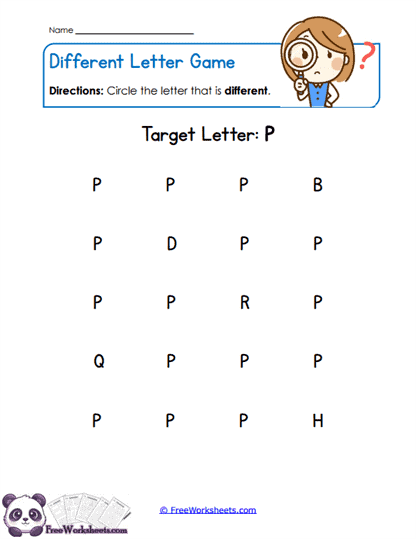
Different Letter Game
• What Kids Do – Students identify a target letter and circle the different letter in each row.
• Target Skill – Enhancing visual discrimination and analytical observation skills.
Find the Lowercase
• What Kids Do – Students scan mixed letters and circle only the lowercase forms.
• Target Skill – Building letter case recognition and early print awareness.
Letter Sound Hunt
• What Kids Do – Students match a featured letter to pictures that share its beginning sound.
• Target Skill – Strengthening letter-sound correspondence and initial phoneme recognition.
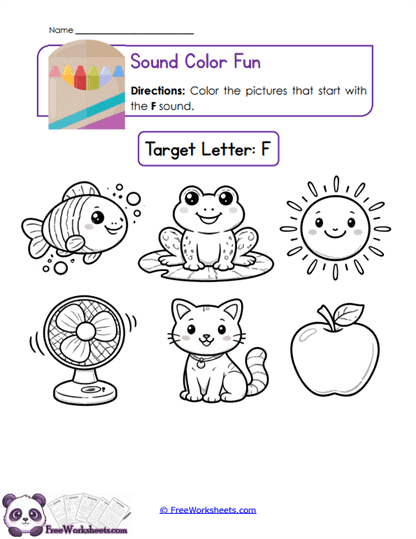
Sound Color Fun
• What Kids Do – Students color only the pictures that begin with the target sound.
• Target Skill – Reinforcing phonological awareness through sound-based categorization.
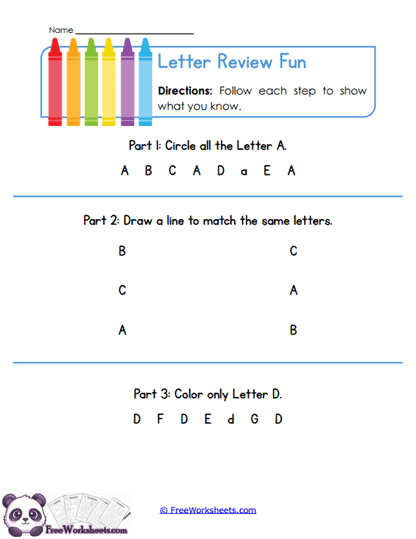
Letter Review Fun
• What Kids Do – Students complete a mix of circling, matching, and coloring tasks across multiple letters.
• Target Skill – Consolidating alphabet knowledge and supporting retrieval practice across varied tasks.