
Beginning And Ending Sounds Worksheets
Preschool Pre-Reading & Literacy Beginning And Ending Sounds worksheets help young learners recognize and isolate sounds in spoken words. These free, ready-to-print PDF worksheets are designed for immediate classroom use with no prep required. Students develop phonemic awareness, auditory discrimination, and early decoding foundations aligned to standards.
About This Collection of Worksheets
Phonemic awareness is a foundational skill in Preschool literacy development, as students begin to hear, identify, and manipulate sounds within words. Beginning and ending sound recognition is a critical early step that supports later decoding, spelling, and reading fluency. These worksheets are aligned with Common Core RF.K.2.D and build essential listening and sound isolation skills needed for future reading success.
This collection is designed for flexible use across instructional settings including morning work, phonics centers, small group instruction, RTI support, and at-home practice. Teachers can use these activities for guided practice or informal assessment of sound recognition skills. The variety of formats-sorting, circling, coloring, and matching-keeps young learners engaged while reinforcing key concepts.
Each worksheet features clear visuals, simple directions, and age-appropriate layouts to support independent and guided learning. They are designed for easy printing with minimal ink use and require little to no prep. These accessible and engaging resources make it easy to implement effective phonics instruction in any learning environment.
Paul’s Teacher Tip
When teaching beginning and ending sounds, always have students say the word aloud slowly to hear each sound clearly. Many preschoolers need help isolating sounds, so model how to stretch words like “sss-un” or “ca-t” to emphasize the target phoneme. Use gestures, such as tapping for each sound, to make the learning more concrete. For students who struggle, limit choices and focus on one sound position at a time before combining skills. Advanced learners can be challenged to identify both beginning and ending sounds in the same word. Consistent repetition and verbal practice are key to building strong phonemic awareness.
Worksheet Collection Skill Spotlights
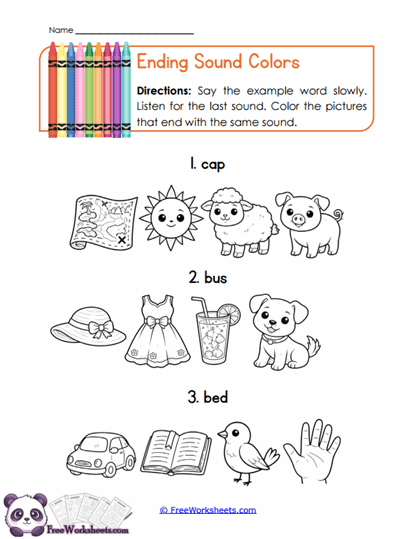
Ending Sound Colors
- What Kids Do:
Children listen to spoken words, identify the final phoneme, and shade pictures that share the same ending sound using a guided coloring activity. - Target Skill:
Strengthens phoneme isolation at the word’s end, supporting auditory processing and early spelling readiness through sound recognition.
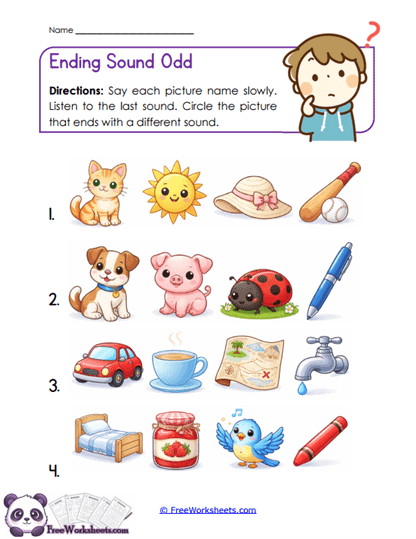
Ending Sound Odd Out
- What Kids Do:
Learners compare groups of pictured words, say each aloud, and select the image that does not share the same ending sound. - Target Skill:
Builds sound discrimination by analyzing and contrasting final phonemes, enhancing precision in listening and comparison.
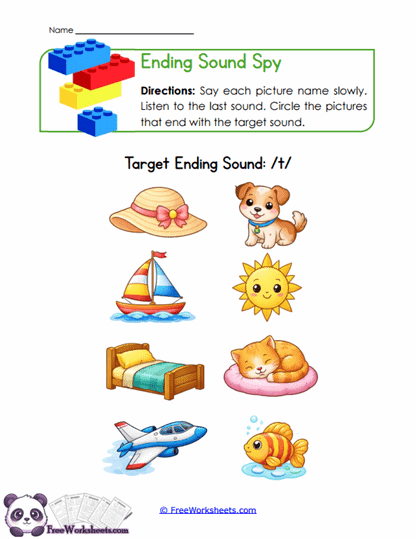
Ending Sound Spy
- What Kids Do:
Students scan a set of images, pronounce each word, and circle all items that end with a specified target sound. - Target Skill:
Develops phonological awareness by identifying consistent sound patterns in word endings through focused listening.
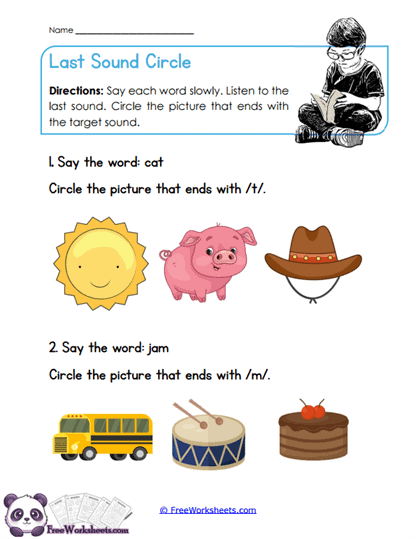
Last Sound Circle
- What Kids Do:
Children say each word, listen carefully to its last sound, and circle the picture that matches the same ending phoneme. - Target Skill:
Reinforces recognition of final sounds, supporting segmentation skills necessary for early reading development.
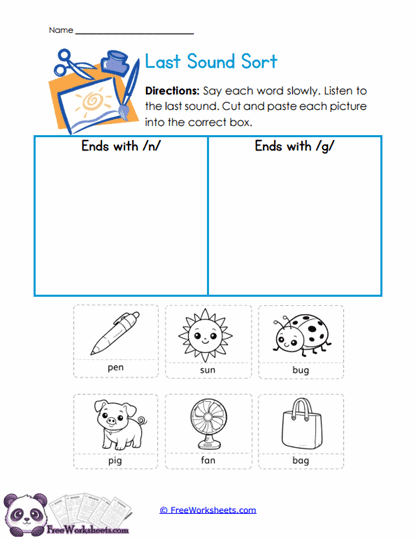
Last Sound Sort
- What Kids Do:
Students cut and categorize pictures into groups based on shared ending sounds, placing each item under the correct sound column. - Target Skill:
Enhances classification of phonemes by grouping words according to final sound patterns, strengthening auditory categorization.
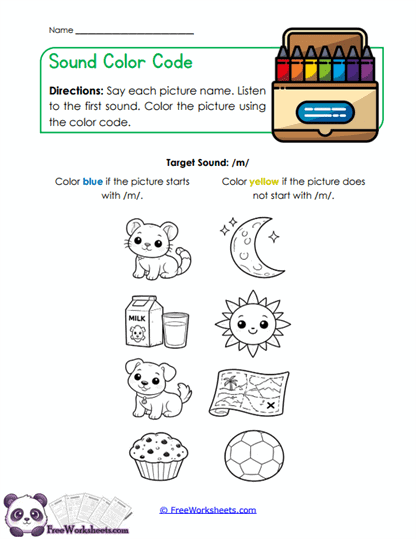
Sound Color Code
- What Kids Do:
Learners identify whether each picture begins with a target sound and apply a color-coding system to classify matching images. - Target Skill:
Supports initial sound recognition and categorization, building connections between spoken sounds and visual cues.
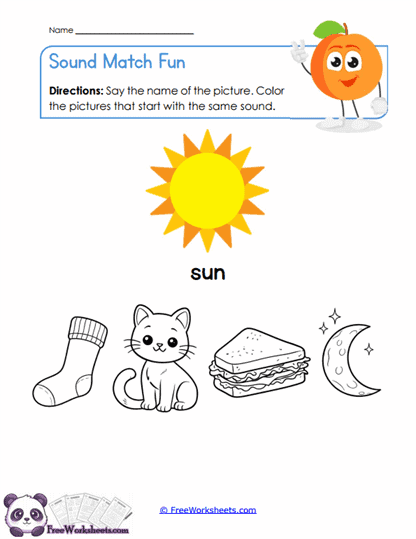
Sound Match Fun
- What Kids Do:
Students say a picture name, determine its starting sound, and match it with other images that share the same initial phoneme. - Target Skill:
Develops beginning sound identification, a key component of phonological processing and early word recognition.
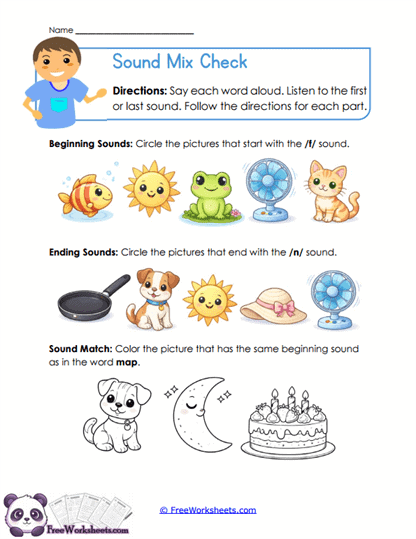
Sound Mix Check
- What Kids Do:
Children complete a variety of tasks including circling and matching pictures based on both beginning and ending sounds within words. - Target Skill:
Promotes comprehensive phonemic awareness by integrating identification of initial and final sounds in a single activity.
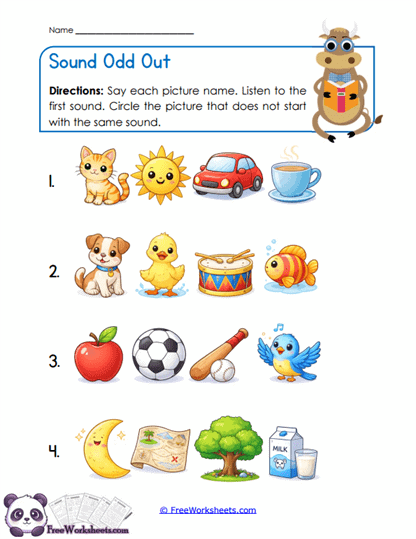
Sound Odd Out
- What Kids Do:
Students examine sets of images, pronounce each word, and identify which one has a different beginning sound from the others. - Target Skill:
Builds comparative listening skills by distinguishing between similar and contrasting initial phonemes.
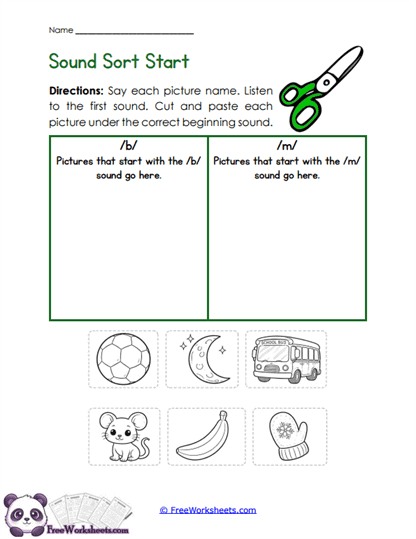
Sound Sort Start
- What Kids Do:
Learners cut and sort images into categories based on their beginning sounds, placing each under the correct heading. - Target Skill:
Strengthens sound categorization and early phonics grouping skills tied to initial phoneme recognition.
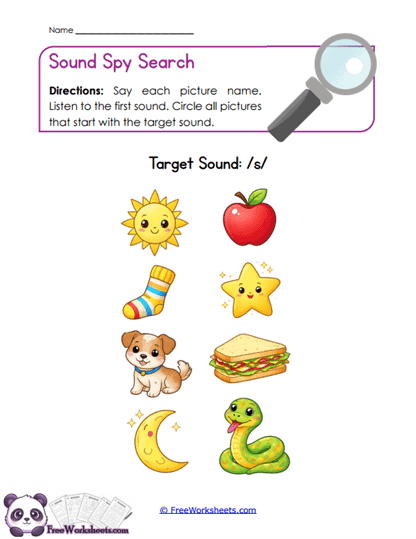
Sound Spy Search
- What Kids Do:
Students search through a collection of images, say each word aloud, and circle all pictures that start with a target sound. - Target Skill:
Enhances auditory identification and visual scanning for consistent beginning sounds across multiple words.
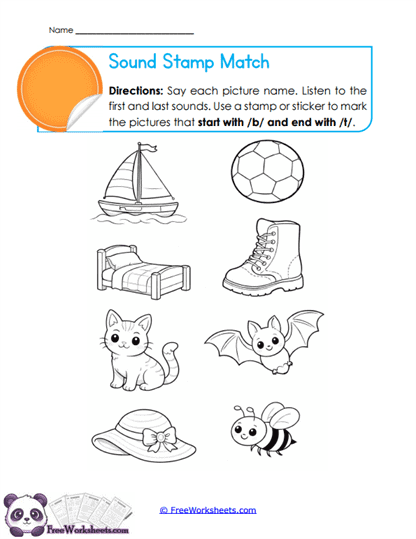
Sound Stamp Match
- What Kids Do:
Children listen for both the first and last sounds in words and use stamps or stickers to mark images that match both criteria. - Target Skill:
Advances full-word phoneme analysis by combining initial and final sound identification within a single task.