
Author's Purpose and Tone Worksheets
These worksheets help students analyze how writers shape meaning through intent, attitude, and word choice. These free, ready-to-print PDF worksheets are designed for immediate classroom use with clear directions and structured response space. Students practice identifying purpose, pinpointing precise tone words, and supporting interpretations with text evidence.
About This Collection of Worksheets
By Grade 7, students are expected to read beyond what a text says and explain how a writer’s choices shape the message for a specific audience. This collection targets that shift by focusing on author’s purpose, point of view, and tone-skills that prepare students to evaluate arguments, analyze nonfiction craft, and respond to texts with evidence. Students learn to name an author’s intent (inform, persuade, explain, entertain) and then prove how word choice, structure, and details communicate an attitude.
These worksheets fit naturally into nonfiction units, media literacy lessons, argument analysis, and test-prep routines. Use them for warm-ups on tone vocabulary, small-group close reading, independent practice, or formative assessments that require students to “pick and prove” with quotes. Several activities also bridge reading and writing by asking students to revise a passage to shift tone or purpose, reinforcing how craft choices work in real texts.
Every printable PDF is classroom-ready and designed for fast implementation. Matching charts, sentence frames, and short-response prompts keep students focused on evidence and precision without overwhelming them with extra steps. The layouts are ink-friendly, readable, and appropriate for whole-class instruction or targeted intervention.

Paul’s Teacher Tip
When teaching tone and purpose, always pair identification with explanation-students should not just name a tone word but prove it with a phrase. Start with quick warm-ups where students compare two similar tone words (like “concerned” vs. “urgent”) to build precision. During reading, have students underline words that carry emotional weight or signal intent before answering questions. For deeper practice, let students rewrite short passages and then discuss how their word choices changed the message. Over time, this helps students see tone and purpose as deliberate choices, not just labels.
Worksheet Collection Skill Spotlights
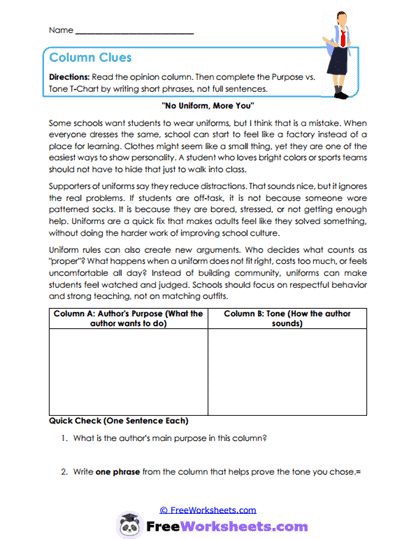
Column Clues
• What Kids Do – Students read an opinion column, identify the author’s purpose and tone, and support their choices with a quote.
• Target Skill – Builds analysis of purpose and tone using text evidence.
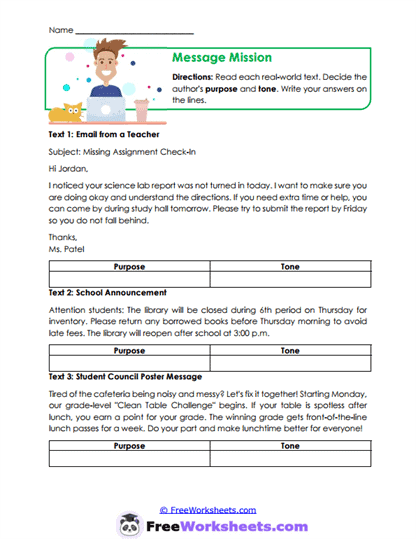
Message Mission
• What Kids Do – Students analyze real-world texts and record each one’s purpose and tone in a chart.
• Target Skill – Develops recognition of purpose and tone across everyday texts.
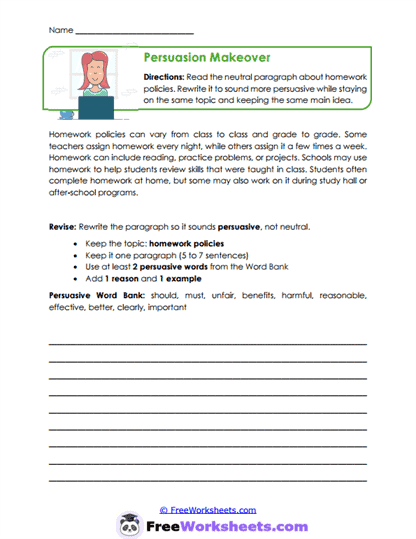
Persuasion Makeover
• What Kids Do – Students rewrite a neutral paragraph to make it persuasive by adding reasons and stronger language.
• Target Skill – Builds persuasive writing and purposeful word choice.
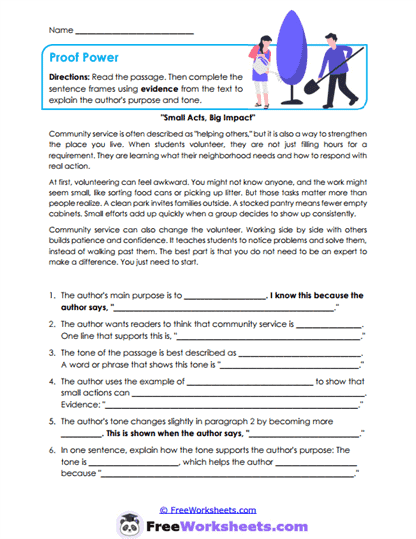
Proof Power
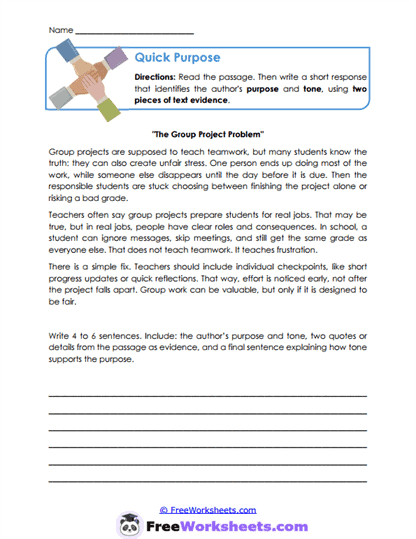
• What Kids Do – Students identify the author’s purpose and tone, then cite evidence using sentence frames.
• Target Skill – Develops evidence-based analysis of purpose and tone.
Purpose Practice
• What Kids Do – Students read short passages, identify the author’s purpose, and explain their reasoning.
• Target Skill – Builds understanding of different author purposes and justification skills.
Purpose Shift
• What Kids Do – Students rewrite a passage to change its purpose and explain how their word choices create that shift.
• Target Skill – Develops awareness of how structure and language shape purpose.
Review Rewrite
• What Kids Do – Students revise a neutral review to create a strong positive or negative tone and explain their changes.
• Target Skill – Builds tone control and understanding of word connotation.
Tone and Purpose Pairing
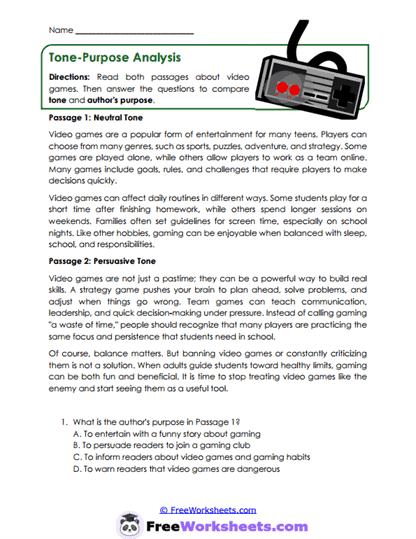
• What Kids Do – Students match each passage with a purpose and tone, then support one choice with evidence.
• Target Skill – Develops combined analysis of intent and attitude.
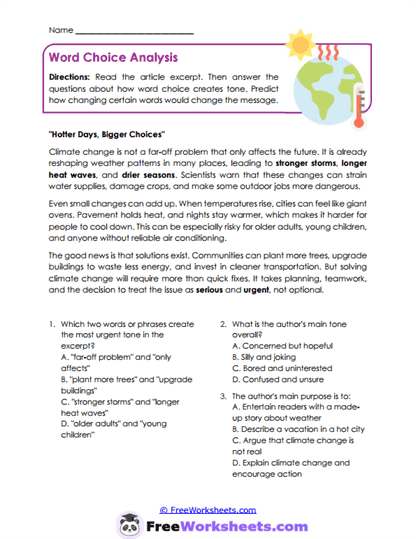
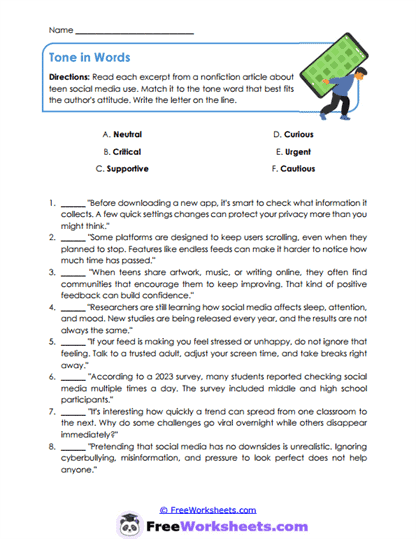
Tone in Words
• What Kids Do – Students read short excerpts and match each one to the correct tone word.
• Target Skill – Builds precision in identifying tone from word choice.
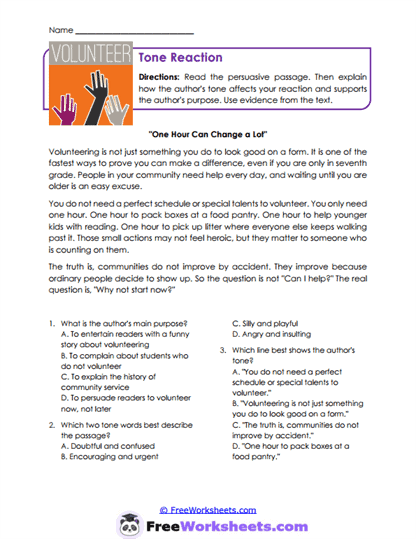
Tone Reaction
• What Kids Do – Students analyze a passage, answer questions about tone and purpose, and select supporting evidence.
• Target Skill – Develops understanding of how tone supports persuasion.
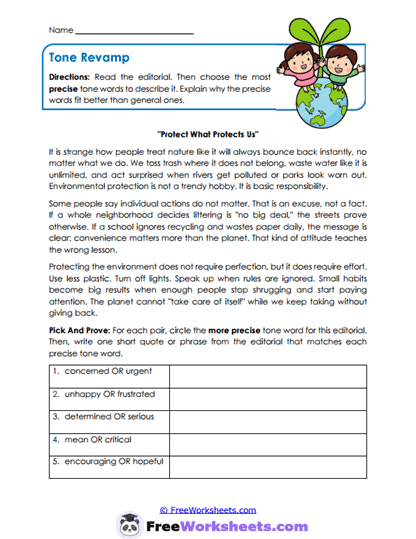
Tone Revamp
• What Kids Do – Students choose the most accurate tone word and support their choice with a quote.
• Target Skill – Builds nuanced tone analysis and attention to connotation.
Tone Tracker
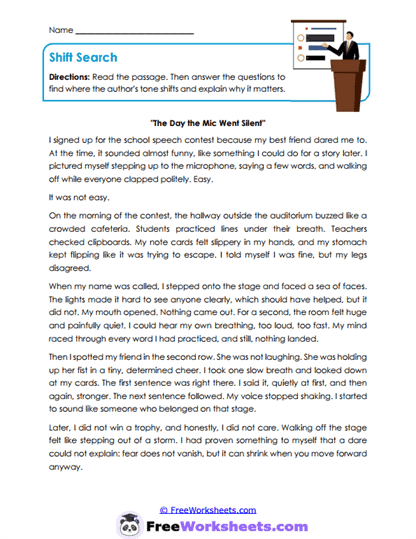
• What Kids Do – Students track tone at the beginning, middle, and end of a passage and explain how it changes.
• Target Skill – Develops analysis of tone shifts and their effect on meaning.