
About This Worksheet
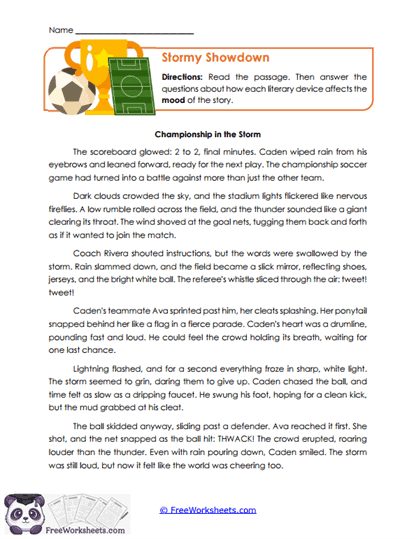
Mood analysis is a reading skill that requires students to examine how literary devices create emotional atmosphere in a text. This Grade 6 worksheet focuses on identifying imagery, simile, metaphor, and sound devices in a narrative about a soccer game played during a storm. Students analyze how descriptive language shapes tension and excitement. For example, the thunder roared louder than the crowd creates intense and dramatic mood.
Curriculum and Grade Alignment
This worksheet is designed for Grade 6 students analyzing how figurative language contributes to mood. Students should already understand common literary devices. The next progression involves comparing how different texts create contrasting moods. It aligns with Common Core Standard RL.6.4, which requires analyzing word choice and its impact on tone and mood. It also supports TEKS 6.8(A), focusing on literary elements and emotional impact in fiction.
Student Tasks
On this worksheet, students will read a narrative passage about a championship soccer game during heavy rain. They will answer questions explaining how specific literary devices influence the mood of the story. Learners cite textual evidence to support their analysis. Each response requires connecting descriptive language directly to emotional atmosphere.
Common Challenges and Misconceptions
Students may focus on identifying devices without explaining how they create mood. Some learners might confuse mood with plot events. Others may struggle to distinguish between excitement and tension in their explanations. Teachers can model how to describe the emotional effect created by imagery and sound.
Implementation Guidance
Teachers can use this worksheet during a unit on mood and tone in literature. It works well as guided practice before independent analytical writing. Parents may guide learners in discussing how certain words make the scene feel intense or thrilling. The worksheet promotes deeper understanding of author craft.
Details and Features
The worksheet includes a vivid narrative passage filled with dynamic imagery and figurative language. Structured questions guide students in analyzing mood. Clear response lines allow for complete written explanations. The printable design is suitable for classroom or homeschool instruction.