
About This Worksheet
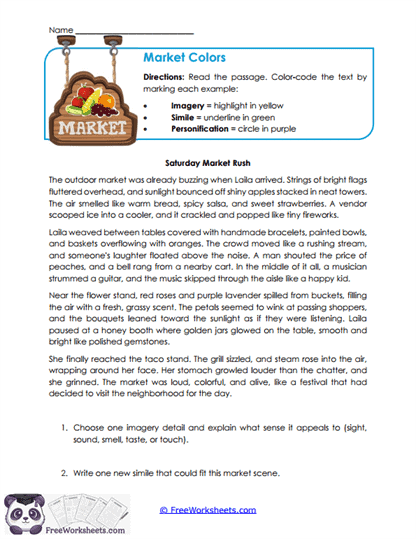
Imagery and figurative language analysis is a reading skill that requires students to identify descriptive techniques within a passage. This Grade 6 worksheet focuses on recognizing imagery, similes, and personification in a narrative about a busy market. Students color-code examples to differentiate types of figurative language. For example, the crowd moved like a rushing stream shows a simile through comparison.
Curriculum and Grade Alignment
This worksheet is designed for Grade 6 students analyzing descriptive writing techniques. Students should already understand basic figurative language terms. The next progression involves explaining how imagery appeals to the senses and contributes to tone. It aligns with Common Core Standard RL.6.4, which requires analyzing word choice and figurative language. It also supports TEKS 6.8(A), focusing on literary techniques in fiction.
Student Tasks
On this worksheet, students will read a descriptive passage about an outdoor market. They will highlight imagery in one color, underline similes, and circle personification as directed. Learners answer questions about sensory details and create an original simile related to the scene. The activity combines identification with creative application.
Common Challenges and Misconceptions
Students may confuse imagery with figurative language even though imagery can be literal description. Some learners might overlook personification if the human action is subtle. Others may struggle to identify which sense a detail appeals to. Teachers can model how to categorize descriptive phrases carefully.
Implementation Guidance
Teachers can use this worksheet during a descriptive writing unit. It works well in small groups where students compare highlighted examples. Parents may guide learners in identifying which senses are engaged in the text. The worksheet strengthens analytical and creative thinking skills.
Details and Features
The worksheet includes a vivid narrative passage with rich sensory detail. Clear color-coding directions help organize identification tasks. Follow-up questions encourage deeper analysis and creative writing. The printable format is easy to use in classroom settings.