
About This Worksheet
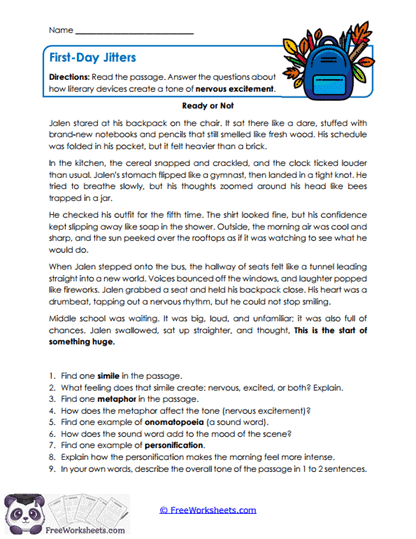
Literary device analysis is a comprehension skill that requires students to identify and interpret figurative language within a narrative. This Grade 6 worksheet focuses on analyzing simile, metaphor, onomatopoeia, and personification in a story about first-day nerves. Students examine how these devices shape mood and tone. For example, voices buzzed like dropped ice cubes shows a simile that conveys nervous energy.
Curriculum and Grade Alignment
This worksheet is designed for Grade 6 students analyzing literary craft in fiction. Students should already recognize basic figurative language types. The next progression involves explaining how devices contribute to overall theme and tone. It aligns with Common Core Standard RL.6.4, requiring analysis of word choice and figurative language impact. It also supports TEKS 6.8(A), focusing on literary elements and techniques.
Student Tasks
On this worksheet, students will read a narrative passage about a student experiencing first-day anxiety. They will identify specific examples of simile, metaphor, onomatopoeia, and personification. Learners explain how each device affects mood or tone. A final question asks them to summarize the overall mood of the passage.
Common Challenges and Misconceptions
Students may misidentify sound words as imagery rather than onomatopoeia. Some learners might explain what the device is without analyzing its effect. Others may struggle to distinguish between metaphor and simile. Teachers can guide students to connect each device directly to the emotional tone of the scene.
Implementation Guidance
Teachers can use this worksheet during a unit on mood and tone in literature. It works well as a close-reading exercise in small groups. Parents may guide discussion about how language choices reveal nervousness or excitement. The worksheet strengthens analytical reading and interpretive writing skills.
Details and Features
The worksheet includes a detailed narrative passage with varied literary devices. Nine comprehension questions guide identification and analysis. Structured response lines allow for clear written explanations. The printable format is classroom-ready.