
About This Worksheet
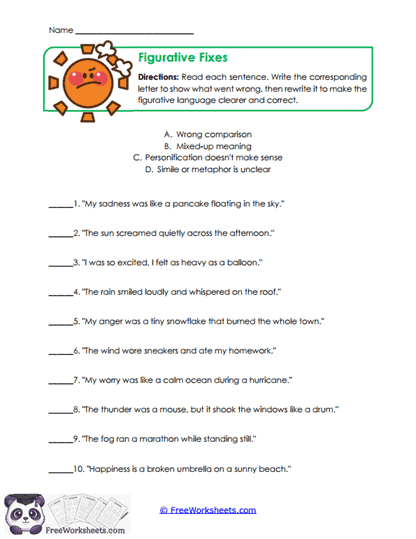
Error analysis in figurative language is a skill that requires students to identify unclear or incorrect literary devices and revise them effectively. This Grade 6 worksheet focuses on recognizing mixed metaphors, unclear comparisons, and illogical personification. Students evaluate sentences and determine what went wrong before rewriting them correctly. For example, sadness like a pancake floating in the sky shows an unclear simile that needs revision.
Curriculum and Grade Alignment
This worksheet is designed for Grade 6 students refining their understanding of figurative language accuracy. Students should already recognize common literary devices. The next progression involves evaluating author craft and improving their own writing for clarity. It aligns with Common Core Standard L.6.5, which requires demonstrating understanding of figurative language. It also supports TEKS 6.11(D), focusing on revising writing for clarity and effectiveness.
Student Tasks
On this worksheet, students will read ten sentences containing figurative language errors. They will select the correct letter describing the problem, such as mixed meaning or unclear simile. Learners then rewrite each sentence to make the figurative language clearer and more logical. The activity requires critical evaluation and creative revision.
Common Challenges and Misconceptions
Students may struggle to identify why a figurative example does not make sense. Some learners might correct grammar instead of focusing on figurative clarity. Others may revise sentences without fully resolving the logical issue. Teachers can model how to test whether the comparison makes realistic sense.
Implementation Guidance
Teachers can use this worksheet during a revision-focused writing lesson. It works well as practice before peer editing sessions. Parents may guide students in explaining why a comparison is confusing before rewriting it. The worksheet strengthens editing and analytical skills.
Details and Features
The worksheet includes ten flawed figurative sentences with multiple-choice error categories. Clear directions guide both identification and revision tasks. Structured response lines provide space for corrected sentences. The format is classroom-ready and easy to grade.