
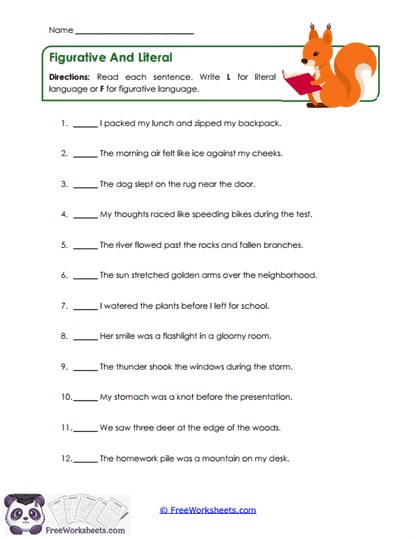
About This Worksheet
Distinguishing between literal and figurative language is a comprehension skill that requires students to recognize when words are used exactly as stated or symbolically. This Grade 6 worksheet focuses on identifying whether each sentence should be labeled literal or figurative. Students analyze meaning and determine whether the language describes a real action or a comparison. For example, my stomach was a knot is figurative because it expresses nervousness rather than a real knot.
Curriculum and Grade Alignment
This worksheet is designed for Grade 6 students refining their understanding of figurative language. Students should already recognize similes and metaphors in context. The next progression involves analyzing how figurative language contributes to theme or tone. It aligns with Common Core Standard RL.6.4, which requires interpreting figurative language in text. It also supports TEKS 6.8(A), focusing on distinguishing literal and figurative meanings.
Student Tasks
On this worksheet, students will read twelve sentences containing both literal and figurative expressions. They will label each sentence with L for literal or F for figurative. Learners must carefully consider context to determine whether the sentence describes an actual event or uses symbolic meaning. The activity promotes close attention to word choice.
Common Challenges and Misconceptions
Students may misidentify figurative language when it resembles a realistic situation. Some learners might assume all vivid descriptions are figurative. Others may struggle with subtle metaphors that do not use comparison words. Teachers can model how to ask whether the statement could literally happen.
Implementation Guidance
Teachers can use this worksheet as introductory practice in a figurative language unit. It works well before students begin analyzing poetry or narrative prose. Parents may guide students in discussing why certain sentences cannot be interpreted literally. The worksheet strengthens critical reading and interpretation skills.
Details and Features
The worksheet includes twelve clearly written sentences with varied examples. Simple labeling directions make expectations clear. The layout provides space for easy marking and quick grading. The printable format is suitable for classroom or homeschool use.