
Literary Devices Worksheets
These worksheets build close-reading skills by helping students identify and analyze figurative language and author craft. These free, ready-to-print PDF worksheets are designed for immediate classroom use with clear directions and organized response spaces. Students practice skills like interpreting figurative language, analyzing word choice and mood, and comparing how authors use devices across texts.
About This Collection of Worksheets
In Grade 6, students move beyond spotting figurative language to explaining how an author’s choices shape meaning, tone, and emotional impact. This collection supports that progression by targeting Common Core-aligned analysis of word choice, imagery, comparisons, and sound devices, helping students interpret both literal and figurative meanings in context. As students become more proficient, they learn to connect devices to mood, character development, and overall message rather than treating devices as isolated labels.
These worksheets work well for mini-lessons, literacy centers, small-group instruction, independent practice, and quick assessment checks. Many activities are ideal for warm-ups or exit tickets because they focus on a single skill set (like device identification or literal vs. figurative meaning), while others support deeper analysis through short responses and text-based explanations. Teachers can also use the writing-focused pages during revision units to help students apply figurative language intentionally.
Each printable PDF is designed to be ink-friendly, easy to read, and low-prep for busy classrooms. Clear marking directions, consistent formatting, and ample space for written responses support accessibility for a range of learners. Whether students are highlighting examples, answering analysis questions, or revising sentences, the layouts keep the focus on evidence-based thinking.
Paul’s Teacher Tip
Start by modeling how to move beyond “I found a simile” to “This simile shows…” so students connect devices to meaning. Use quick daily warm-ups where students rewrite one plain sentence to build confidence with figurative language. For support, provide a few strong examples and let students mimic the structure before creating their own. During discussion, ask students which description feels more vivid and why to build comparison skills. Over time, encourage students to intentionally add figurative language to their own writing during revision, not just identify it in reading.
Worksheet Collection Skill Spotlights
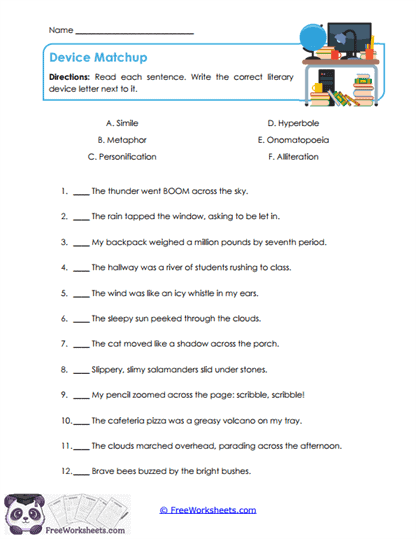
Device Matchup
• What Kids Do – Students read short sentences and match each one to the correct literary device.
• Target Skill – Builds identification of figurative and sound devices.
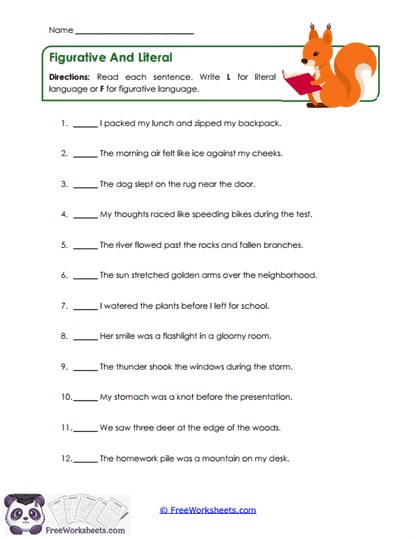
Figurative And Literal
• What Kids Do – Students label sentences as literal or figurative based on meaning.
• Target Skill – Develops understanding of literal vs. figurative language.
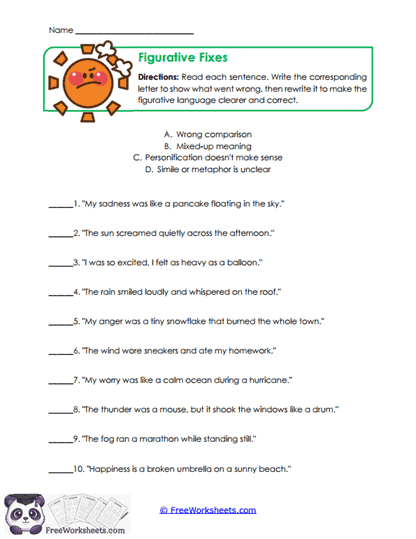
Figurative Fixes
• What Kids Do – Students identify problems in figurative language and rewrite sentences to improve clarity.
• Target Skill – Builds revision skills and accurate use of figurative language.
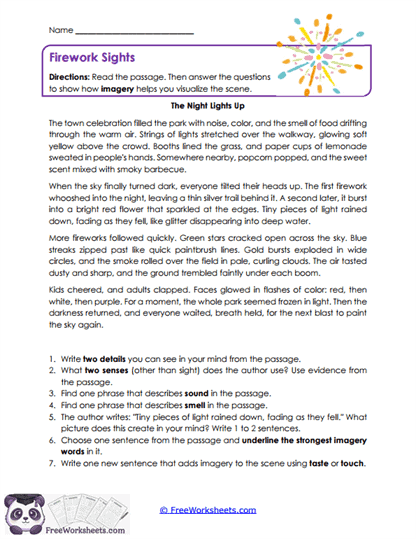
Firework Sights
• What Kids Do – Students read a passage, identify sensory details, and write their own imagery sentence.
• Target Skill – Develops imagery analysis and descriptive writing.
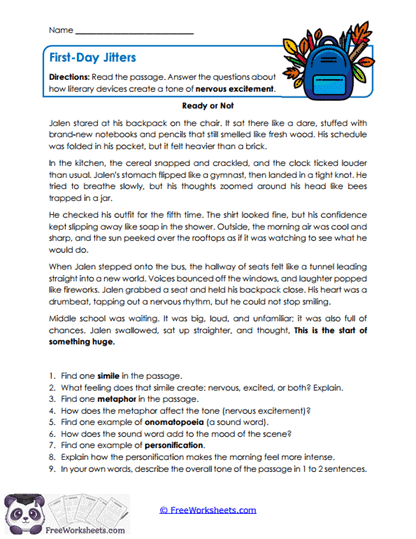
First-Day Jitters
• What Kids Do – Students identify literary devices in a passage and explain how they affect mood.
• Target Skill – Builds analysis of figurative language and tone.
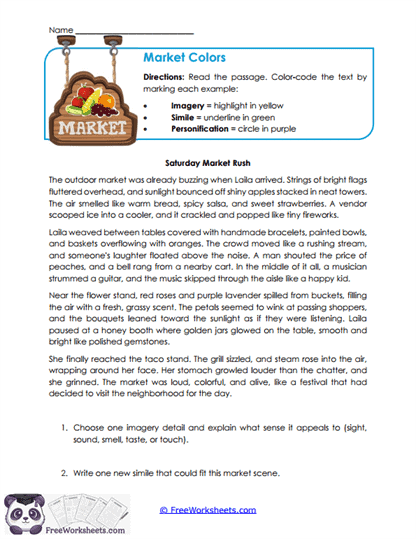
Market Colors
• What Kids Do – Students color-code imagery and figurative language in a passage and answer questions about sensory details.
• Target Skill – Develops differentiation between imagery and figurative language.
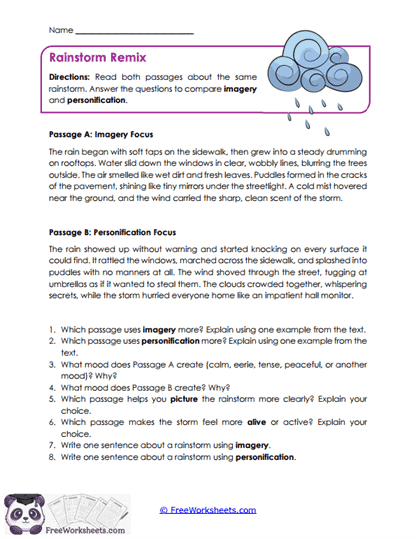
Rainstorm Remix
• What Kids Do – Students compare two passages and analyze how literary devices create different moods.
• Target Skill – Builds comparison of author’s craft and mood development.
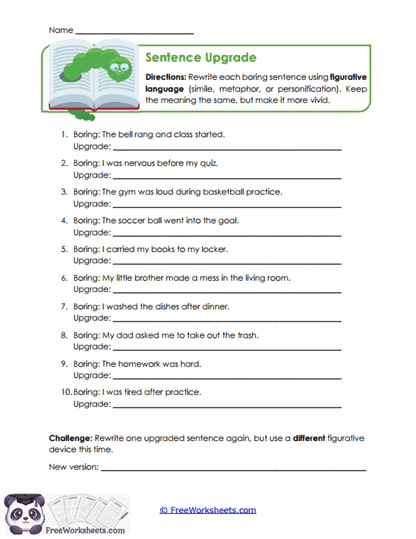
Sentence Upgrade
• What Kids Do – Students rewrite simple sentences using simile, metaphor, or personification.
• Target Skill – Develops application of figurative language in writing.
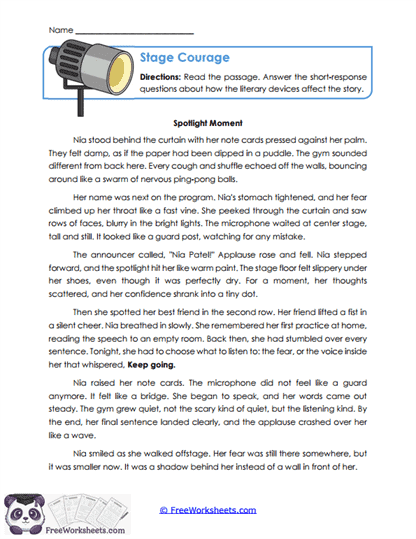
Stage Courage
• What Kids Do – Students analyze a narrative and explain how figurative language reveals character emotions.
• Target Skill – Builds connection between literary devices and character development.
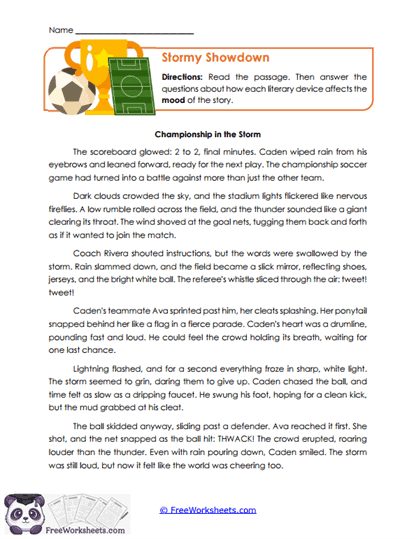
Stormy Showdown
• What Kids Do – Students identify literary devices in a passage and explain how they create mood.
• Target Skill – Develops mood analysis using textual evidence.
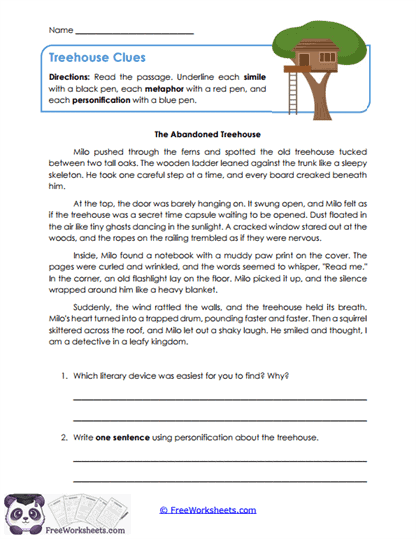
Treehouse Clues
• What Kids Do – Students locate similes, metaphors, and personification in a passage and create their own example.
• Target Skill – Builds identification and creation of figurative language.
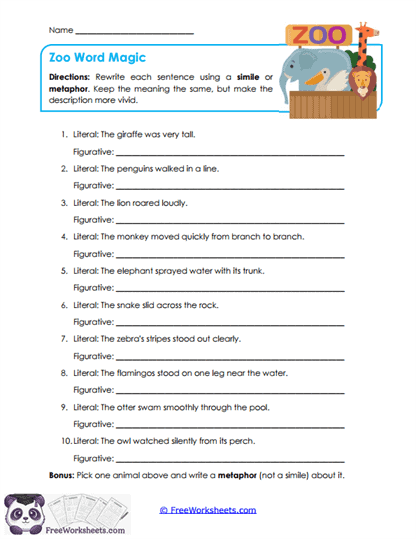
Zoo Word Magic
• What Kids Do – Students rewrite sentences using similes or metaphors to make descriptions more vivid.
• Target Skill – Develops descriptive writing using figurative language.