
About This Worksheet
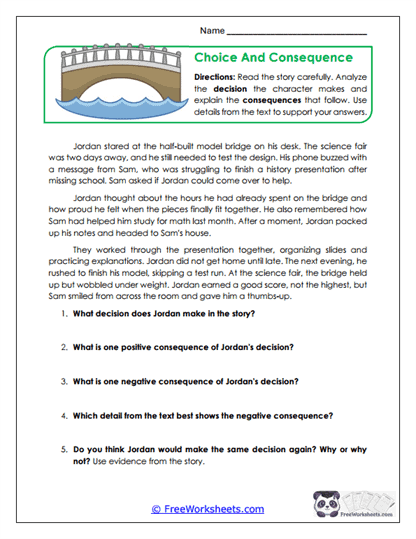
Analyzing character decisions is a reading skill that requires students to examine how choices lead to consequences in a story. This Grade 5 worksheet focuses on evaluating both positive and negative outcomes of a character’s actions. Students analyze how decisions affect relationships and results. For example, helping a friend leads to a lower score but strengthens trust.
Curriculum and Grade Alignment
This worksheet is designed for Grade 5 students developing skills in literary analysis. Students should already understand plot and character motivation. The next progression involves analyzing complex character conflicts across longer texts. It aligns with Common Core Standard RL.5.3, which requires comparing and contrasting characters and events. It also supports TEKS 5.7(B), focusing on character development and consequences.
Student Tasks
On this worksheet, students will read a narrative about a student choosing to help a friend before a science fair. They will identify the main decision made in the story. Learners explain one positive and one negative consequence of that decision. Additional questions require citing evidence and evaluating whether the character would make the same choice again.
Common Challenges and Misconceptions
Students may confuse outcomes with unrelated events in the story. Some learners might provide personal opinions without referencing text evidence. Others may struggle to identify both positive and negative consequences. Teachers can guide students in tracing cause-and-effect relationships within the plot.
Implementation Guidance
Teachers can use this worksheet during lessons on character analysis and theme. It works well as a discussion starter about responsibility and friendship. Parents may encourage reflection on real-life decision-making connections. The worksheet reinforces evidence-based literary analysis skills.
Details and Features
The worksheet includes a narrative passage and five comprehension questions. Prompts require evidence-based reasoning and thoughtful explanation. Ample writing space supports complete answers. The layout is clean, printable, and classroom-ready.