
Sensory Details Worksheets
Grade 5 Reading Sensory Details worksheets help students understand how descriptive language engages the five senses to create vivid imagery. These free, ready-to-print PDF worksheets are designed for immediate classroom use and structured skill practice. Students develop visualization, descriptive analysis, and evidence-based comprehension skills aligned with Common Core standards.
About This Collection of Worksheets
Sensory details play a key role in Grade 5 reading and writing, helping students move beyond basic comprehension to deeper visualization and interpretation. These worksheets support Common Core standards by guiding learners to identify language connected to sight, sound, smell, taste, and touch, and explain how those details enhance meaning. This skill strengthens both reading comprehension and descriptive writing.
This collection is ideal for use in guided reading, writing workshops, homework, literacy centers, and small group instruction. Teachers can also use these activities for RTI support or formative assessments to evaluate students’ ability to analyze and apply descriptive language. The variety of engaging, real-world scenarios keeps students motivated while reinforcing essential literacy skills.
Each worksheet is designed with clean layouts and minimal ink usage, making them easy to print and use in both classroom and home environments. The activities are structured, accessible, and low-prep, allowing educators to focus on meaningful instruction and discussion.
Paul’s Teacher Tip
When teaching sensory details, encourage students to ask, “What can I see, hear, smell, taste, or feel?” Many students can identify descriptive words but may not connect them to a specific sense. Model how to categorize details and explain their impact on the reader. For struggling learners, focus on one sense at a time. For advanced learners, challenge them to explain how multiple sensory details work together to create mood and imagery.
Worksheet Collection Skill Spotlights
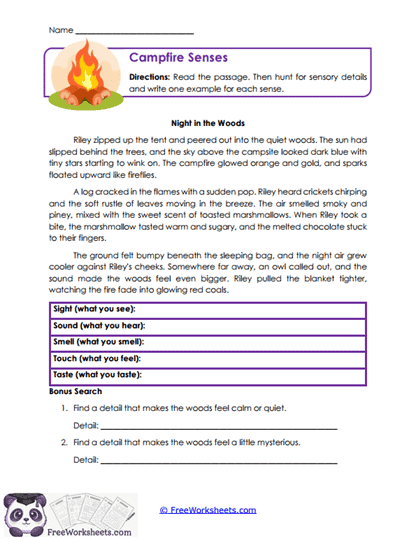
Campfire Senses
- What Kids Do:
Students read a passage and identify one example for each of the five senses using text evidence. - Target Skill:
Builds comprehension by connecting descriptive language to specific sensory categories.
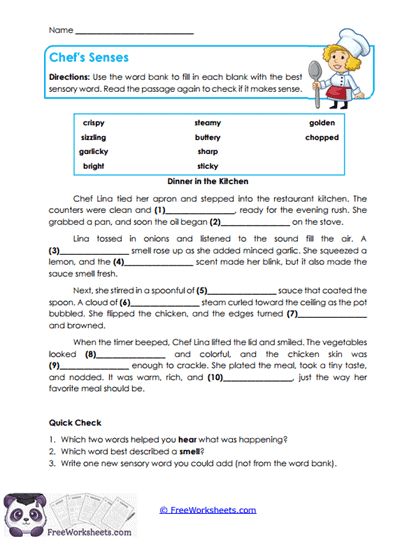
Chef’s Senses
- What Kids Do:
Learners complete a passage by selecting appropriate sensory words from a word bank. - Target Skill:
Strengthens vocabulary and context skills by choosing descriptive words that fit meaning.
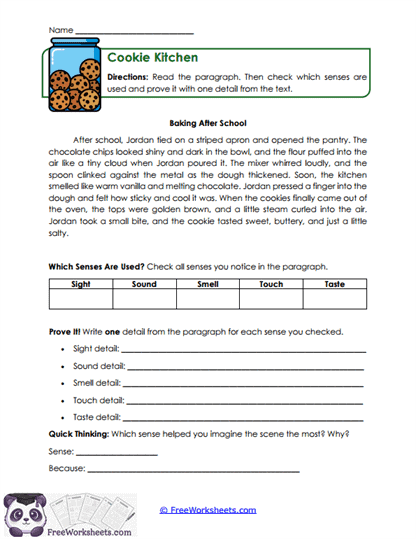
Cookie Kitchen
- What Kids Do:
Students identify which senses are present in a passage and provide supporting examples. - Target Skill:
Enhances evidence-based reading by linking sensory details to textual support.
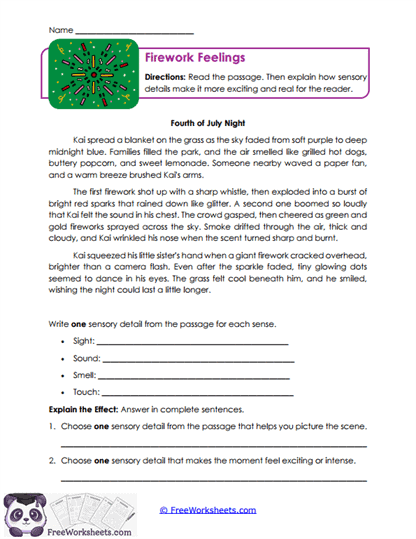
Firework Feelings
- What Kids Do:
Learners identify sensory details in a passage and explain how they increase excitement and intensity. - Target Skill:
Develops deeper analysis by connecting description to mood and emotional impact.
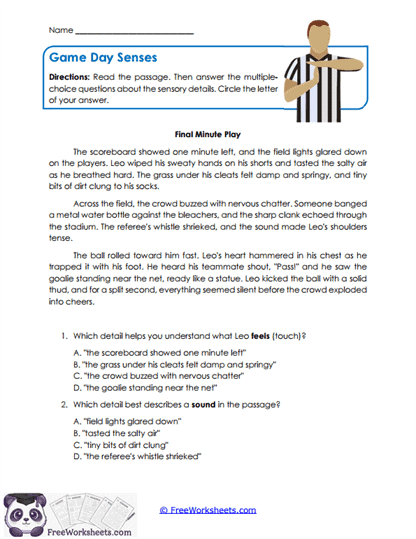
Game Day Senses
- What Kids Do:
Students read a passage and answer multiple-choice questions focused on sensory details. - Target Skill:
Builds comprehension by identifying descriptive language within context.
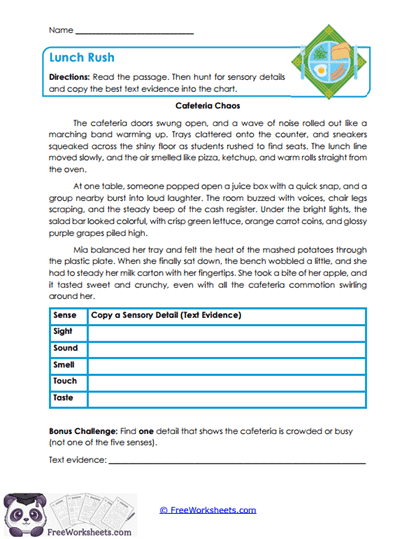
Lunch Rush
- What Kids Do:
Learners locate and record sensory details from a passage in a structured chart. - Target Skill:
Improves close reading by extracting and organizing vivid descriptions.
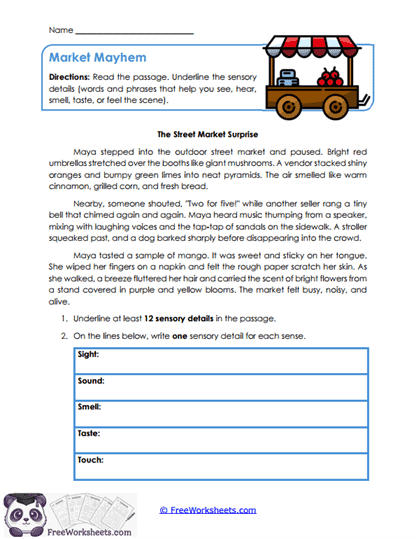
Market Mayhem
- What Kids Do:
Students underline sensory details and sort them into categories for each sense. - Target Skill:
Strengthens classification and visualization skills through detailed analysis.
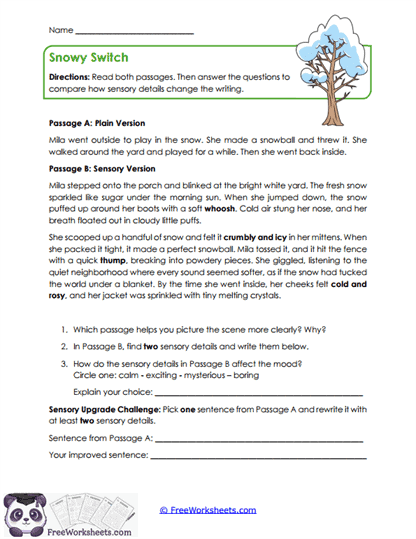
Snowy Switch
- What Kids Do:
Learners compare two passages and evaluate how sensory details improve imagery and clarity. - Target Skill:
Builds analytical thinking by examining the impact of descriptive language.
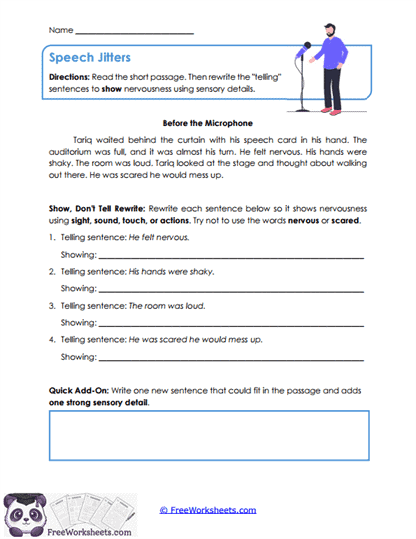
Speech Jitters
- What Kids Do:
Students rewrite sentences to replace telling statements with sensory-based descriptions. - Target Skill:
Enhances writing skills by using sensory details to show emotions and actions.
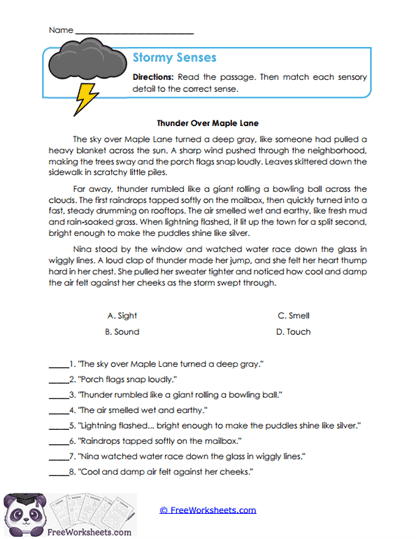
Stormy Senses
- What Kids Do:
Learners match descriptive phrases to the correct sense based on a passage. - Target Skill:
Develops understanding of how sensory language connects to imagery.
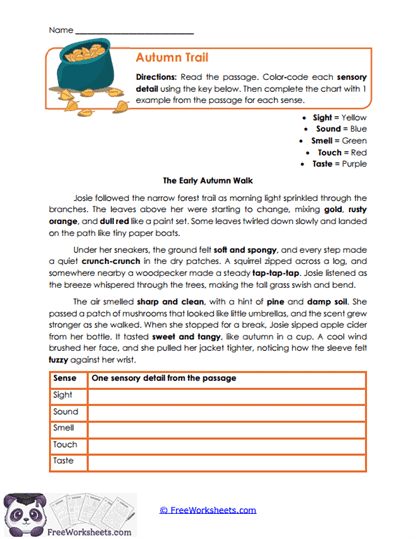
Autumn Trail
- What Kids Do:
Students color-code and organize sensory details from a passage into categories. - Target Skill:
Builds organization and visualization by grouping descriptive details.
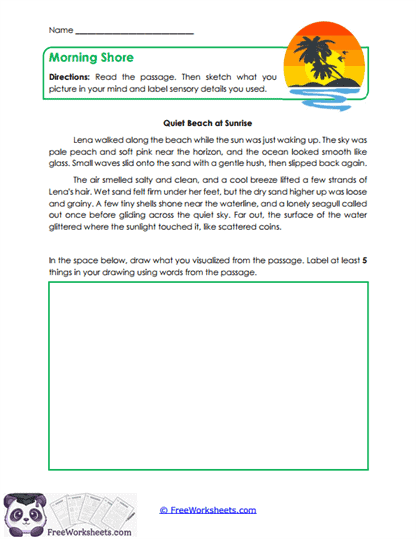
Morning Shore
- What Kids Do:
Learners read a passage and create a drawing based on sensory details, labeling elements from the text. - Target Skill:
Strengthens visualization by translating descriptive language into visual representation.