
Author's Perspective Worksheets
These worksheets help readers identify what an author believes, how they try to influence the reader, and which sentences reveal opinion, bias, or purpose. Students practice separating fact from opinion, analyzing persuasive language, comparing viewpoints across texts, and citing strong evidence-perfect for nonfiction units, media literacy, and argument analysis.
About This Collection of Worksheets
By Grade 5, students are expected to read informational and persuasive texts with a critical eye. They must determine an author’s point of view, explain how language reveals perspective, and evaluate how reasons and evidence support claims. This collection builds those skills through high-interest topics (school policies, technology, conservation, space exploration) and varied formats that require both selection and explanation.
Many activities explicitly teach students to hunt for “signal phrases” (such as I believe, in my opinion, should) and to notice how tone changes when an author shifts from neutral information to persuasion. Students also practice recognizing when a text includes counterarguments, and they learn that acknowledging the other side does not always mean the author is neutral. Across the set, the consistent expectation is: state the topic → identify the author’s stance → prove it with text evidence.
These worksheets work well in small groups, debate units, and writing workshops because they mirror the skills students need for opinion writing-understanding claims, reasons, and evidence. They also support test readiness by strengthening students’ ability to infer perspective from word choice, identify bias, and compare two authors’ views on the same topic.
Paul’s Teacher Tip
When teaching perspective, consistently push students to answer two questions: “What does the author think?” and “How do you know?” Have students underline or highlight key phrases that reveal opinion or attitude before answering. For deeper understanding, let students compare two passages and debate which author is more convincing and why. You can also model how small word changes (like “must” vs. “might”) shift tone and meaning. Over time, this helps students see perspective as something authors build intentionally-not something readers guess.
Worksheet Collection Skill Spotlights
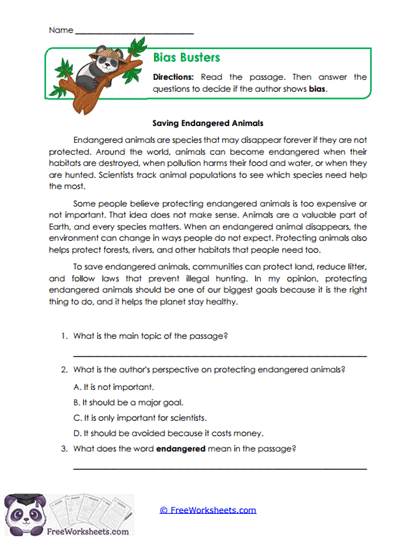
Bias Busters
• What Kids Do – Students read a passage, identify the author’s stance, and analyze word choices to decide if bias is present.
• Target Skill – Builds detection of bias and analysis of perspective through language.
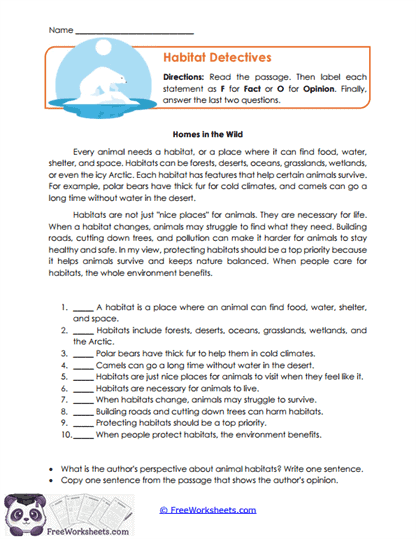
Habitat Detectives
• What Kids Do – Students label statements as fact or opinion and identify a sentence that reveals the author’s viewpoint.
• Target Skill – Develops fact vs. opinion skills and perspective identification.
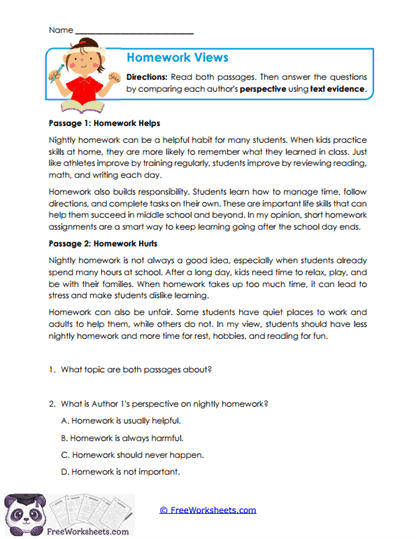
Homework Views
• What Kids Do – Students read two passages and compare each author’s stance using evidence from both texts.
• Target Skill – Builds comparison of perspectives across texts.
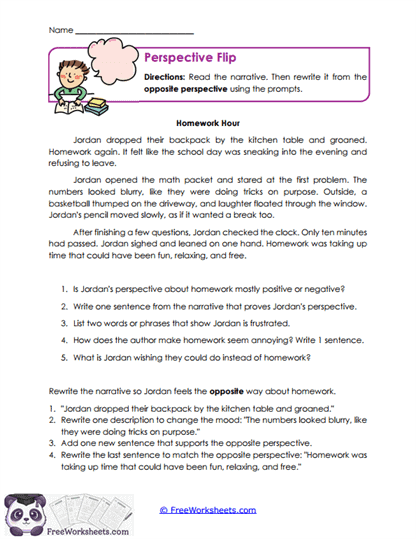
Perspective Flip
• What Kids Do – Students identify tone in a passage and rewrite it to reflect the opposite perspective.
• Target Skill – Develops understanding of tone and how word choice shapes perspective.
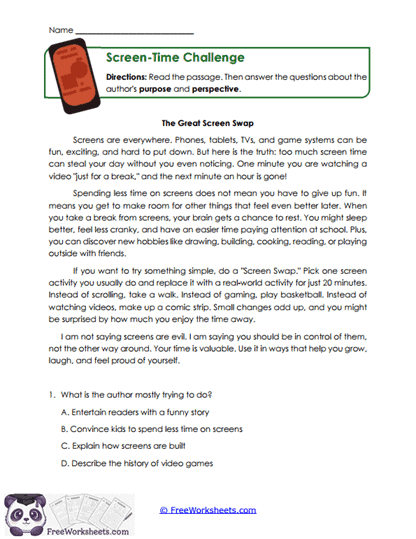
Screen-Time Challenge
• What Kids Do – Students determine the author’s purpose and explain the author’s viewpoint using evidence.
• Target Skill – Builds connection between author’s purpose and perspective.
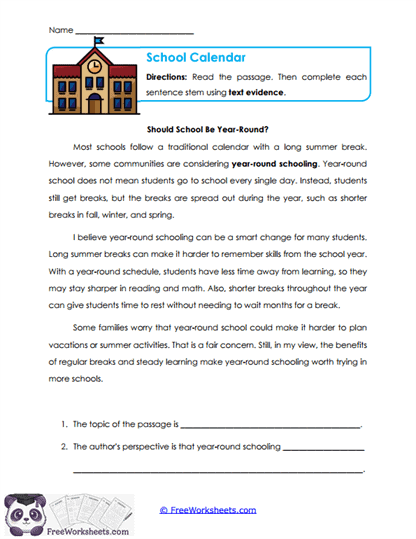
School Calendar
• What Kids Do – Students identify the author’s stance and support it with evidence, even when counterarguments are included.
• Target Skill – Develops analysis of perspective in texts with counterclaims.
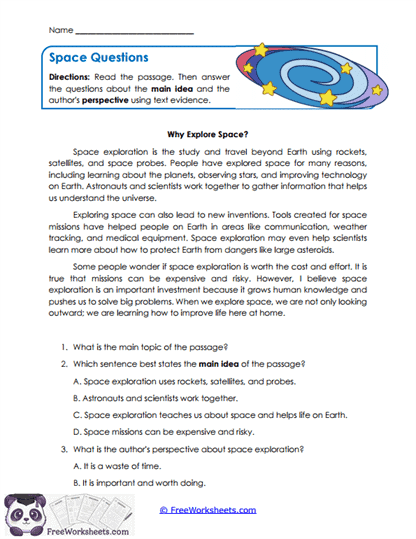
Space Questions
• What Kids Do – Students identify the main idea and determine the author’s stance using supporting details.
• Target Skill – Builds distinction between central idea and author perspective.
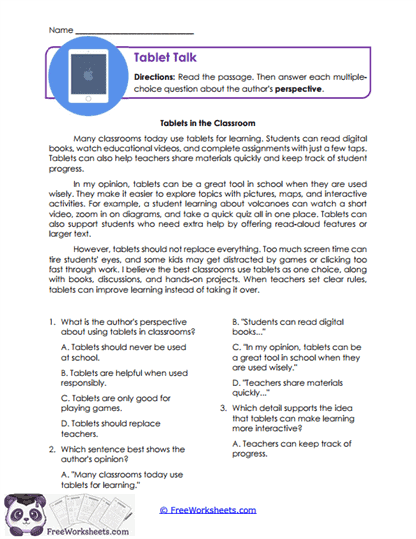
Tablet Talk
• What Kids Do – Students analyze a balanced passage and identify which details reveal the author’s true viewpoint.
• Target Skill – Develops recognition of subtle perspective in balanced texts.
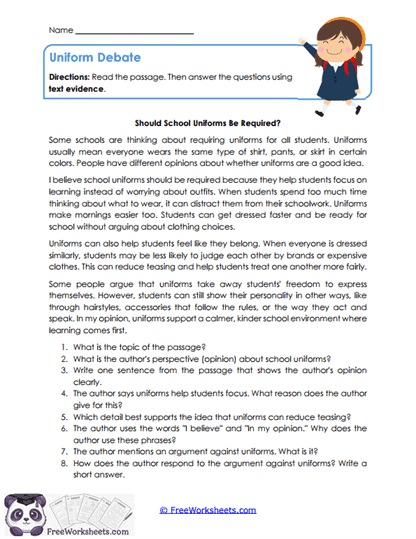
Uniform Debate
• What Kids Do – Students identify the author’s opinion and cite phrases that show persuasive language and bias.
• Target Skill – Builds analysis of persuasive techniques and stance.
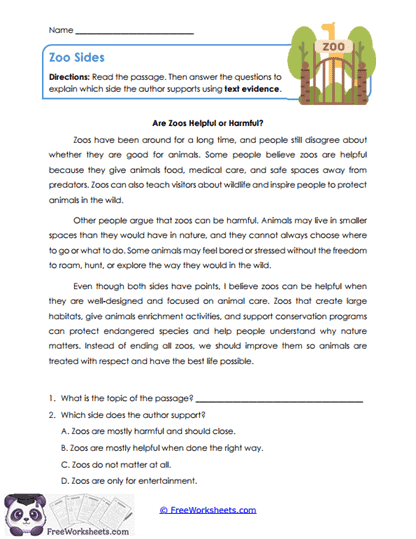
Zoo Sides
• What Kids Do – Students determine which side the author supports in a balanced argument and select the strongest supporting evidence.
• Target Skill – Develops evaluation of argument and identification of author position.
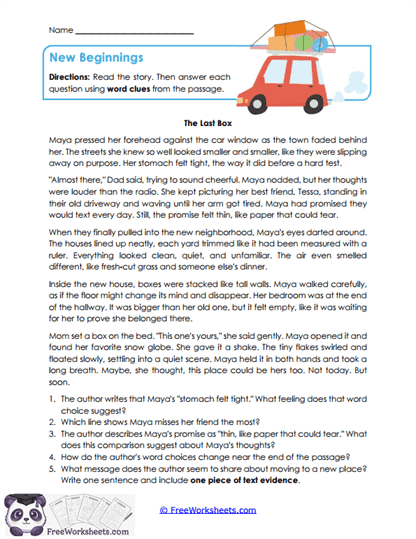
New Beginnings
• What Kids Do – Students read a narrative and identify phrases that reveal the character’s feelings and perspective.
• Target Skill – Builds inference of perspective through descriptive language.
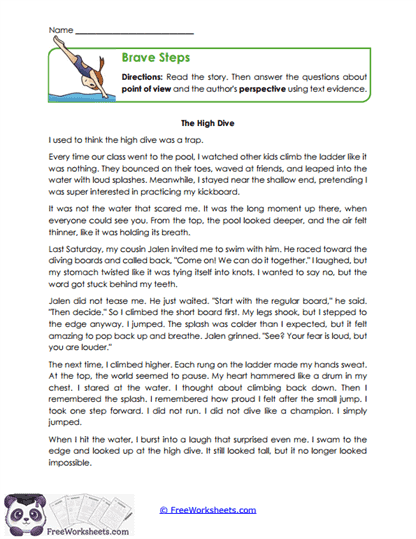
Brave Steps
• What Kids Do – Students track how a narrator’s feelings change over time and support it with evidence.
• Target Skill – Develops analysis of changing perspective in a narrative.