
Visual Elements Worksheets
Grade 4 Reading Visual Elements worksheets help students interpret images, graphics, and text features to deepen comprehension and meaning. These free, ready-to-print PDF worksheets are designed for immediate classroom use with no prep required. Students strengthen inference, evidence analysis, and visual-text integration skills aligned to Common Core standards.
About This Collection of Worksheets
Visual literacy is a critical component of reading development in Grade 4, as students move beyond basic comprehension into deeper analysis of how images and text work together. These Visual Elements worksheets support Common Core standards by helping students interpret illustrations, analyze details, and draw meaningful conclusions from visual information. This skill progression prepares learners for more advanced informational and literary analysis tasks.
This collection is highly versatile and can be used across multiple instructional settings, including morning work, homework assignments, RTI support, literacy centers, and small group instruction. Teachers can also use these worksheets as formative assessments to evaluate students’ ability to integrate visual and textual information. The variety of activities ensures engagement while targeting essential comprehension strategies.
Each worksheet is designed with clean layouts for high-quality printing and ink efficiency, making them ideal for repeated classroom use. The accessible format ensures all learners can participate, while the low-prep structure allows teachers to implement lessons quickly and effectively. These resources support both structured instruction and independent practice.
Paul’s Teacher Tip
When teaching visual elements, model your thinking out loud so students understand how to move from observation to interpretation. Many students can describe what they see but struggle to explain what it means, so explicitly connect details to conclusions using sentence frames like “This shows… because…”. Encourage students to support every answer with evidence from the image, not just prior knowledge or guesses. For differentiation, provide guided questions or partially completed examples for struggling learners while challenging advanced students to analyze multiple clues together. Repeated exposure to different types of visuals-photos, diagrams, and illustrations-helps build confidence and transfer skills across contexts.
Worksheet Collection Skill Spotlights
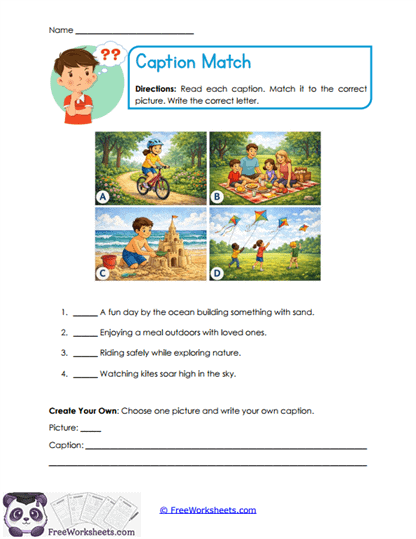
Caption Match
- What Kids Do:
Students pair descriptive captions with corresponding images by examining visual cues such as setting, actions, and objects, then compose an original caption based on observed details. - Target Skill:
Develops the ability to interpret image-text relationships while strengthening contextual understanding and descriptive writing aligned to informational text features.
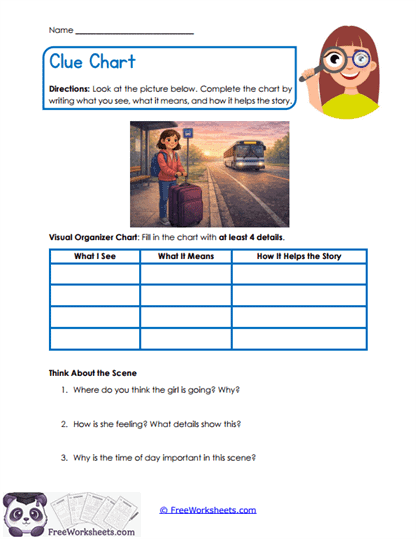
Clue Chart
- What Kids Do:
Learners complete a structured organizer by recording observed details, interpreting their meaning, and explaining how each clue contributes to a developing narrative. - Target Skill:
Builds inferential reasoning by connecting visual evidence to conclusions, supporting deeper analytical thinking and evidence-based interpretation.
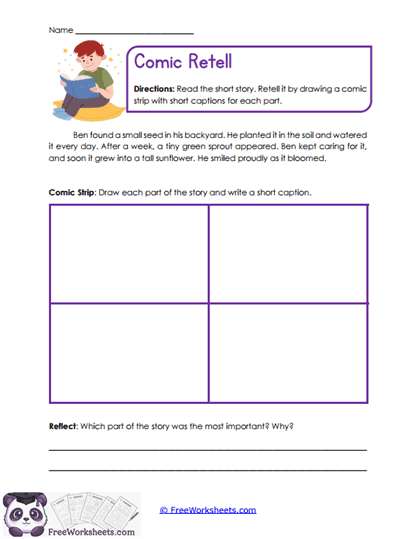
Comic Retell
- What Kids Do:
Students transform a short passage into sequential comic panels, illustrating key events and adding concise captions to represent each stage of the story. - Target Skill:
Enhances sequencing and summarization through multimodal representation, reinforcing understanding of narrative structure and event progression.
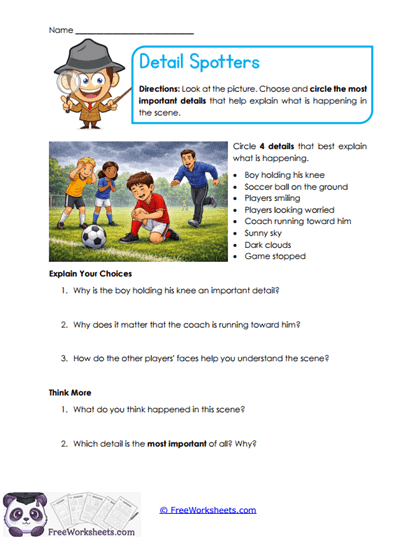
Detail Spotters
- What Kids Do:
Students examine a detailed scene and identify the most important elements by selecting relevant details and explaining their significance within the context. - Target Skill:
Strengthens the ability to distinguish critical information from minor details, supporting close reading and prioritization of key evidence.
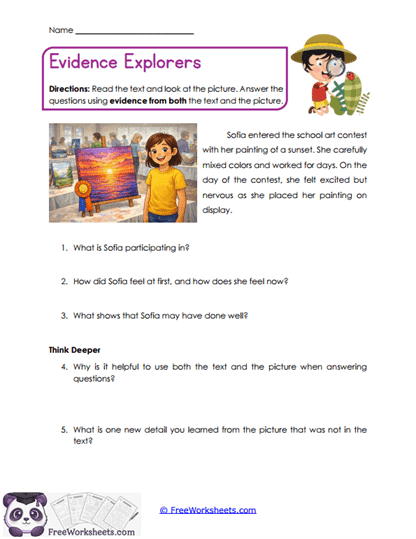
Evidence Explorers
- What Kids Do:
Learners analyze a passage alongside an illustration and respond to questions that require combining written and visual information to justify their answers. - Target Skill:
Promotes synthesis of multiple sources by integrating textual and visual evidence to support reasoning and comprehension.
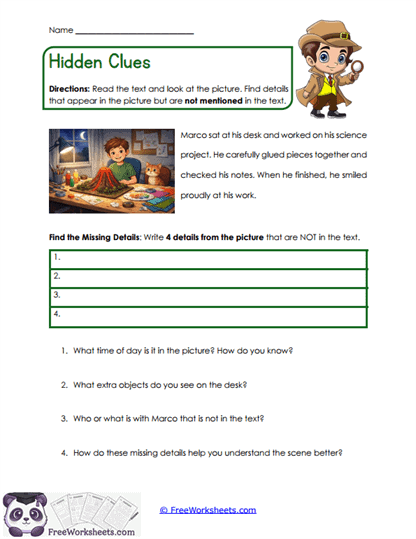
Hidden Clues
- What Kids Do:
Students compare a written passage with an image to identify additional details present only in the visual, then answer questions based on those discoveries. - Target Skill:
Develops skills in identifying supplementary information from visuals, reinforcing the ability to expand understanding beyond the written text.
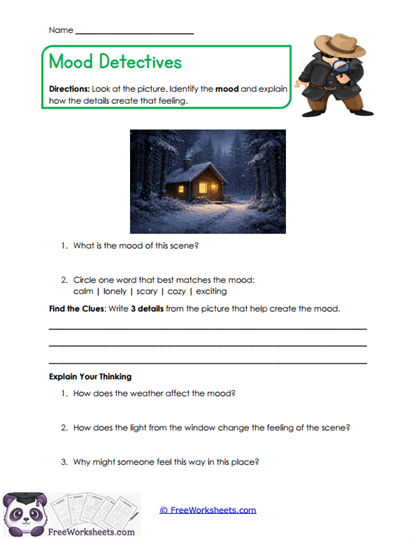
Mood Detectives
- What Kids Do:
Students analyze an image’s atmosphere by selecting a mood word and supporting their choice with specific visual elements like lighting and environment. - Target Skill:
Builds interpretation of tone by connecting visual features to emotional impact, enhancing analytical reading of mood and atmosphere.
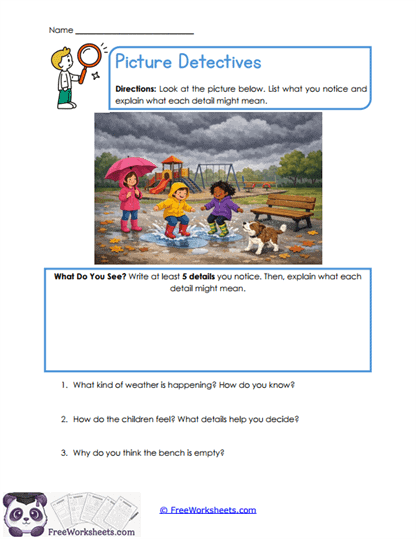
Picture Detectives
- What Kids Do:
Learners observe a detailed scene and list multiple observations, then explain what each detail suggests about context, emotions, and events. - Target Skill:
Strengthens observational analysis and meaning-making by linking concrete details to inferred ideas and situational understanding.
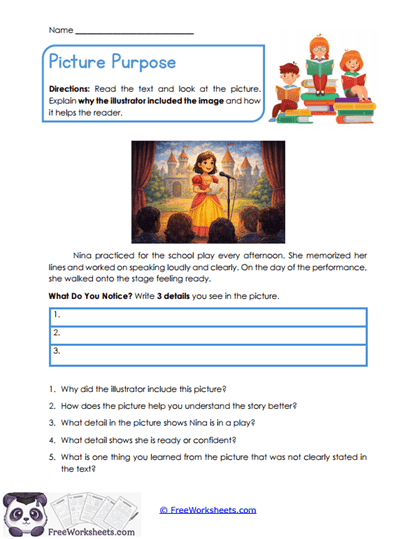
Picture Purpose
- What Kids Do:
Students examine how an illustration relates to a passage by identifying details and explaining how the image supports or expands the text. - Target Skill:
Develops understanding of author and illustrator intent, focusing on how visuals enhance comprehension and convey additional meaning.
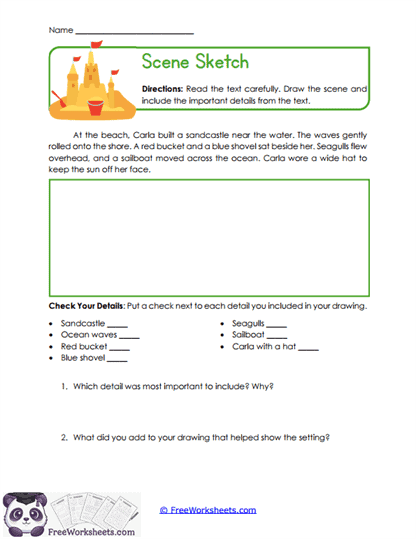
Scene Sketch
- What Kids Do:
Students read a descriptive paragraph and create a drawing that includes all key elements, using a checklist to ensure accuracy. - Target Skill:
Reinforces visualization strategies by translating descriptive language into accurate mental and visual representations.
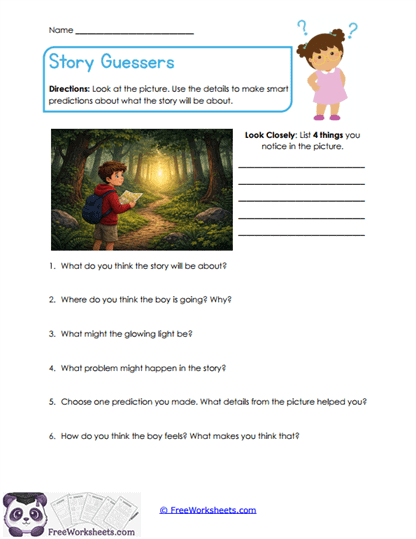
Story Guessers
- What Kids Do:
Learners study an image and generate predictions about possible events, characters, and conflicts, supporting their ideas with visual evidence. - Target Skill:
Builds predictive reasoning and justification skills by using contextual clues to anticipate narrative developments.
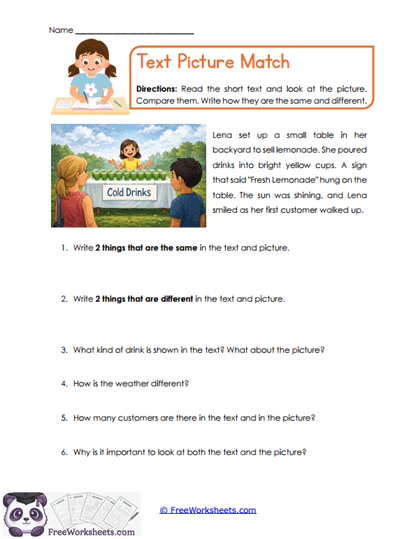
Text Picture Match
- What Kids Do:
Students compare a passage with an accompanying image, identifying similarities and differences while answering targeted comprehension questions. - Target Skill:
Enhances comparative analysis by evaluating how different formats present information and contribute to overall understanding.