
Text Structure Worksheets
Grade 4 Reading Text Structure worksheets help students understand how informational texts are organized and how that structure supports meaning. These free, ready-to-print worksheets are available in PDF format for easy classroom, homeschool, or at-home use. Students practice identifying sequence, cause and effect, compare and contrast, description, and problem-and-solution structures through standards-aligned reading activities.
About This Collection of Worksheets
Text structure becomes especially important in Grade 4 because students are expected to read longer and more complex informational passages with greater independence. At this level, readers need to recognize how an author organizes ideas so they can better understand relationships between events, follow steps in a process, compare subjects, and explain how problems are solved. This collection helps students build that understanding through targeted practice with the major nonfiction structures they are most likely to encounter.
These worksheets fit naturally into many instructional settings. Teachers can use them during reading workshop, small-group instruction, literacy centers, intervention, homework, review lessons, or assessment prep. Because the set includes signal-word practice, charts, short responses, passage comparisons, sequencing tasks, and structure identification across multiple short texts, it gives students repeated exposure to the same core skill in a variety of useful formats.
Each worksheet is designed for strong classroom usability and easy student access. The pages are print-friendly, clearly organized, and simple to follow without extra preparation. Whether students are identifying sequence words, comparing two environments, tracing cause-and-effect relationships, or explaining why an author chose a problem-and-solution structure, this collection provides meaningful Grade 4 practice with essential nonfiction organization patterns.
Paul’s Teacher Tip
When teaching text structure, remind students that they are not just naming a pattern. They are figuring out how the author chose to organize information so the reader can understand it more clearly. Many students benefit from looking first for signal words, but they also need practice asking what the text is mostly doing: describing, comparing, explaining causes, showing steps, or solving a problem. For differentiation, some students may need to sort short examples by structure first, while others are ready to compare how two passages on the same topic are organized differently. At home, families can support this skill by asking children not just what a passage was about, but how the information was arranged.
Worksheet Collection Skill Spotlights
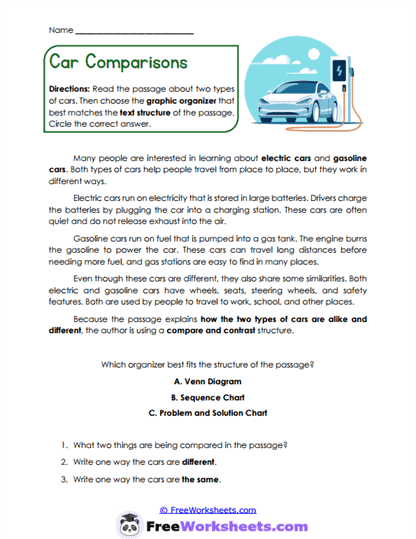
Car Comparisons
- What Kids Do:
Students read about electric and gasoline cars, then identify how the passage compares the two subjects. They answer questions about similarities and differences using details from the text. - Target Skill:
This worksheet builds recognition of compare-and-contrast structure and helps students track how authors organize information across two topics. It also strengthens the use of text evidence when explaining similarities and differences.
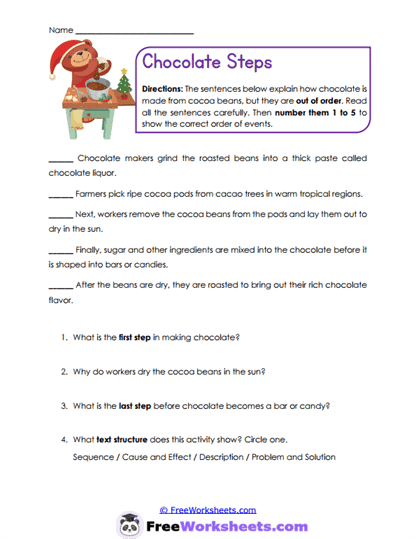
Chocolate Steps
- What Kids Do:
Students read mixed-up sentences about how chocolate is made and put the steps back in the correct order. They then answer questions about the process and identify the structure of the text. - Target Skill:
This activity strengthens sequence understanding by helping students follow and organize events in a process. It also reinforces how transition words and step-by-step order signal a sequence structure.
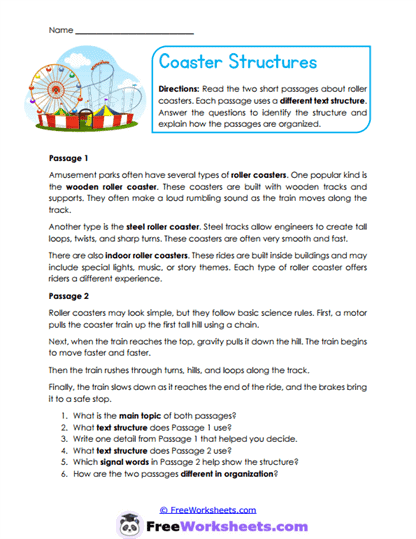
Coaster Structures
- What Kids Do:
Students read two passages about roller coasters and determine the text structure used in each one. They explain how the passages are organized differently even though they share the same topic. - Target Skill:
This worksheet builds flexible text structure analysis across multiple passages. It also helps students separate topic from organization, which is a key step in deeper nonfiction comprehension.
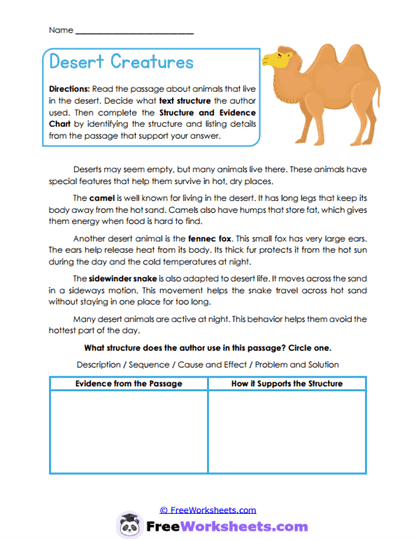
Desert Creatures
- What Kids Do:
Students read a passage about desert animals and decide which text structure the author uses. They support their answer with evidence and explain how the passage is organized. - Target Skill:
This activity helps students recognize descriptive structure by noticing how a text gives details about a topic rather than comparing, sequencing, or solving a problem. It also builds justification skills through evidence-based explanation.
Flood Fix
- What Kids Do:
Students read about flooding in a town and identify the main problem along with the community’s solution. They use supporting details from the passage to explain how the solution addresses the issue. - Target Skill:
This worksheet develops understanding of problem-and-solution structure in informational texts. It also helps students distinguish the main issue from smaller details and connect the solution directly to the problem.
Invention Sort
- What Kids Do:
Students read several short paragraphs about inventions and classify each one by text structure. They look for clues such as signal words and overall organization before choosing an answer. - Target Skill:
This activity strengthens structure recognition across multiple examples rather than just one passage. It helps students compare patterns like sequence, cause and effect, problem and solution, and description more confidently.
Migration Journey
- What Kids Do:
Students read a passage about bird migration, highlight transition words, and answer questions about the order of events. They also identify the text structure used in the passage. - Target Skill:
This worksheet builds sequence analysis by helping students connect transition words to chronological organization. It also supports stronger comprehension of how events unfold over time in nonfiction texts.
Mission Training
- What Kids Do:
Students read about astronaut training and identify the steps in the order they happen. They also find sequence signal words and determine the structure of the passage. - Target Skill:
This activity strengthens recognition of chronological order and process-based organization. It helps students see how authors guide readers through steps using transition words and time-order clues.
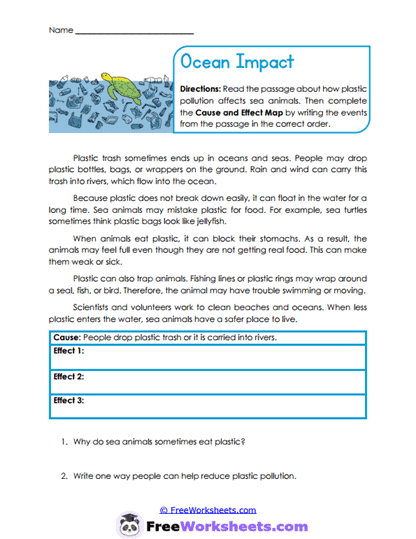
Ocean Impact
- What Kids Do:
Students read about plastic pollution and complete a chart showing how one action leads to another. They then answer questions about the consequences described in the text. - Target Skill:
This worksheet builds understanding of cause-and-effect relationships by helping students organize connected events clearly. It also supports more accurate reading of consequences in science and environmental texts.
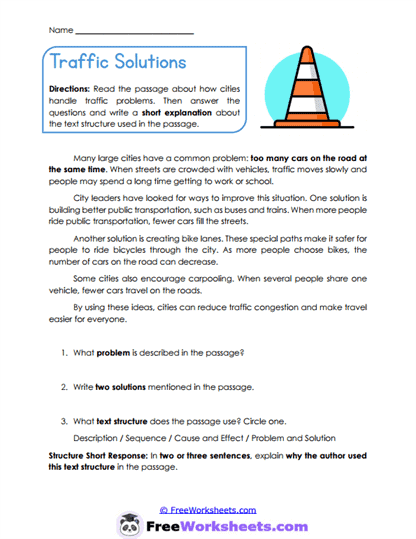
Traffic Solutions
- What Kids Do:
Students read about traffic congestion, identify the main problem, and list solutions the text presents. They also explain why problem-and-solution is the best structure for the topic. - Target Skill:
This activity develops structure identification and explanation at a deeper level. It helps students understand not only what the structure is, but why an author may choose it to present information clearly.
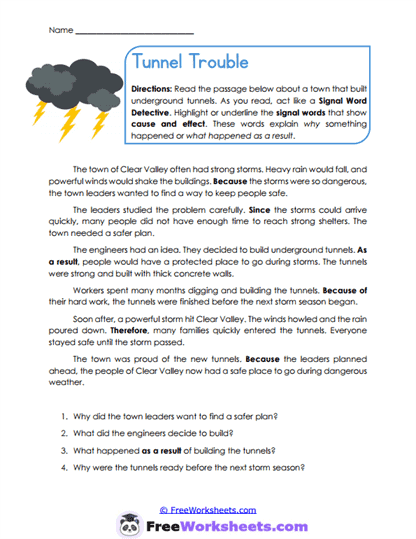
Tunnel Trouble
- What Kids Do:
Students read about a town that builds tunnels for storm safety and highlight signal words that show why events happen and what happens as a result. They answer follow-up questions about the relationships between causes and effects. - Target Skill:
This worksheet strengthens cause-and-effect analysis through close attention to signal words and event relationships. It also helps students explain how one event leads to another in informational text.
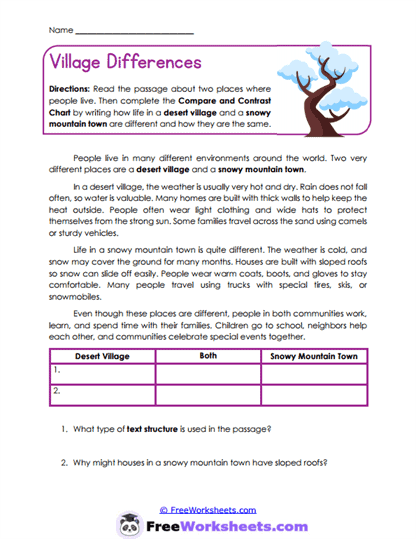
Village Differences
- What Kids Do:
Students read about a desert village and a snowy mountain town, then complete a chart comparing the two environments. They answer questions about similarities, differences, and the structure of the passage. - Target Skill:
This worksheet builds compare-and-contrast comprehension by helping students organize details into clear categories. It also supports recognition of how authors structure information to highlight both likenesses and differences.