
Story Elements Worksheets
Grade 4 Reading Story Elements worksheets help students identify key parts of a narrative, understand how stories are organized, and strengthen overall reading comprehension. These free, ready-to-print worksheets are available in PDF format for easy classroom, homeschool, or at-home use. Students practice analyzing characters, setting, conflict, plot, and theme through standards-aligned reading activities.
About This Collection of Worksheets
Story elements are a core part of Grade 4 reading because students are expected to move beyond simply reading a narrative and begin explaining how its parts work together. At this level, readers identify characters, setting, problem, solution, and major events while also thinking about how those elements shape the meaning of the story. This collection gives students repeated practice with those essential skills through short, engaging narrative passages and structured response activities.
These worksheets fit well into many instructional settings. Teachers can use them during reading workshop, small-group instruction, literacy centers, homework, intervention, test-prep practice, or independent comprehension work. Because the set includes charts, matching tasks, multiple-choice questions, sequencing activities, summaries, and theme analysis, it provides a strong variety of ways for students to build confidence with the same core concepts.
Each worksheet is designed for easy implementation and strong student accessibility. The pages are print-friendly, clearly organized, and simple to follow without extensive setup. Whether students are identifying a story’s setting, matching a problem to its solution, comparing two settings, or writing a short summary from key plot details, this collection provides meaningful Grade 4 practice with the building blocks of narrative understanding.
Paul’s Teacher Tip
When teaching story elements, encourage students to think about how the parts of a story connect instead of treating each element as its own separate box. For example, the setting can shape the problem, the character’s traits can influence the solution, and the conflict often leads directly to the lesson or theme. It helps to ask questions like, “How did this setting change what happened?” or “What did the character do that helped solve the problem?” For differentiation, some students may benefit from identifying character, setting, and problem first, while stronger readers can explain conflict types, compare settings across texts, or connect events to theme. At home, families can support this work by asking children to retell a story using the key parts in order.
Worksheet Collection Skill Spotlights
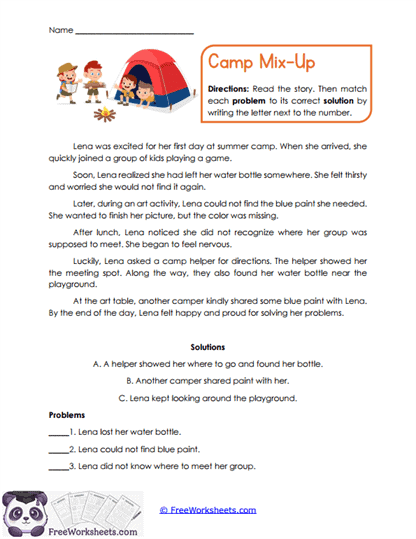
Camp Mix-Up
- What Kids Do:
Students read a story about a day at camp and match each problem in the narrative to the correct solution. - Target Skill:
This worksheet builds understanding of problem-and-solution relationships, cause-and-effect thinking, and comprehension of how challenges are resolved in stories.
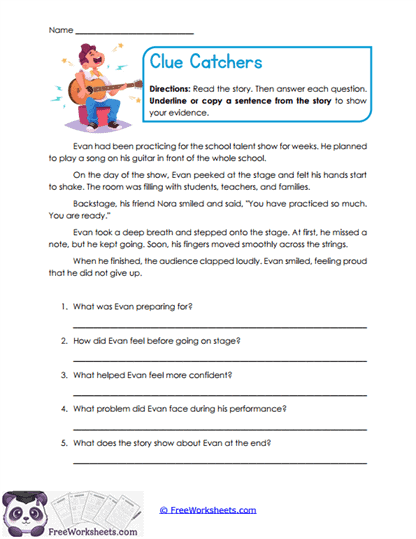
Clue Catchers
- What Kids Do:
Students read a short story about a performance and answer questions using evidence from the text to support each response. - Target Skill:
This activity strengthens close reading, text evidence use, and careful explanation of story details.
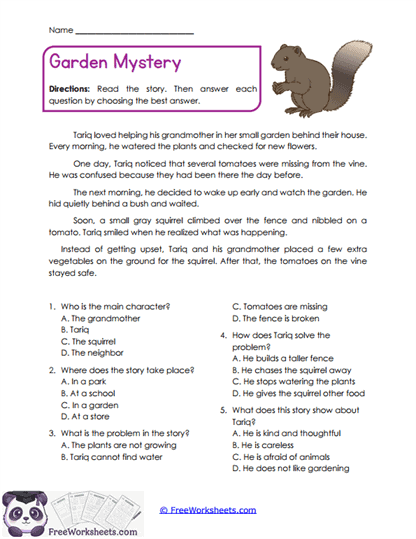
Garden Mystery
- What Kids Do:
Students read a short mystery about missing tomatoes and answer multiple-choice questions about characters, setting, problem, and solution. - Target Skill:
This worksheet supports story element identification, comprehension, and evidence-based answer selection in narrative reading.
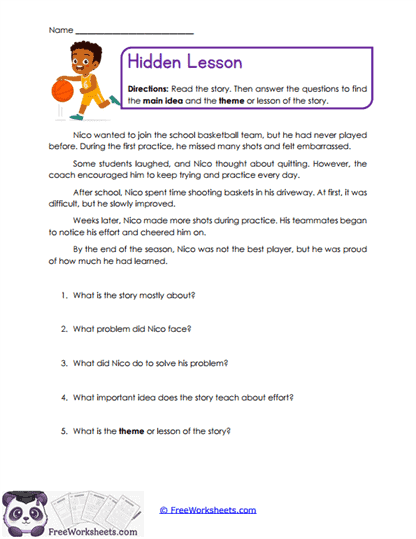
Hidden Lesson
- What Kids Do:
Students read about Nico learning basketball, answer questions about the story, and explain the lesson or theme using details from the text. - Target Skill:
This page develops theme analysis, main idea understanding, and connection between character actions and deeper story meaning.
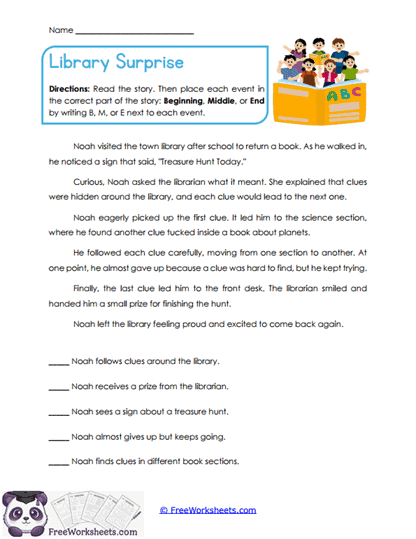
Library Surprise
- What Kids Do:
Students read a library adventure and decide which events belong in the beginning, middle, and end of the story. - Target Skill:
This worksheet strengthens sequencing, narrative structure recognition, and understanding of plot progression.
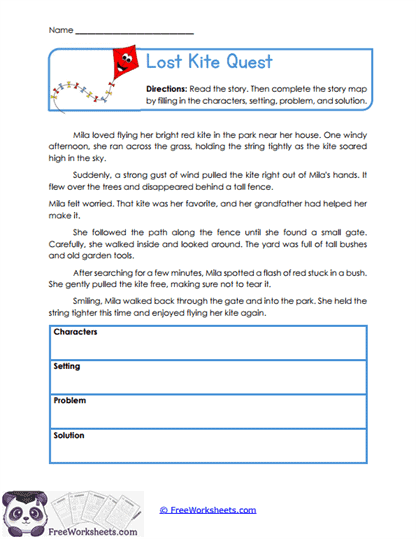
Lost Kite Quest
- What Kids Do:
Students read a story about a lost kite and fill in a chart with the characters, setting, problem, and solution. - Target Skill:
This activity builds foundational story structure analysis and helps students organize important narrative details clearly.
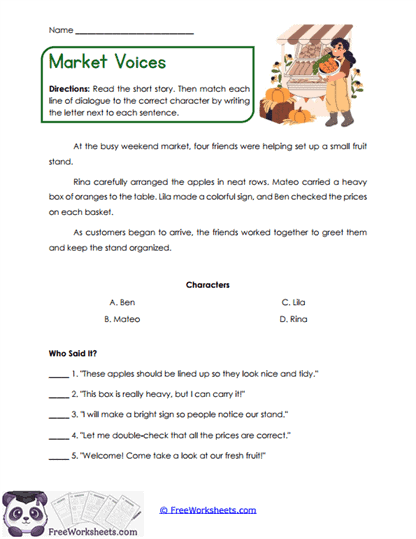
Market Voices
- What Kids Do:
Students read a story set in a market and match lines of dialogue to the correct character using context clues. - Target Skill:
This worksheet supports dialogue analysis, inference, and understanding of how speech reveals character roles and actions.
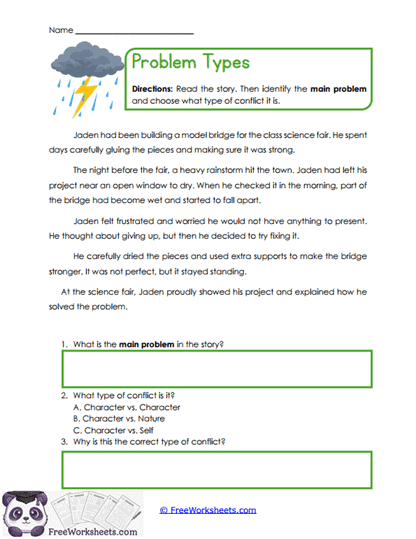
Problem Types
- What Kids Do:
Students read about Jaden’s science project challenge, identify the main problem, and determine the type of conflict in the story. - Target Skill:
This page develops conflict analysis, deeper story comprehension, and reasoning about internal and external challenges.
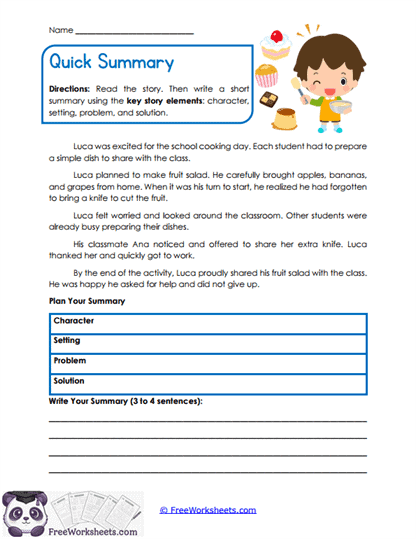
Quick Summary
- What Kids Do:
Students read a short story, record the character, setting, problem, and solution, and then use those notes to write a summary. - Target Skill:
This worksheet strengthens summarizing, story planning, and the ability to turn key narrative details into clear writing.
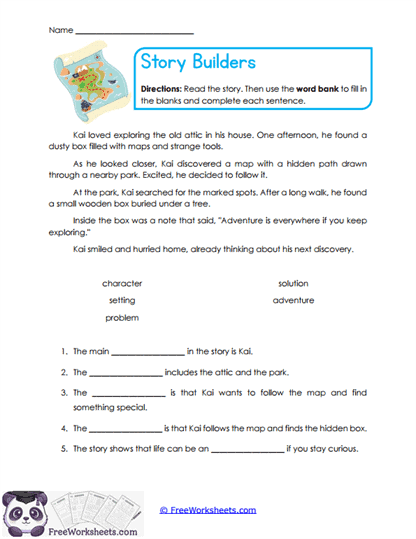
Story Builders
- What Kids Do:
Students read a story and use a word bank to complete sentences about story elements such as character, setting, problem, and solution. - Target Skill:
This activity reinforces story element vocabulary and helps students apply narrative terms accurately in context.
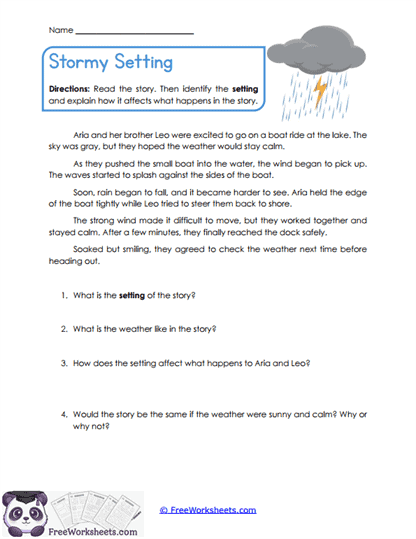
Stormy Setting
- What Kids Do:
Students read about a boat ride during stormy weather and explain how the setting affects the events and character actions. - Target Skill:
This worksheet builds setting analysis, cause-and-effect thinking, and understanding of how place and weather shape a story.
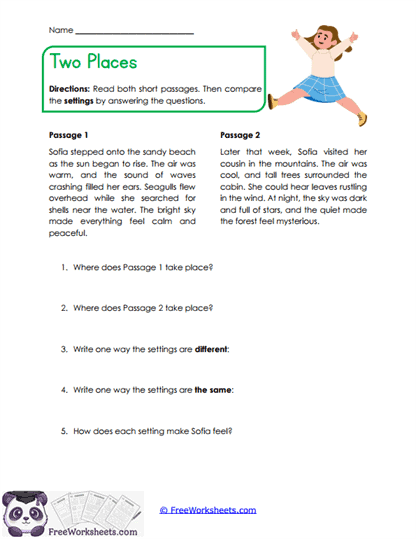
Two Places
- What Kids Do:
Students read two short passages with different settings and compare how the locations are similar and different. - Target Skill:
This page supports compare-and-contrast reading, setting analysis, and cross-text comprehension.