
Sensory Details Worksheets
Grade 4 Reading Sensory Details worksheets help students identify vivid language, connect descriptions to the five senses, and build stronger reading comprehension. These free, ready-to-print worksheets are available in PDF format for simple classroom, homeschool, or at-home use. Students practice noticing imagery, classifying sensory language, and explaining how details help readers picture and experience a scene.
About This Collection of Worksheets
Sensory details are an important part of Grade 4 reading because they help students move beyond basic comprehension and into visualizing, interpreting, and experiencing a text more fully. At this level, readers are expected to notice how authors use words connected to sight, sound, smell, taste, and touch to create mood, strengthen meaning, and bring a setting or character experience to life. This collection gives students repeated practice with that work through engaging passages and focused response tasks.
These worksheets fit naturally into many parts of reading instruction. Teachers can use them during close reading lessons, writing tie-ins, literacy centers, small-group instruction, homework, intervention, or independent practice. Because the set includes sorting charts, matching tasks, short-answer questions, passage analysis, and stronger-description comparisons, it offers a strong variety of ways for students to build the same core skill from different angles.
Each worksheet is designed for easy classroom use and strong student accessibility. The pages are print-friendly, clearly structured, and simple to follow without extra preparation. Whether students are underlining sensory phrases in a passage, sorting details by sense, connecting description to character perspective, or identifying what sensory information is missing, this collection gives Grade 4 learners meaningful practice with descriptive language and imagery.
Paul’s Teacher Tip
When students work with sensory details, remind them to look for words that help them experience the text, not just understand it. Many students can find adjectives, but they need extra modeling to decide whether a word truly connects to sight, sound, smell, taste, or touch. It helps to ask, “What can I picture, hear, smell, taste, or feel because of this sentence?” For differentiation, some students may do best identifying one sense at a time before sorting all five, while stronger readers can explain how sensory details shape mood, setting, or character experience. At home, families can support this skill by reading a short passage together and naming the details that make the scene feel real.
Worksheet Collection Skill Spotlights
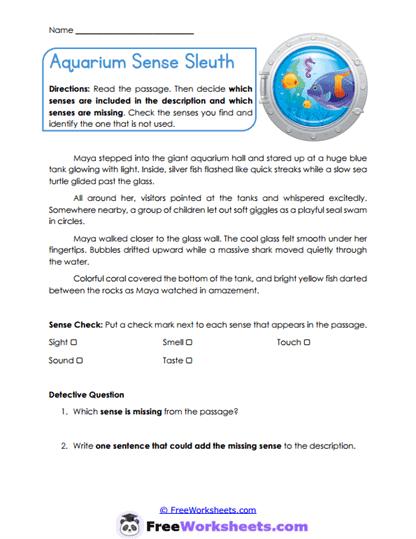
Aquarium Sense Sleuth
- What Kids Do:
Students read a passage about an aquarium, decide which senses are included, identify the missing sense, and write a sentence to add it. - Target Skill:
This worksheet builds sensory analysis, close reading, and descriptive writing by helping students evaluate how fully a passage uses the five senses.
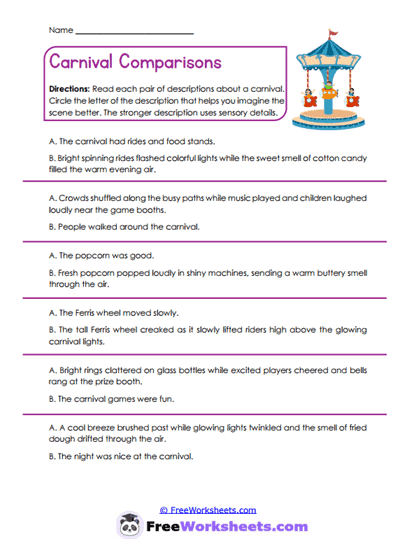
Carnival Comparisons
- What Kids Do:
Students read pairs of carnival-themed sentences and choose which one uses stronger sensory details to help the reader imagine the scene. - Target Skill:
This activity strengthens evaluation of descriptive writing, comparison of sentence quality, and understanding of what makes imagery more vivid.
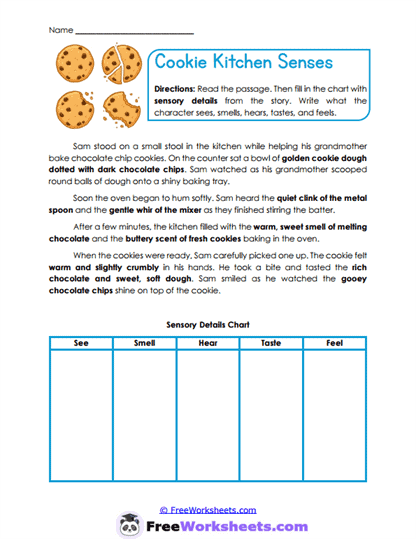
Cookie Kitchen Senses
- What Kids Do:
Students read a passage about baking cookies and record what the character sees, smells, hears, tastes, and feels. - Target Skill:
This worksheet supports sensory categorization, perspective-taking, and understanding of how details shape a character’s experience.
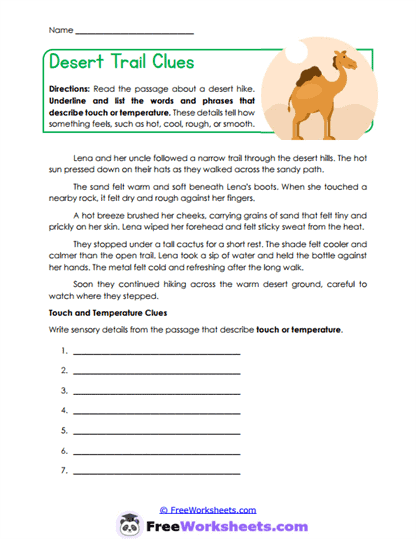
Desert Trail Clues
- What Kids Do:
Students read about a desert hike and identify words and phrases that describe touch and temperature. - Target Skill:
This page develops focused sensory reading, tactile-language recognition, and attention to physical experience in descriptive text.
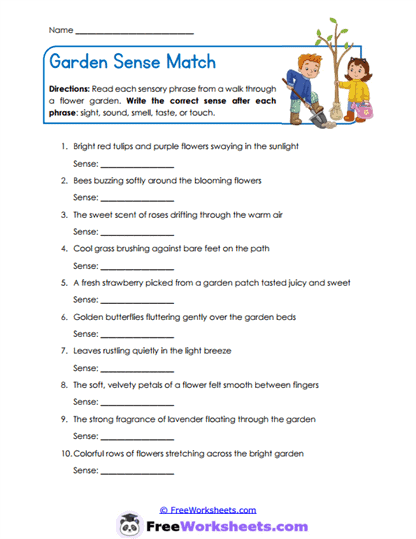
Garden Sense Match
- What Kids Do:
Students read descriptive garden phrases and match each one to the correct sense such as sight, sound, smell, taste, or touch. - Target Skill:
This worksheet builds sensory classification, vocabulary interpretation, and accurate connection between descriptive phrases and the five senses.
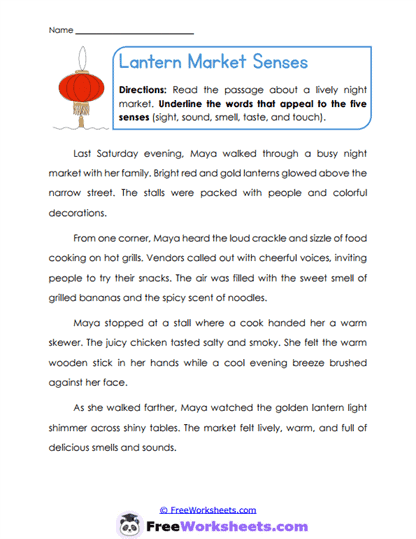
Lantern Market Senses
- What Kids Do:
Students read a passage about a lively night market and underline words and phrases that appeal to the five senses. - Target Skill:
This activity strengthens sensory detail recognition, visualization, and close reading of vivid descriptive language.
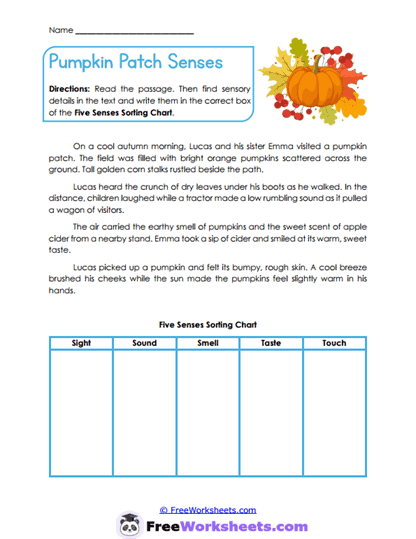
Pumpkin Patch Senses
- What Kids Do:
Students read about a pumpkin patch and sort sensory details into categories for sight, sound, smell, taste, and touch. - Target Skill:
This worksheet supports organization of descriptive language, comprehension of imagery, and classification of text evidence by sense.
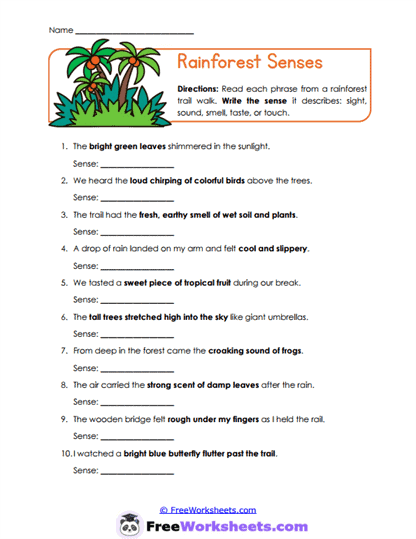
Rainforest Senses
- What Kids Do:
Students read rainforest sentences and decide which sense each one describes. - Target Skill:
This page develops sentence-level sensory analysis, clue-based reasoning, and clear understanding of how specific language connects to sensory experience.
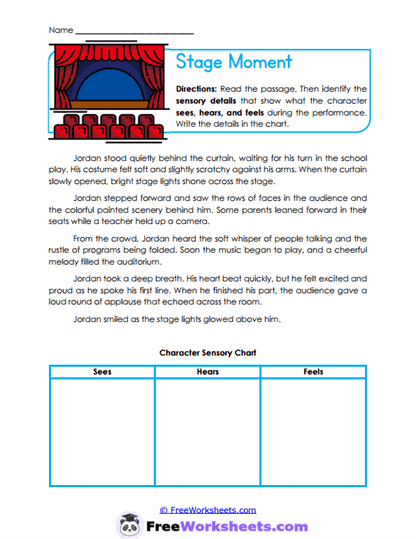
Stage Moment
- What Kids Do:
Students read about a performance and identify what the character sees, hears, and feels during the event. - Target Skill:
This worksheet strengthens character-based sensory analysis and helps students connect details to viewpoint and emotional experience.
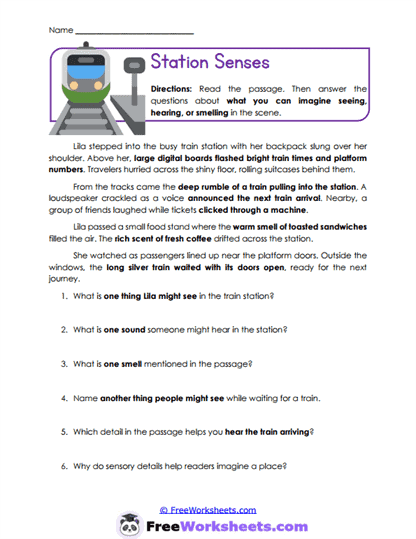
Station Senses
- What Kids Do:
Students read a passage about a busy train station and answer questions about what can be seen, heard, and smelled in the scene. - Target Skill:
This activity builds reading comprehension, evidence-based response skills, and use of sensory clues to understand setting.
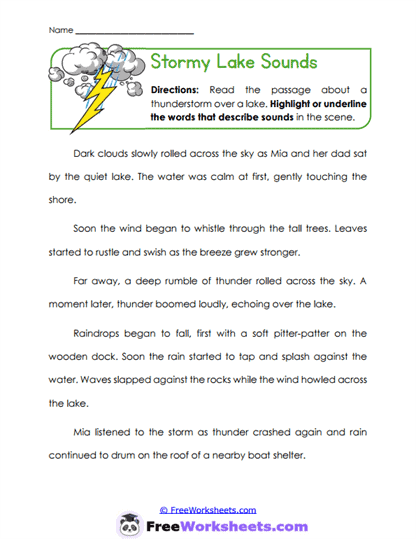
Stormy Lake Sounds
- What Kids Do:
Students read a storm passage and highlight words that describe sounds. - Target Skill:
This worksheet develops awareness of auditory imagery and helps students focus on how sound details create atmosphere in a text.
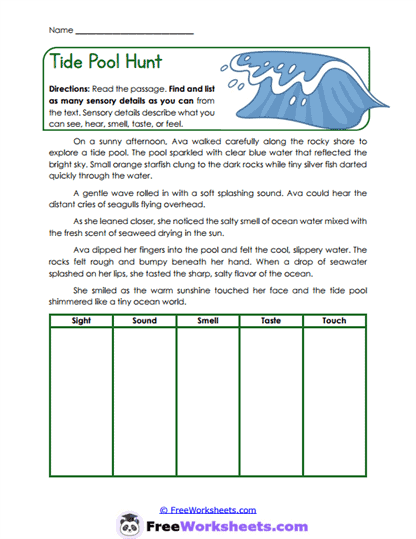
Tide Pool Hunt
- What Kids Do:
Students read a descriptive tide pool passage and collect as many sensory details as possible across all five senses. - Target Skill:
This page supports thorough close reading, evidence gathering, and categorization of sensory language for deeper text analysis.