
Poetry Elements Worksheets
Grade 4 Reading Poetry Elements worksheets help students explore rhyme, structure, imagery, and mood while building deeper poetry comprehension. These free, ready-to-print worksheets are available in PDF format for easy classroom, homeschool, or at-home use. Students practice analyzing poems, interpreting figurative language, and identifying sound and structure patterns through standards-aligned reading activities.
About This Collection of Worksheets
Poetry instruction in Grade 4 helps students move beyond simply reading poems for enjoyment and into understanding how poems are built and how their language creates meaning. At this stage, students are expected to notice rhyme, identify stanzas and lines, interpret imagery and figurative language, and explain how a poem’s structure or word choice affects mood and understanding. This collection supports those goals with a wide range of age-appropriate activities that make poetry analysis feel approachable and engaging.
These worksheets work well across many teaching situations. Teachers can use them during poetry units, literacy centers, small-group instruction, independent practice, homework, enrichment, or review before assessment. Because the set includes rhyme work, stanza analysis, mood interpretation, figurative language tasks, and poem comparison, it gives students repeated exposure to key poetry skills in multiple formats. That variety helps reinforce understanding while keeping practice fresh.
Each worksheet is designed for strong classroom usability and easy student access. The pages are print-friendly, clearly organized, and simple to follow without extra preparation. Whether students are circling rhyming words, explaining the meaning of a poetic line, comparing two poems, or identifying repetition and imagery, this collection gives Grade 4 learners meaningful practice with the essential elements of poetry.
Paul’s Teacher Tip
When students read poetry, remind them that they do not need to “solve” every line right away. Start by helping them notice what stands out first: repeated words, strong images, interesting sounds, or the feeling the poem creates. Reading the poem aloud more than once makes a big difference, especially for rhyme, rhythm, repetition, and mood. For differentiation, some students may benefit from identifying concrete features like lines, stanzas, and rhyme before moving into interpretation, while others are ready to explain how imagery or figurative language shapes meaning. At home, families can support poetry learning by reading short poems together and talking about what words help them picture, hear, or feel the scene.
Worksheet Collection Skill Spotlights
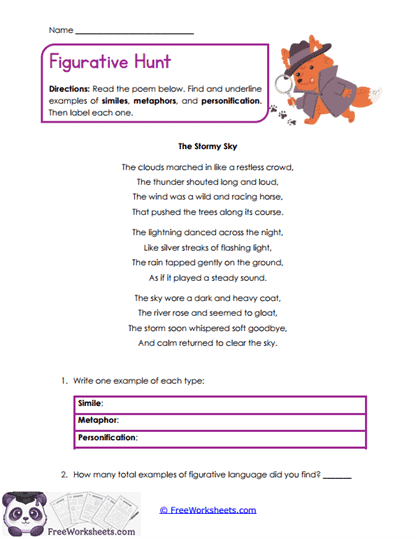
Figurative Hunt
- What Kids Do:
Students read a poem about a storm and locate examples of similes, metaphors, and personification, then label each type. - Target Skill:
This worksheet strengthens figurative language identification, comparison analysis, and understanding of how poetic language adds imagery and meaning.
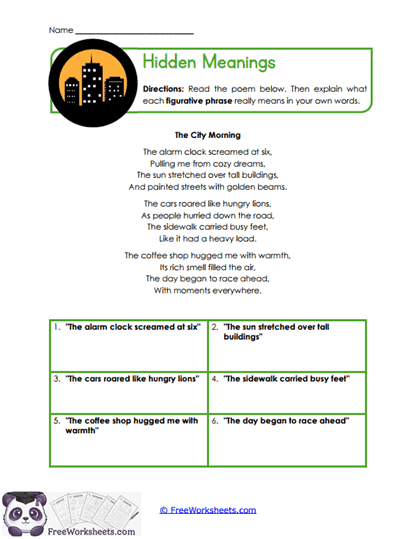
Hidden Meanings
- What Kids Do:
Students read a poem with figurative phrases and explain what those phrases mean in their own words using context clues. - Target Skill:
This activity builds interpretation of nonliteral language, context-based reasoning, and clear explanation of figurative meaning.
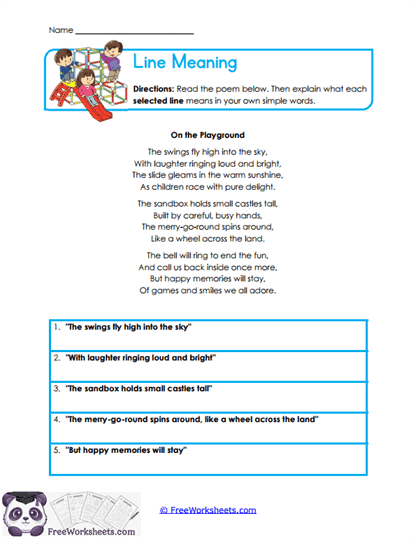
Line Meaning
- What Kids Do:
Students read a poem about a playground and paraphrase selected lines to show what each one is really describing. - Target Skill:
This worksheet supports line-by-line interpretation, paraphrasing, and deeper understanding of poetic meaning beyond literal wording.
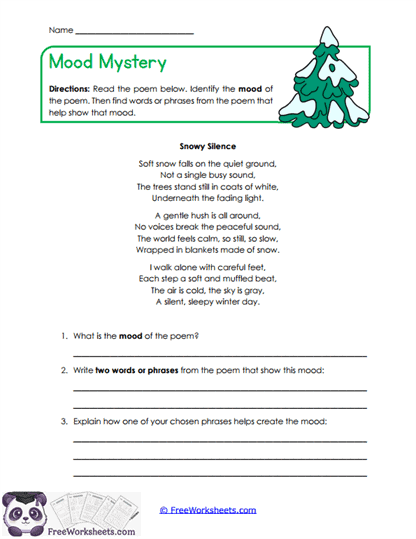
Mood Mystery
- What Kids Do:
Students read a poem about a snowy scene, identify the mood, and support their answer with words or phrases from the text. - Target Skill:
This page develops mood analysis, evidence-based explanation, and understanding of how word choice creates feeling in poetry.
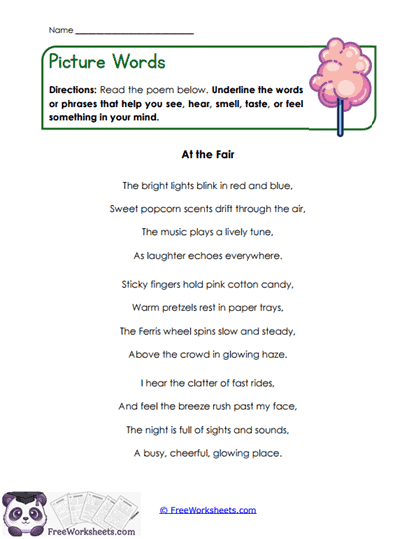
Picture Words
- What Kids Do:
Students read a poem about a fair and underline words and phrases that appeal to the senses. - Target Skill:
This worksheet strengthens imagery recognition, sensory language analysis, and visualization skills during poetry reading.
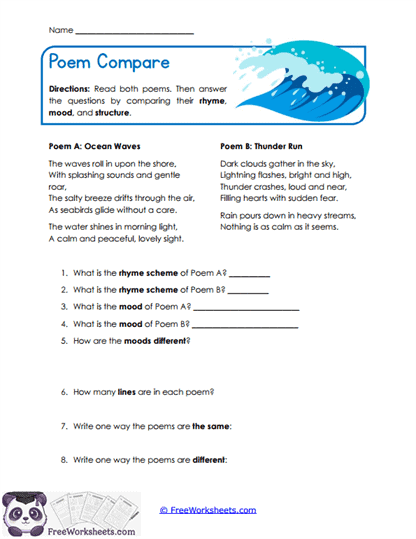
Poem Compare
- What Kids Do:
Students read two poems and compare them for similarities and differences in rhyme, mood, and structure. - Target Skill:
This activity builds compare-and-contrast thinking, poetry analysis, and cross-text comprehension using literary evidence.
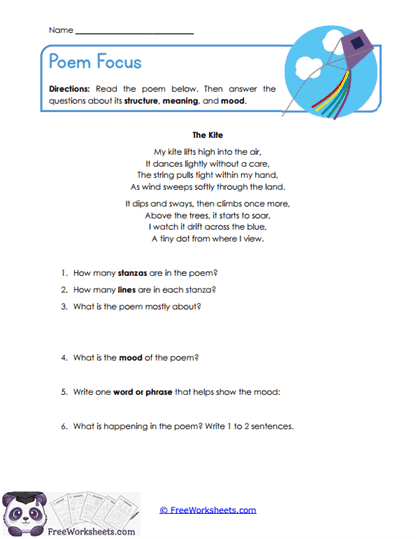
Poem Focus
- What Kids Do:
Students read a poem about flying a kite and answer questions about stanzas, lines, meaning, mood, and summary. - Target Skill:
This worksheet supports comprehensive poetry analysis by combining structure, interpretation, and evidence-based response skills.
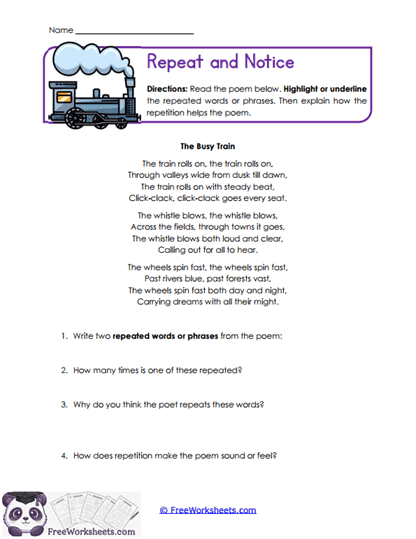
Repeat and Notice
- What Kids Do:
Students read a poem about a train, identify repeated words or phrases, count how often one appears, and explain why the poet uses repetition. - Target Skill:
This page develops recognition of repetition, analysis of emphasis and rhythm, and understanding of how repeated language shapes a poem.
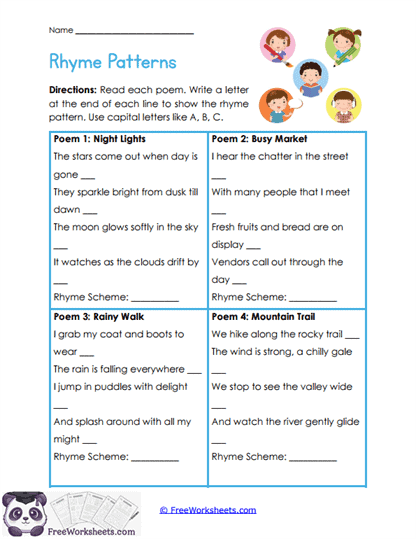
Rhyme Patterns
- What Kids Do:
Students read several short poems and label the rhyme scheme of each one using letters such as AABB or ABAB. - Target Skill:
This worksheet strengthens rhyme scheme analysis, sound-pattern recognition, and understanding of poetic structure.
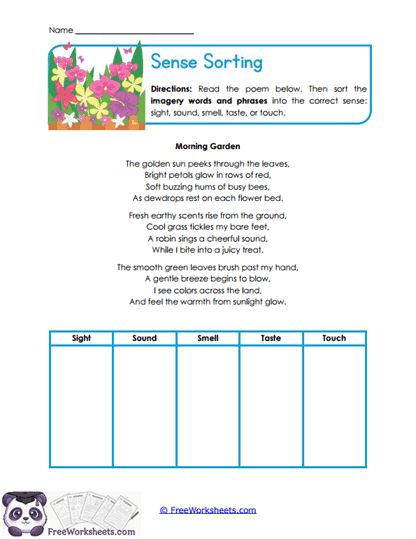
Sense Sorting
- What Kids Do:
Students read a descriptive poem and sort imagery words into categories such as sight, sound, smell, taste, and touch. - Target Skill:
This activity builds sensory language classification, vocabulary analysis, and understanding of how imagery connects to the five senses.
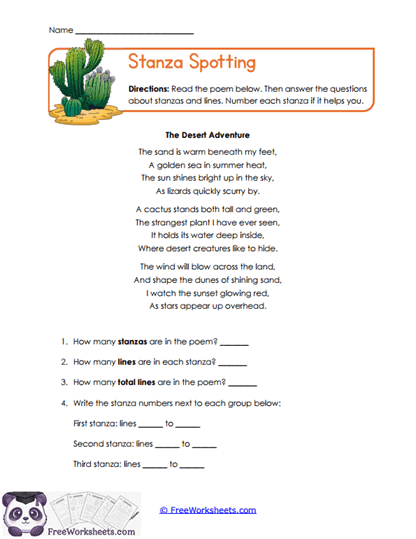
Stanza Spotting
- What Kids Do:
Students read a poem and identify how many stanzas and lines it contains, including the number of lines in each stanza. - Target Skill:
This worksheet supports poem structure awareness, line and stanza recognition, and careful attention to organization in verse.
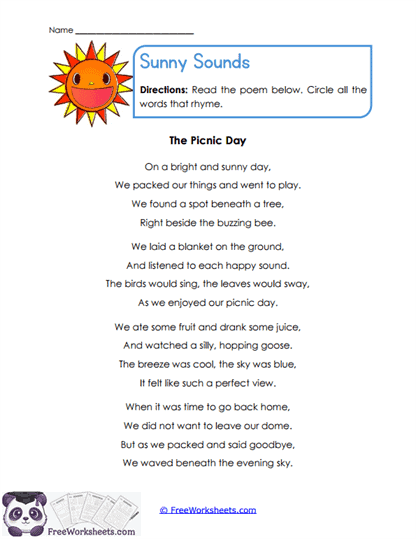
Sunny Sounds
- What Kids Do:
Students read a poem about a picnic and circle words that rhyme throughout the poem. - Target Skill:
This page develops rhyme recognition, sound awareness, and understanding of how rhyming words contribute to rhythm and flow in poetry.