
About This Worksheet
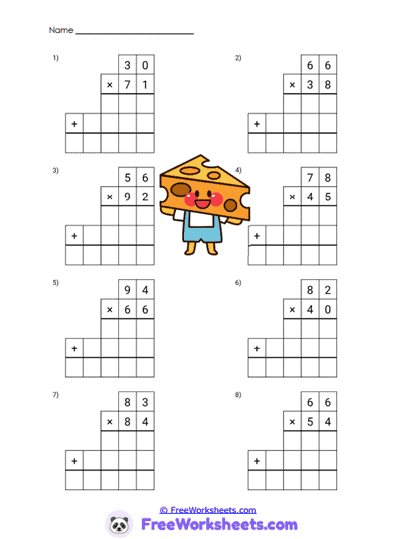
This worksheet gives students additional practice using a grid-style multiplication format for two-digit numbers. The visual layout breaks multiplication into smaller parts so students can focus on place value and partial products more clearly. This type of practice helps students better understand how multiplication works instead of simply memorizing steps. For example, 30 × 71 becomes 2,130 after multiplying the tens and ones correctly and combining the products. The organized format can help reduce confusion and improve confidence with larger multiplication problems.
Curriculum and Grade Alignment
This worksheet supports upper elementary multiplication standards focused on place value and multi-digit operations. Students should already know multiplication facts and understand the meaning of tens and ones before beginning this activity. The learning goal is to help students solve multiplication problems using visual organization and partial product strategies. This aligns with Common Core 4.NBT.B.5 because students multiply whole numbers using place value understanding and written methods. It also supports TEKS 4.4D through practice with multiplication algorithms and problem-solving strategies.
Student Tasks
On this worksheet, students will solve two-digit multiplication problems using a grid or boxed layout. They will multiply separate place values and record each partial product in the correct section. After completing all sections, students will add the products together to find the final answer. Students must also keep their numbers organized and pay close attention to place value relationships. The repeated visual structure encourages careful and methodical problem solving.
Common Challenges and Misconceptions
Some students may mix up the placement of partial products inside the grid. Others may forget to multiply one section entirely, leading to incomplete answers. Students can also struggle when adding all the partial products together at the end of the problem. A few learners may focus too much on the boxes and lose sight of the overall multiplication equation. Teachers and parents can help by having students point to each section as they explain what numbers are being multiplied.
Implementation Guidance
Teachers can use this worksheet during lessons on partial products, area models, or visual multiplication strategies. It works especially well for students who need more structure before transitioning to the standard algorithm. Parents can use the worksheet at home by guiding children through one problem slowly before encouraging independent work. Students who struggle with organization often benefit from the clear visual setup. This worksheet can also be used during math intervention groups or review practice.
Details and Features
This printable worksheet includes grid-style multiplication problems with organized spaces for each partial product. The clean black-and-white design keeps the focus on the math process while remaining easy to photocopy and print. A themed cartoon character adds visual appeal for younger learners. The spacious layout helps students keep numbers aligned and work neatly. The worksheet is useful for classrooms, tutoring sessions, or homeschool multiplication review.