
Literary Texts Worksheets
Grade 4 Reading Literary Texts worksheets help students build stronger comprehension, analyze story elements, and support answers with evidence from the text. These free, ready-to-print worksheets are available in PDF format for easy classroom, homeschool, or at-home use. Students practice key literary reading skills such as identifying theme, sequencing events, analyzing characters, and summarizing narrative passages through standards-aligned activities.
About This Collection of Worksheets
Literary text study in Grade 4 asks students to do more than simply retell a story. At this level, readers are expected to examine character actions, explain events, identify themes, determine point of view, and refer to details from the text to support their thinking. This collection is designed to strengthen those foundational comprehension skills through engaging narrative passages and targeted response tasks that reflect the kinds of close reading students are expected to do across the school year.
These worksheets fit easily into a variety of instructional settings. Teachers can use them during reading workshop, small-group instruction, literacy centers, independent practice, homework, intervention blocks, or quick comprehension checks. Because the set includes story maps, written responses, sequencing tasks, compare-and-contrast questions, vocabulary work, and theme analysis, it offers a broad mix of practice formats to support both instruction and review.
Each worksheet is built for easy implementation and clear student use. The pages are print-friendly, simple to follow, and structured to support independent work without unnecessary complexity. Whether students are reading to identify evidence, track plot events, analyze character traits, or explain the lesson of a story, this collection provides meaningful Grade 4 practice with strong classroom flexibility.
Paul’s Teacher Tip
When teaching literary texts in Grade 4, encourage students to keep going back to the story instead of answering from memory alone. Many students understand the passage generally but need extra practice locating the exact details that prove an answer. Model how to underline clues, reread key parts, and turn story details into complete responses. To differentiate, have some students focus first on identifying story elements such as character, setting, and problem, while others explain deeper ideas like theme, motivation, or point of view. Families can support this work at home by asking simple follow-up questions such as, “What in the story makes you think that?”
Worksheet Collection Skill Spotlights
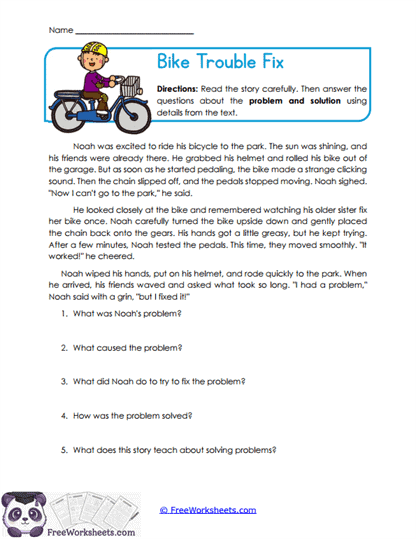
Bike Trouble Fix
- What Kids Do:
Students read a narrative about a bicycle problem and answer questions about the challenge, its cause, and the solution using details from the story. - Target Skill:
This worksheet builds problem-and-solution analysis, event understanding, and evidence-based comprehension within narrative texts.
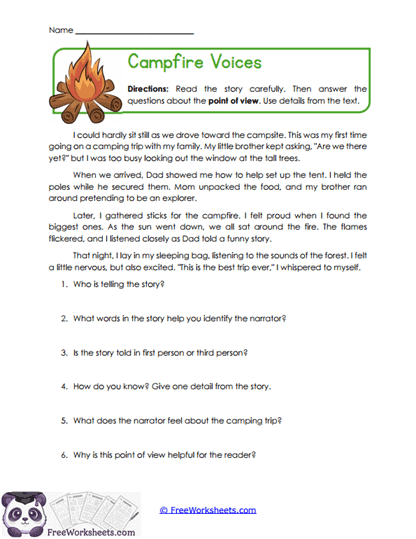
Campfire Voices
- What Kids Do:
Students read a camping story and identify who is telling it, then explain whether the narration is written in first person or third person. - Target Skill:
This activity strengthens point of view recognition, pronoun-based text analysis, and understanding of how narration shapes a story.
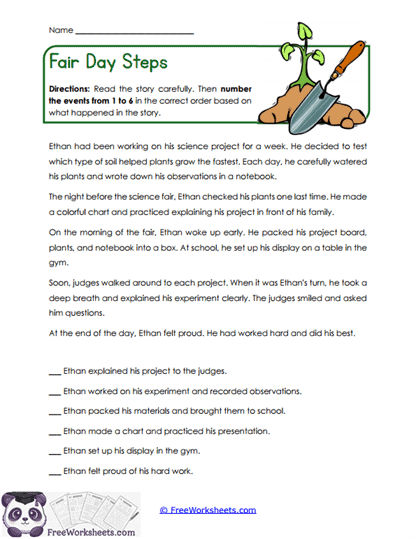
Fair Day Steps
- What Kids Do:
Students read about preparing for a science fair and place important events in the correct order from beginning to end. - Target Skill:
This worksheet supports sequencing, chronological reasoning, and close reading of key plot events.
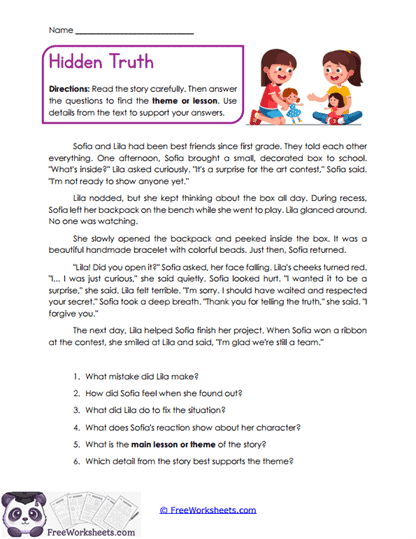
Hidden Truth
- What Kids Do:
Students read a story about honesty and friendship, answer comprehension questions, and identify the lesson or theme using supporting details. - Target Skill:
This page develops theme identification, reflective reading, and the ability to connect character choices to a story’s message.
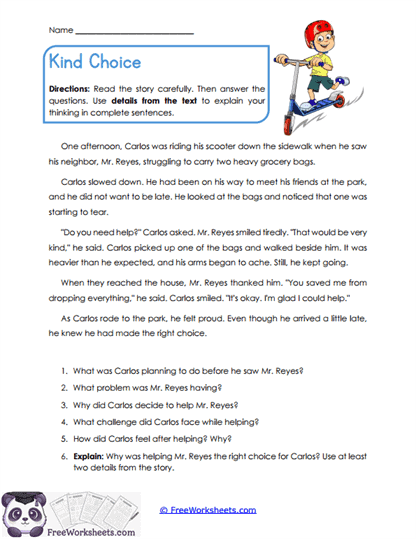
Kind Choice
- What Kids Do:
Students read about a boy making a thoughtful decision and explain how his actions affect the outcome of the story. - Target Skill:
This worksheet strengthens character analysis, motivation tracking, and written responses supported by text evidence.
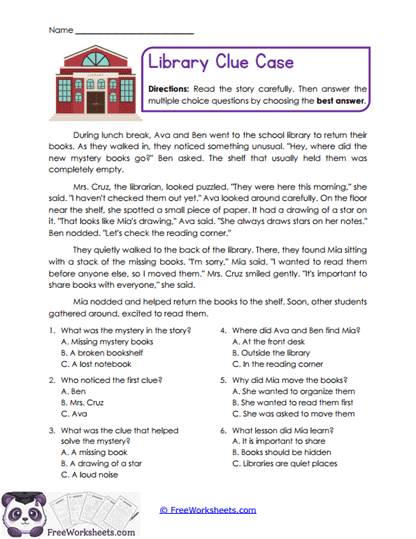
Library Clue Case
- What Kids Do:
Students read a short mystery about missing library books and answer multiple-choice questions by finding the best evidence in the text. - Target Skill:
This activity builds close reading, reasoning, and accurate answer selection based on story details.
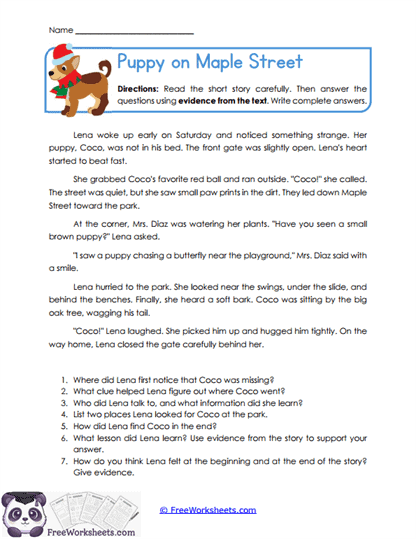
Puppy on Maple Street
- What Kids Do:
Students read a story about Lena searching for her missing puppy and answer comprehension questions in complete sentences using evidence from the passage. - Target Skill:
This worksheet supports text evidence, narrative comprehension, and careful rereading to justify answers.
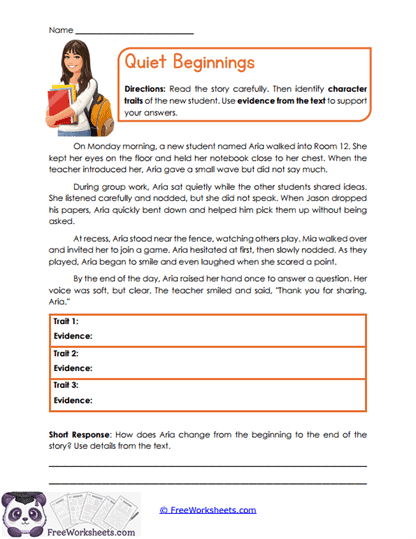
Quiet Beginnings
- What Kids Do:
Students read about a new student adjusting to class, identify character traits, and support each trait with evidence from the story. - Target Skill:
This page develops character analysis, trait identification, and understanding of how actions reveal personality.
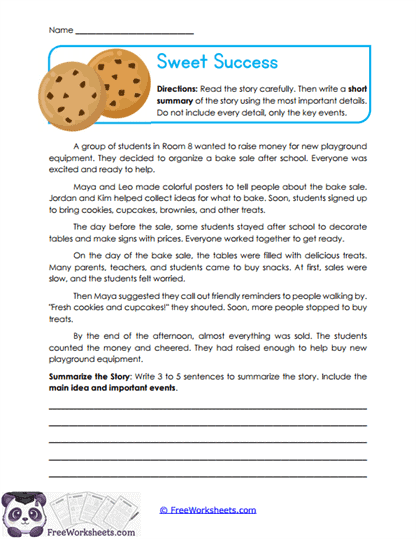
Sweet Success
- What Kids Do:
Students read a story about organizing a bake sale and write a short summary that includes the main idea and most important events. - Target Skill:
This worksheet builds summarizing skills, main-event selection, and concise written comprehension.
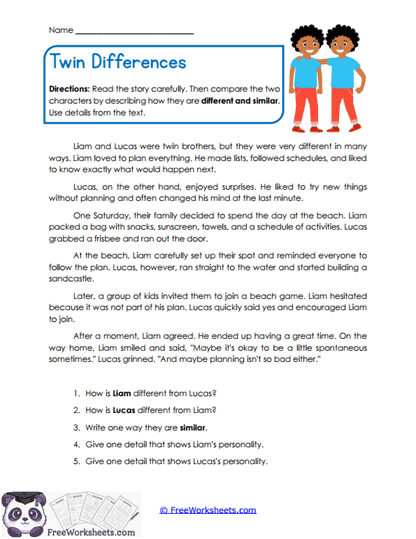
Twin Differences
- What Kids Do:
Students read about twin brothers with different personalities and compare how they are alike and different using details from the text. - Target Skill:
This activity strengthens compare-and-contrast thinking, character analysis, and evidence-based explanation.
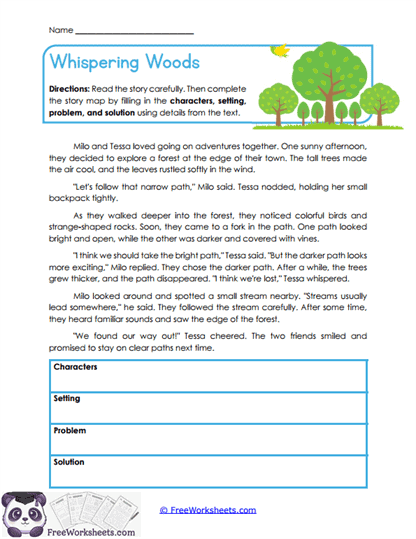
Whispering Woods
- What Kids Do:
Students read a forest adventure and complete a story map by identifying the characters, setting, problem, and solution. - Target Skill:
This worksheet supports story structure analysis, organization of narrative elements, and understanding of plot relationships.
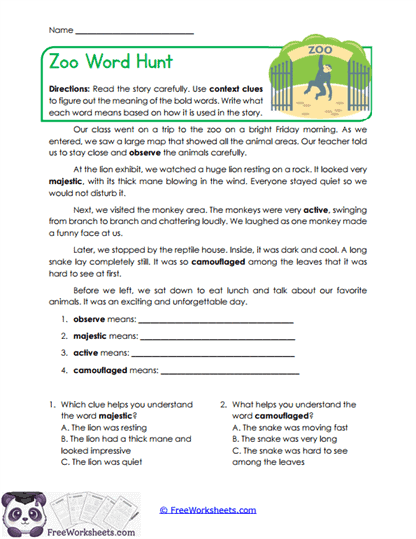
Zoo Word Hunt
- What Kids Do:
Students read a zoo-themed passage, use context clues to define unfamiliar words, and answer follow-up vocabulary questions. - Target Skill:
This page strengthens vocabulary development, context clue use, and comprehension of descriptive language.