
Literary Devices Worksheets
Grade 4 Reading Literary Devices worksheets help students understand how authors use language creatively to add meaning, imagery, and emotion to texts. These free, printable PDF worksheets give students structured practice with figurative language while building stronger reading comprehension and writing skills. Students explore similes, metaphors, personification, and sound devices while learning how these tools improve storytelling.
About This Collection of Worksheets
Understanding literary devices is a key step in helping Grade 4 students move from basic reading comprehension to deeper text analysis. At this level, students are expected not only to recognize figurative language but also to explain what it means and how it affects the reader. This collection supports that transition by giving students repeated exposure to common literary devices in clear, engaging formats.
The worksheets in this set focus heavily on interpreting nonliteral language, including similes, metaphors, and personification. Students practice connecting figurative expressions to their real meanings, using context clues to guide interpretation, and distinguishing between literal and figurative statements. Activities like matching metaphors to meanings and explaining figurative phrases help reinforce critical thinking and vocabulary development.
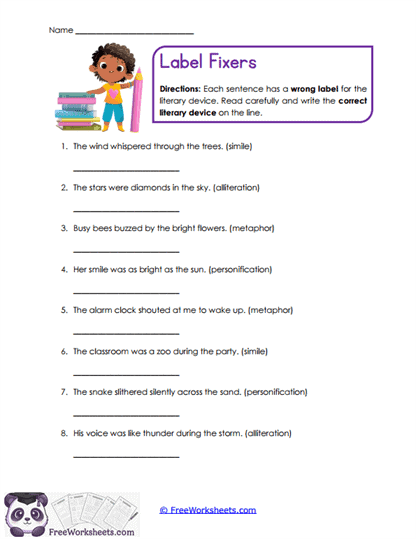
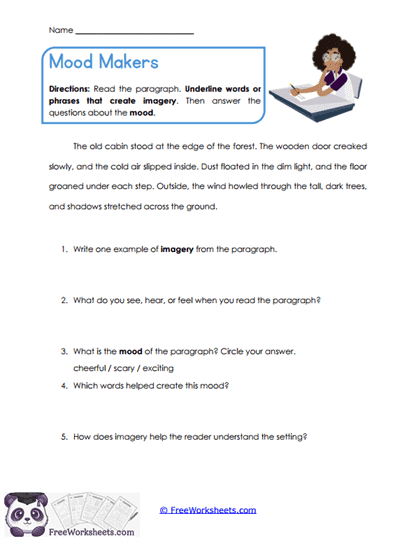
In addition to interpretation, students also work on identifying literary devices within passages. They locate personification in descriptive texts, recognize alliteration through sound patterns, and analyze how imagery creates mood. These tasks strengthen close reading skills and help students pay attention to how authors craft language for effect.
The collection also includes opportunities for creative application. Students build their own similes, revise sentences using figurative language, and complete comparisons that enhance meaning. These writing-focused activities encourage students to actively use literary devices, not just recognize them, which leads to stronger retention and more expressive writing.
These worksheets are ideal for a variety of classroom uses, including whole-group instruction, small-group practice, literacy centers, homework, and assessment. They are also well-suited for at-home learning, giving parents simple, structured tools to support reading development. Each worksheet is designed with a clean, student-friendly layout that makes printing and implementation quick and easy.
Paul’s Teacher Tip
When teaching literary devices in Grade 4, focus on helping students connect figurative language to meaning rather than just labeling it. Many students can identify a simile or metaphor but struggle to explain what it actually means in context. Model how to “translate” figurative language into plain language by thinking aloud and asking questions like, What is being compared? and What does that tell us?
Encourage students to use context clues from surrounding sentences to guide their understanding. When introducing new devices, use simple, relatable examples before moving into more complex passages. For students who need extra support, provide sentence frames such as This means ___ because ___ or The author uses this to show ___. For extension, challenge students to compare how different authors use figurative language or to revise their own writing for stronger imagery and detail.
Worksheet Collection Skill Spotlights
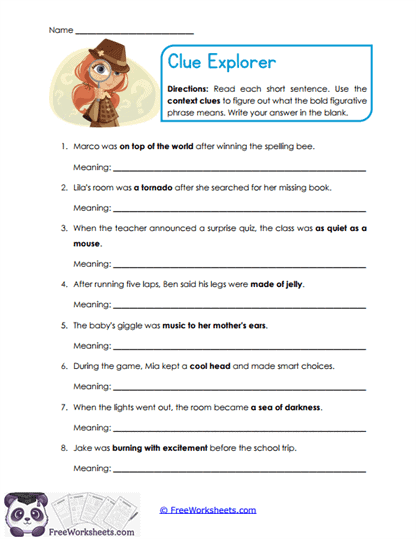
Clue Explorer
- What Kids Do:
Students examine short sentences with bold nonliteral expressions and use surrounding language to explain what each figurative phrase means in their own words. - Target Skill:
This activity strengthens context-clue application, figurative interpretation, and meaning construction tied to Grade 4 expectations for understanding nuanced language.
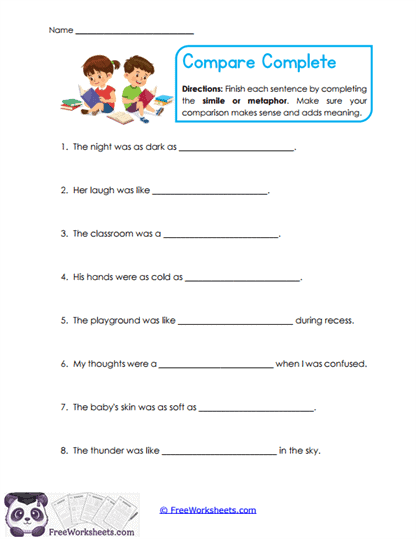
Compare Complete
- What Kids Do:
Students finish incomplete statements by crafting fitting similes and metaphors that create vivid, logical comparisons. - Target Skill:
This page develops comparison writing, semantic precision, and flexible use of figurative structures to deepen descriptive expression.
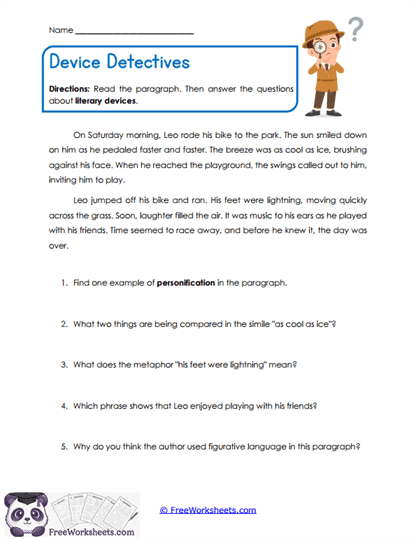
Device Detectives
- What Kids Do:
Students read a narrative paragraph, locate multiple examples of figurative language, and respond to questions about how each example works in context. - Target Skill:
This worksheet builds literary analysis, device identification, and evidence-based explanation of similes, metaphors, and personification.
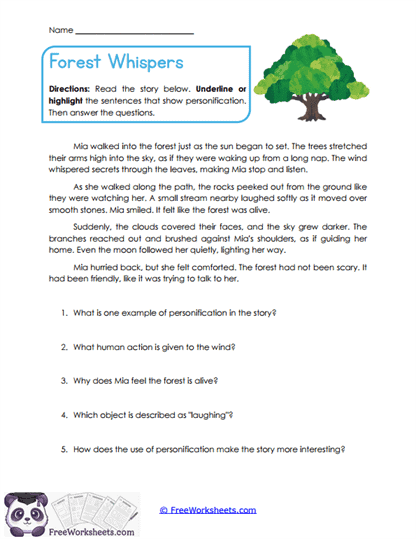
Forest Whispers
- What Kids Do:
Students read a descriptive forest passage, mark sentences showing personification, and answer follow-up questions about the language choices in the story. - Target Skill:
This activity supports recognition of human traits assigned to nonhuman things and helps students analyze how personification enriches imagery and tone.
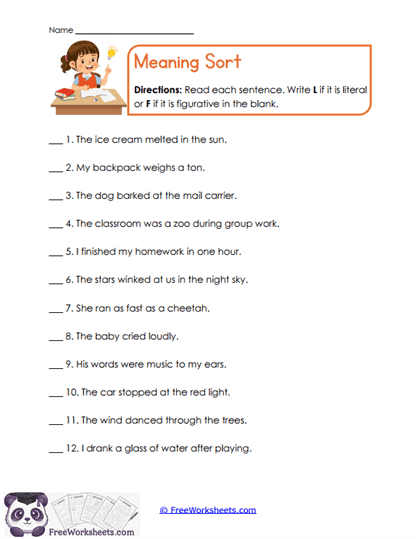
Meaning Sort
- What Kids Do:
Students review a set of sentences and sort each one as literal or figurative by deciding whether the wording should be taken exactly or nonliterally. - Target Skill:
This practice sharpens language discrimination, interpretive reasoning, and understanding of figurative versus literal meaning in text.
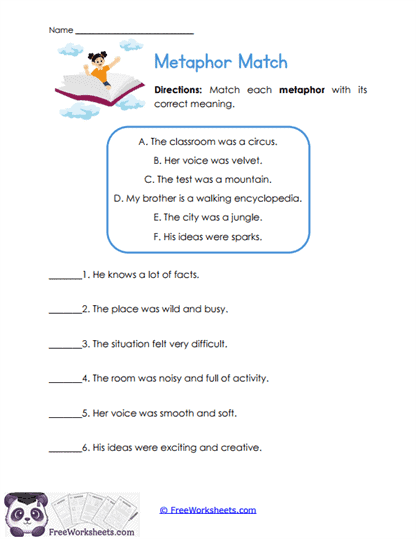
Metaphor Match
- What Kids Do:
Students pair each metaphor with the correct real-life explanation by connecting symbolic comparisons to their intended meanings. - Target Skill:
This worksheet reinforces metaphor comprehension, abstract thinking, and accurate interpretation of implied comparison in literary language.
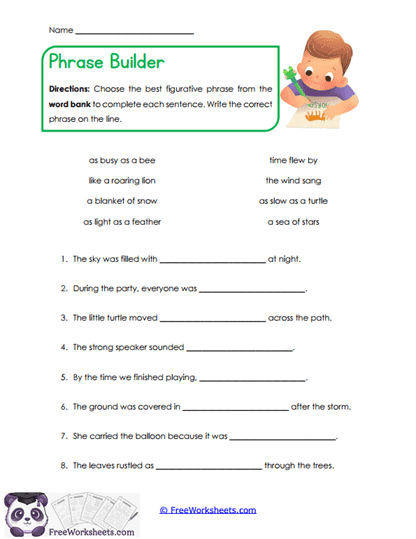
Phrase Builder
- What Kids Do:
Students select similes and metaphors from a word bank to complete sentences so the finished ideas are descriptive and contextually appropriate. - Target Skill:
This page strengthens figurative language selection, contextual decision-making, and understanding of how comparison shapes sentence meaning.
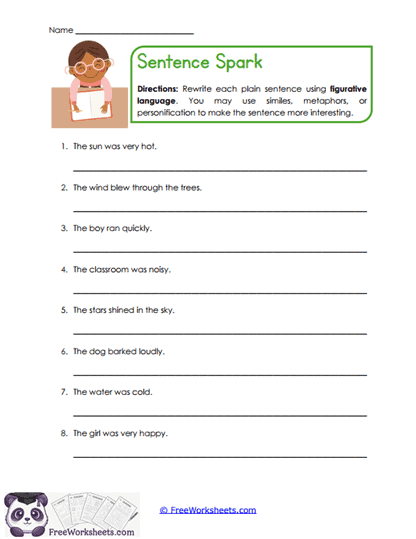
Sentence Spark
- What Kids Do:
Students transform plain statements into more engaging sentences by adding similes, metaphors, or personification. - Target Skill:
This activity develops revision skills, elaborative writing, and purposeful use of figurative techniques to improve clarity and imagery.
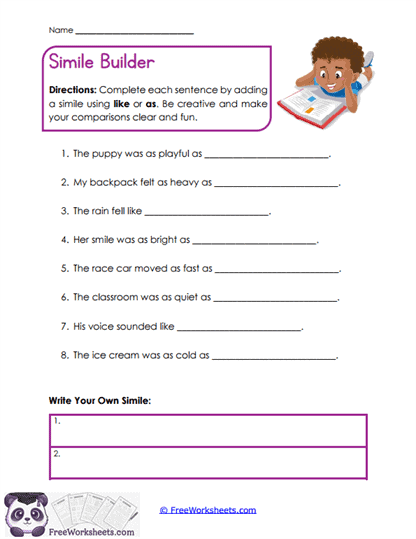
Simile Builder
- What Kids Do:
Students complete sentence frames using like or as and then compose original similes that make their descriptions more imaginative. - Target Skill:
This worksheet supports simile formation, descriptive writing fluency, and command of comparative language patterns in student composition.
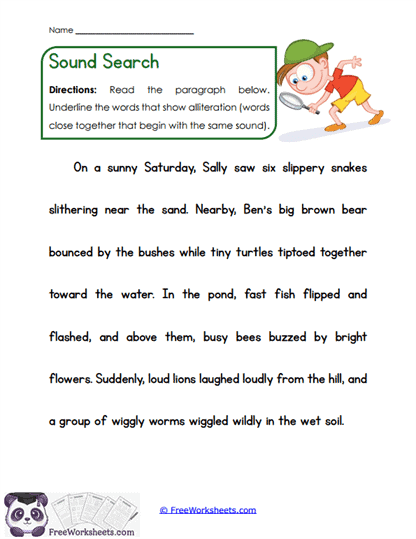
Sound Search
- What Kids Do:
Students read a paragraph closely and underline groups of words that repeat beginning sounds to show alliteration. - Target Skill:
This page builds phonological awareness, sound-pattern recognition, and understanding of how alliteration contributes to style and emphasis in text.