
About This Worksheet
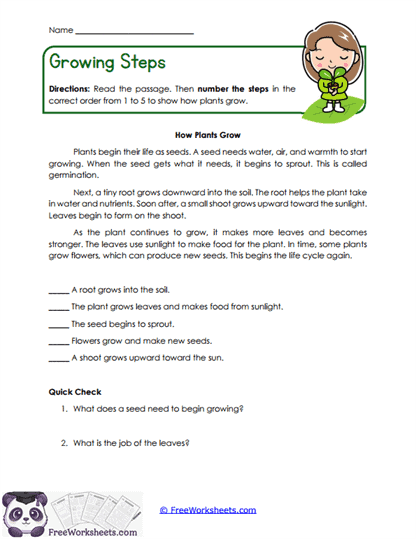
This worksheet is a sequencing comprehension activity focused on understanding the steps in a process described in an informational text. It is designed for Grade 4 students and integrates science content about plant growth. Students read a passage and organize the steps in the correct order. For example, identifying that seeds sprout before leaves grow shows understanding of sequence.
Curriculum and Grade Alignment
This worksheet aligns with Grade 4 standards for understanding sequence and describing events in informational texts. The primary learning goal is to help students organize steps logically and understand processes. Students should already be familiar with basic sequencing concepts before completing this activity successfully. This supports CCSS.ELA-LITERACY.RI.4.3 and TEKS 4.6(E).
Student Tasks
On this worksheet, students will read a passage about how plants grow from seeds to mature plants. They will number the steps in the correct order based on the passage. Learners will also answer comprehension questions about plant growth. The activity reinforces understanding of sequence and scientific processes.
Common Challenges and Misconceptions
Students may mix up the order of steps if they do not carefully reread the passage. Some learners might rely on prior knowledge instead of using the text. Others may overlook small but important details. Teachers should encourage careful reading and checking answers.
Implementation Guidance
This worksheet is ideal for science lessons focused on plant life cycles and reading comprehension. Teachers can model sequencing strategies before assigning independent work. Parents and homeschool educators can use this activity to reinforce science learning at home. It also works well as a review activity.
Details and Features
The worksheet includes a clear informational passage with structured sequencing tasks. It features comprehension questions to reinforce understanding. The layout is organized and student-friendly. It is designed for printing and flexible use.