
Informational Texts Worksheets
Grade 4 reading Informational Texts worksheets help students analyze nonfiction passages, key details, and text-based ideas across engaging academic topics. These free, ready-to-print resources are provided in PDF format for immediate classroom use. Students strengthen main idea, text evidence, and informational text analysis skills aligned to Common Core standards.
About This Collection of Worksheets
Informational text skills are essential in Grade 4 because students are expected to read nonfiction more independently, identify key ideas, and explain how details support understanding. These worksheets support that growth by aligning with Common Core standards such as RI.4.1, RI.4.2, RI.4.3, RI.4.8, and RI.4.9, helping students work with science-based, health-related, and general knowledge passages in meaningful ways. As students practice with varied text structures and response formats, they build confidence in reading to learn.
This collection works well for morning work, homework, RTI support, literacy centers, small groups, guided reading, and formative assessment. Teachers can use these worksheets to introduce nonfiction strategies, reinforce close reading habits, or target a specific standard such as summarizing, compare and contrast, or fact versus opinion. Because the activities include charts, written responses, evidence hunts, and graphic organizers, students get repeated practice without the work feeling repetitive.
Each worksheet is designed for strong print quality, low ink use, and easy classroom or homeschool implementation. The layouts are clean, organized, and student-friendly, allowing learners to focus on the reading task without distraction. With low-prep formatting and clear directions, these printable resources fit smoothly into daily instruction and independent practice.
Paul’s Teacher Tip
When teaching informational texts, encourage students to slow down and ask, “What is the author teaching me here?” Grade 4 readers often notice interesting facts, but they still need support identifying which details matter most and how those details connect to the main idea. Model how to underline one strong sentence, label a paragraph’s focus in the margin, or use a simple organizer before answering questions. For students who need more support, narrow the task to one skill at a time, and for stronger readers, ask them to explain why one piece of evidence is more useful than another. The goal is not just to find answers, but to understand how nonfiction texts are built.
Worksheet Collection Skill Spotlights
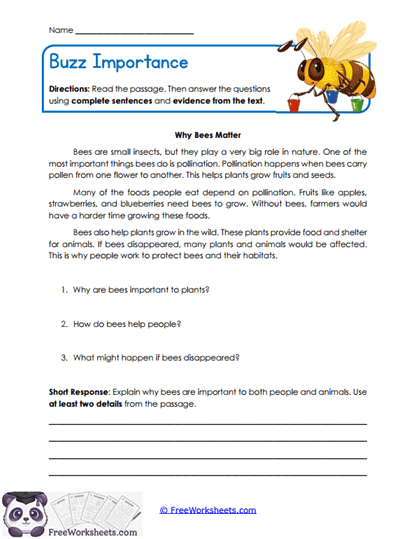
Buzz Importance
- What Kids Do:
Students read a passage about bees, answer questions in complete sentences, and explain why bees matter using details from the text. - Target Skill:
Builds explanatory comprehension by helping readers connect central ideas to precise supporting evidence in science-based nonfiction.
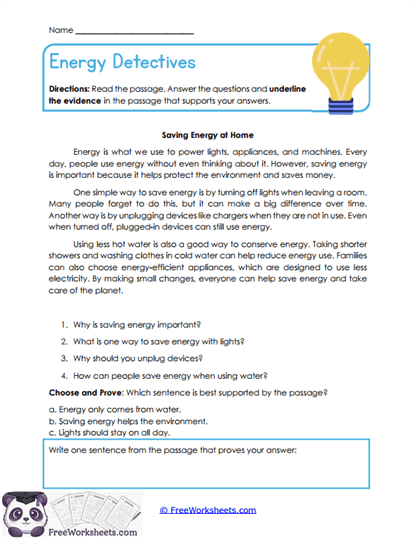
Energy Detectives
- What Kids Do:
Learners read about saving energy at home, answer questions, and underline the exact sentences that prove their responses. - Target Skill:
Strengthens close-reading habits by locating relevant textual proof and using it to support understanding of informational text.
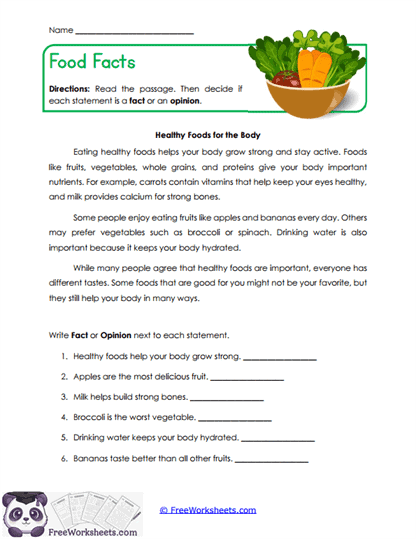
Food Facts
- What Kids Do:
Students read a healthy eating passage and label statements as fact or opinion based on evidence and wording in the text. - Target Skill:
Develops evaluative reading by distinguishing verifiable information from personal judgment in nonfiction writing.
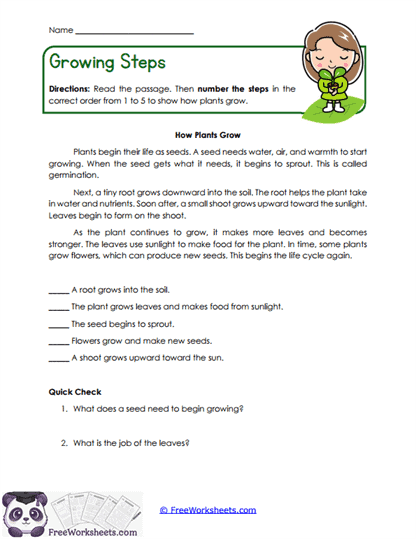
Growing Steps
- What Kids Do:
Students read about plant growth and number the steps of the process in the correct order while answering follow-up questions. - Target Skill:
Builds process-sequencing skills by tracing how scientific events unfold in a logical progression.
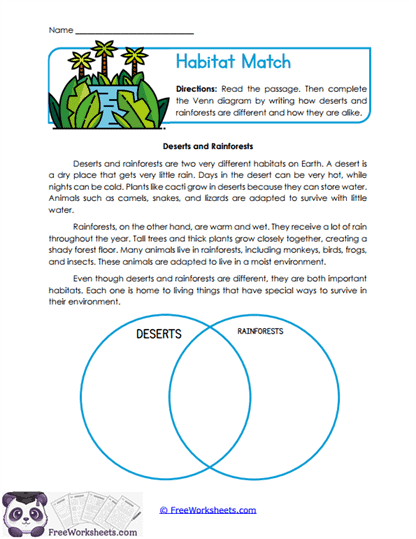
Habitat Match
- What Kids Do:
Learners read about deserts and rainforests and complete a Venn diagram showing how the habitats are alike and different. - Target Skill:
Strengthens compare-and-contrast analysis by organizing specific details from nonfiction text into similarities and differences.
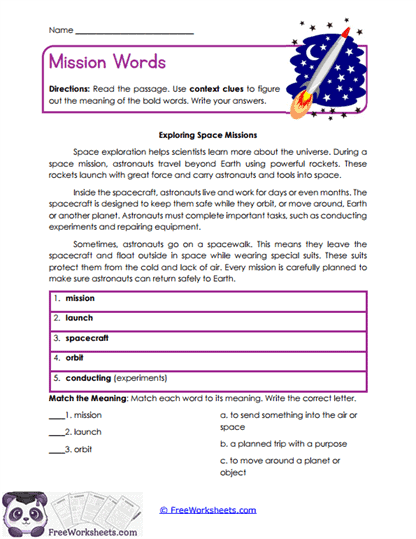
Mission Words
- What Kids Do:
Students read a passage about space missions, use context to define bold words, and match each term to the best meaning. - Target Skill:
Builds academic vocabulary by using surrounding clues to determine the meaning of domain-specific science language.
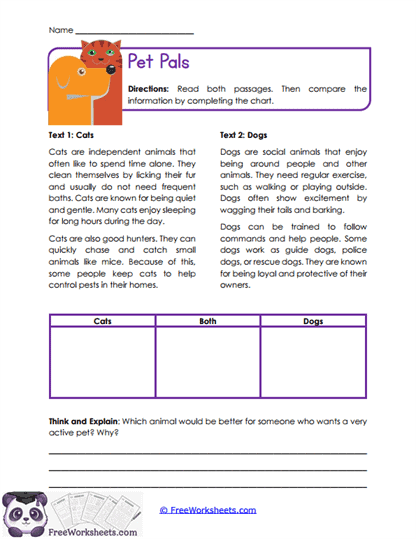
Pet Pals
- What Kids Do:
Students read two passages about cats and dogs, sort traits into a three-column chart, and explain which pet better fits an active person. - Target Skill:
Develops cross-text comparison by synthesizing information from paired nonfiction passages and applying it in a written response.
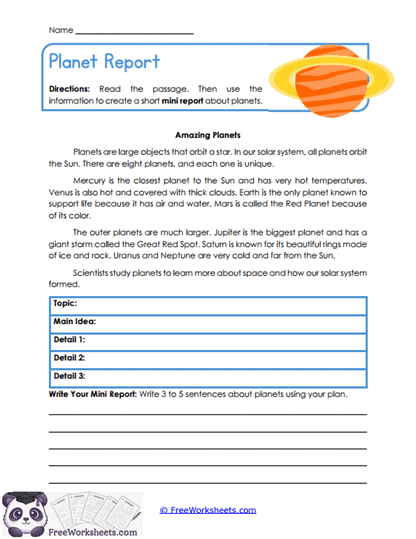
Planet Report
- What Kids Do:
Learners read about planets, fill in a planning chart with the topic, main idea, and details, then write a short informational report. - Target Skill:
Strengthens informational writing by turning reading notes into a clear, organized explanatory paragraph.
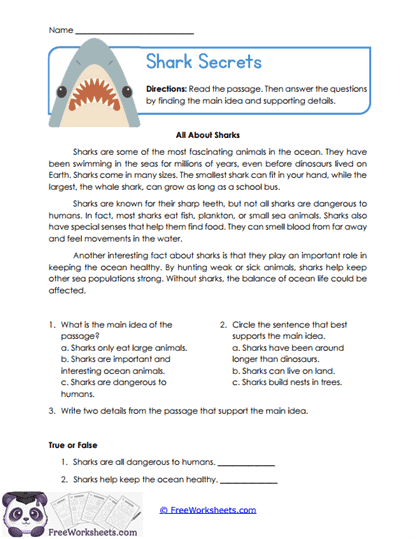
Shark Secrets
- What Kids Do:
Students read a passage about sharks, identify the main idea, and choose details that best support the central point of the text. - Target Skill:
Builds main-idea understanding by separating the author’s most important message from interesting supporting facts.
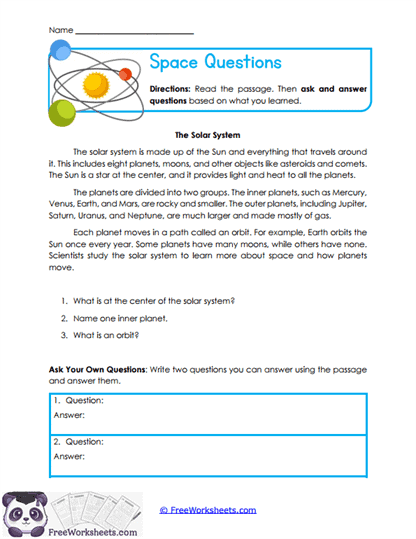
Space Questions
- What Kids Do:
Students read a solar system passage, answer text-based questions, and create their own meaningful questions with supported answers. - Target Skill:
Develops inquiry-driven comprehension by using questioning to deepen understanding of nonfiction content.
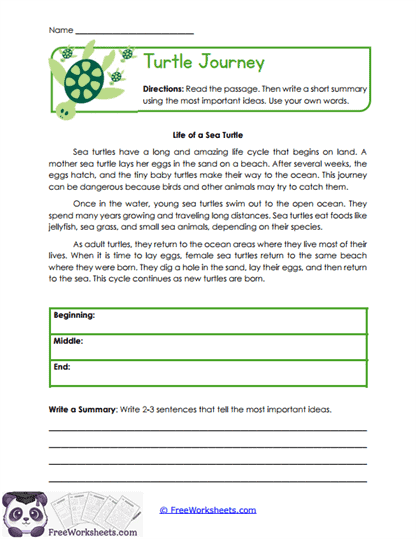
Turtle Journey
- What Kids Do:
Learners read about the sea turtle life cycle, organize the passage into beginning, middle, and end, and write a short summary. - Target Skill:
Strengthens summarizing skills by selecting major events and expressing them in a clear, concise sequence.
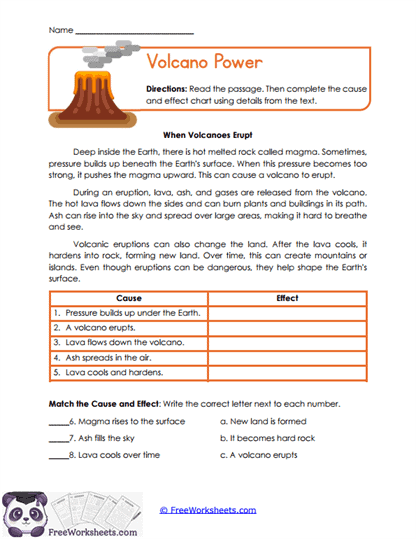
Volcano Power
- What Kids Do:
Students read about volcanic eruptions and complete a chart that matches causes to the effects they produce. - Target Skill:
Builds cause-and-effect reasoning by tracing how linked events develop within a scientific explanation.