
About This Worksheet
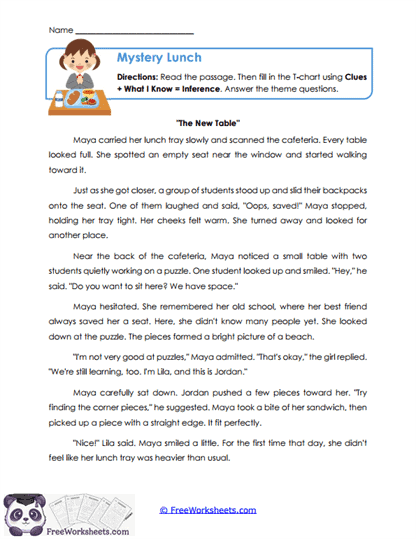
This worksheet is an inference and theme analysis activity built around social situations and character growth. Students read a narrative passage about Maya navigating a new cafeteria experience. The story includes subtle emotional cues, dialogue, and character interactions that require careful interpretation. Students complete a T-chart separating text clues (“What I Know”) from their inferences (“What I Infer”). They then identify the theme supported by the character’s experience. This structured format strengthens inferential thinking and theme development skills.
Curriculum and Grade Alignment
This worksheet aligns with Common Core Standards RL.4.1 and RL.4.2. Students must refer to specific details when making inferences about character feelings and social situations. They also determine a central theme supported by events in the story. The T-chart structure increases rigor by requiring students to justify conclusions logically. Learners practice distinguishing between explicit information and inferred meaning. This resource builds higher-level literary comprehension skills.
Student Tasks
Students read the passage carefully. They list explicit details in the “What I Know” column. Then they write logical inferences in the “What I Infer” column. Finally, they determine the theme and support it with textual evidence. Careful rereading ensures accuracy and depth. The task promotes structured reasoning and evidence-based analysis.
Common Challenges and Misconceptions
Students may confuse facts with inferences. Some learners might state opinions without textual support. Others may choose a theme that is too specific to one event. Confusion often arises when interpreting subtle emotional shifts. Teachers can model how to move from a specific detail to a broader life lesson. Emphasizing cause-and-effect relationships strengthens understanding.
Implementation Guidance
Teachers can use this worksheet during lessons on inference and theme development. It works well in guided reading groups focused on social-emotional narratives. Class discussions can explore how first impressions change through kindness. Parents and homeschool educators may use this worksheet to reinforce analytical reading skills. Encourage students to underline dialogue clues. This activity prepares students for constructed-response literary questions.
Details and Features
The worksheet includes a narrative passage and T-chart organizer. It promotes evidence-based inference and theme analysis. The layout supports organized written responses. The black-and-white printable format ensures classroom efficiency. The activity strengthens higher-level comprehension skills. Its design reinforces structured analytical thinking.