
Inference and Theme Worksheets
These worksheets help students analyze stories for what's implied and the lesson the text communicates. These free, ready-to-print PDF worksheets are made for immediate classroom use with structured response supports. Students practice citing evidence, interpreting character motivation, predicting outcomes, and writing clear theme statements.
About This Collection of Worksheets
In Grade 4, students are expected to move beyond literal understanding and explain what the text suggests through dialogue, actions, and descriptive language. They must make inferences supported by details, determine theme, and explain how events and character choices reveal a lesson. This collection builds those skills systematically-teaching students to separate topic from theme, gather strong clues, and turn observations into evidence-based explanations aligned to RL.4.1 and RL.4.2.
These worksheets work well for guided reading, small-group instruction, literacy centers, and assessment practice. Many activities include scaffolds such as sentence frames, T-charts, matching formats, and annotation routines that help students organize thinking before writing. Teachers can also use them to model how to cite evidence, discuss multiple valid interpretations, and revise theme statements so they are universal rather than plot-specific.
All pages are black-and-white, printable, and designed for low-prep implementation. Clear organizers support students who need structure for deeper thinking, while open-ended responses provide challenge for students ready to explain reasoning in writing. The consistent emphasis on “clue → inference/theme → evidence” strengthens comprehension habits across a wide range of narratives.
Paul’s Teacher Tip
A powerful routine for this skill set is “clue → think → prove.” Have students first underline clues, then say what they think, and finally explain how the clue proves it. Model the difference between a weak theme (“friendship”) and a strong one (“Friends support each other during difficult times”) often. For extra support, let students talk through their thinking before writing-it helps clarify their ideas. You can also compare two different theme statements and ask which is stronger and why. Over time, students begin to internalize that good reading means explaining, not just answering.
Worksheet Collection Skill Spotlights
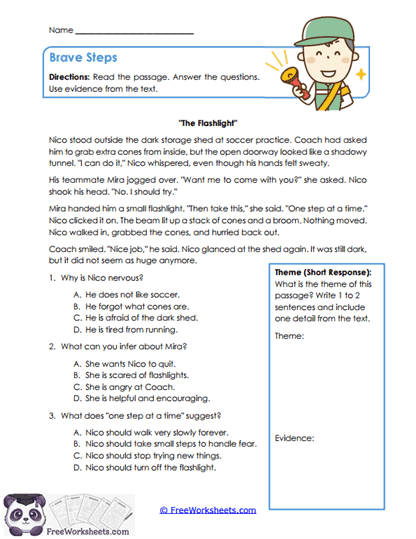
Brave Steps
• What Kids Do – Students read a story, infer character feelings, and write a theme supported by key moments.
• Target Skill – Builds inference of character growth and theme development.
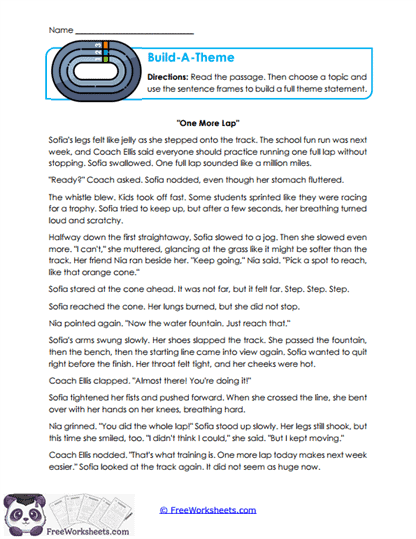
Build-A-Theme
• What Kids Do – Students choose a topic, use a sentence frame to write a theme, and support it with story details.
• Target Skill – Develops writing clear theme statements with evidence.
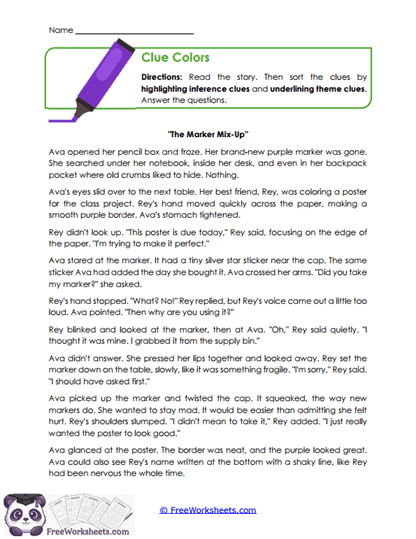
Clue Colors
• What Kids Do – Students highlight clues for inferences and themes, then answer questions using both types of evidence.
• Target Skill – Builds differentiation between inference evidence and theme evidence.
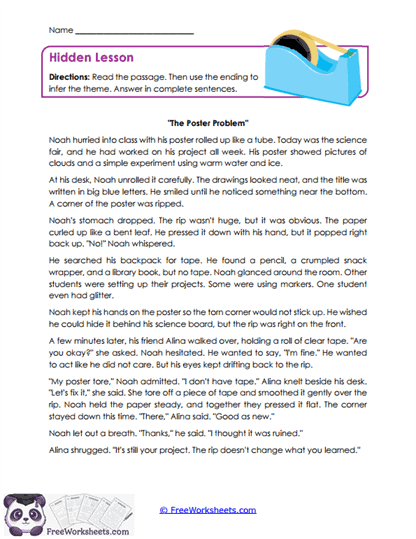
Hidden Lesson
• What Kids Do – Students track a character’s change and use it to identify and support a theme.
• Target Skill – Develops theme analysis through character development.
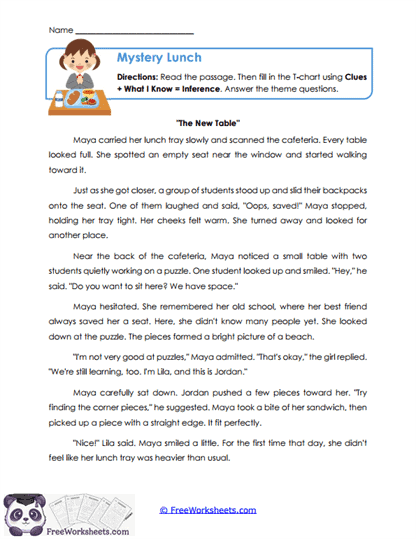
Mystery Lunch
• What Kids Do – Students sort text clues and inferences in a T-chart, then connect them to a theme.
• Target Skill – Builds inference skills and connection to theme.
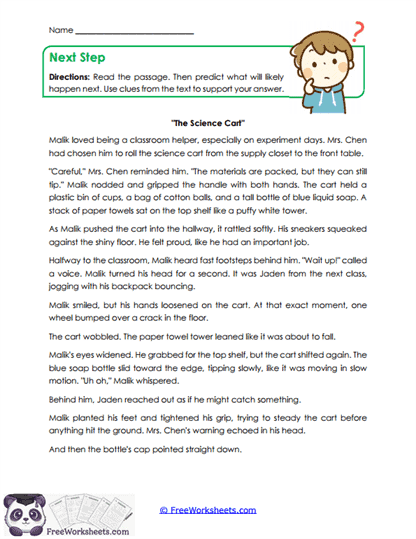
Next Step
• What Kids Do – Students read a passage, predict what will happen next, and support it with clues from the text.
• Target Skill – Develops evidence-based prediction.
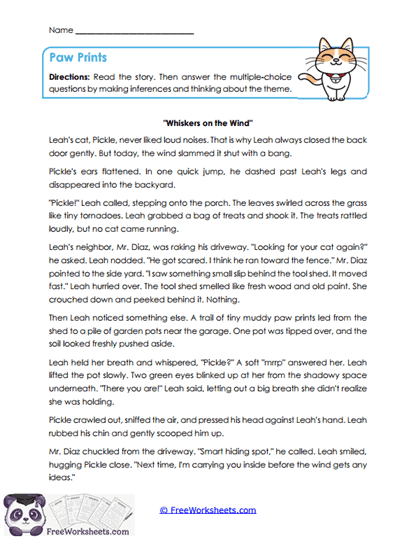
Paw Prints
• What Kids Do – Students infer events from story clues and identify a theme using supporting details.
• Target Skill – Builds inference and theme identification.
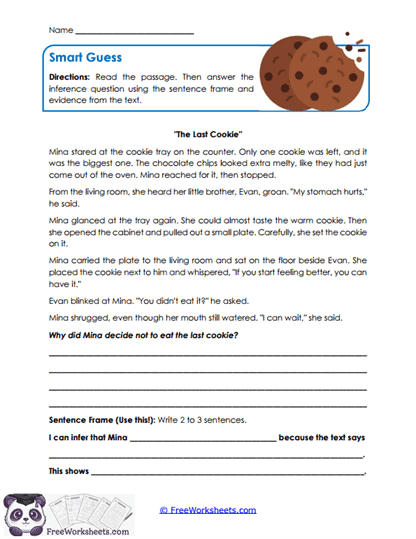
Smart Guess
• What Kids Do – Students infer a character’s motivation and complete a sentence using text evidence.
• Target Skill – Develops inference of motivation with evidence.
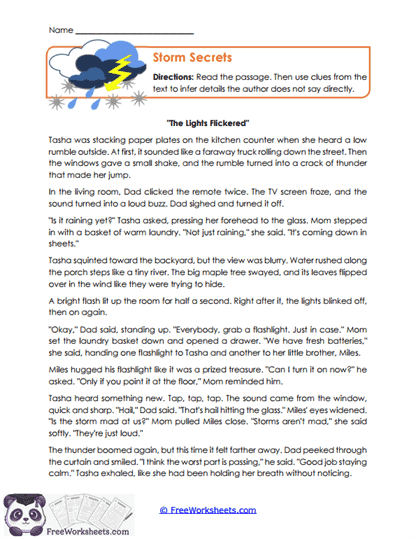
Storm Secrets
• What Kids Do – Students infer character thoughts and feelings using clues from dialogue and description.
• Target Skill – Builds understanding of implied meaning.
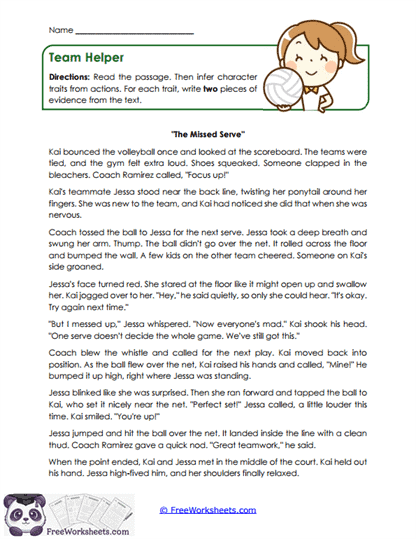
Team Helper
• What Kids Do – Students identify character traits, support them with evidence, and connect them to a theme.
• Target Skill – Develops trait analysis and theme connection.
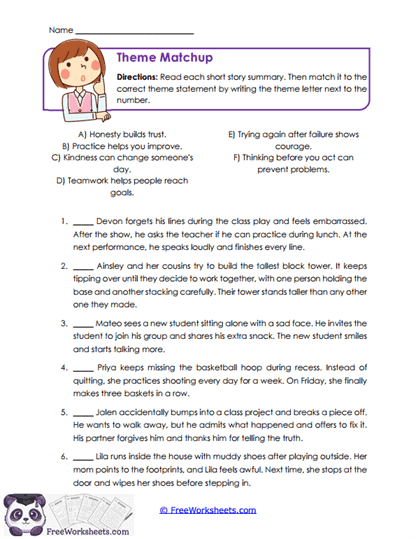
Theme Matchup
• What Kids Do – Students match short story scenarios to the most accurate theme statement.
• Target Skill – Builds precise theme identification.
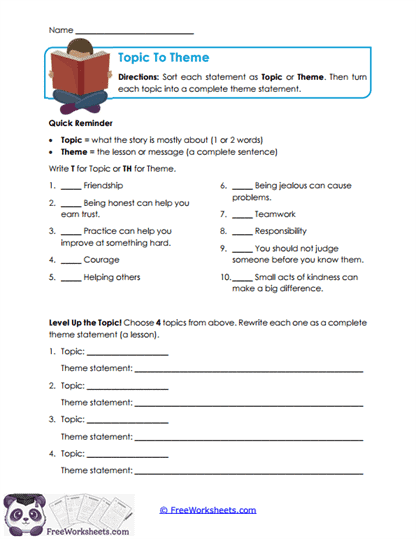
Topic to Theme
• What Kids Do – Students sort topics and themes, then rewrite topics into full theme statements.
• Target Skill – Develops understanding of topic vs. theme and writing complete themes.