
About This Worksheet
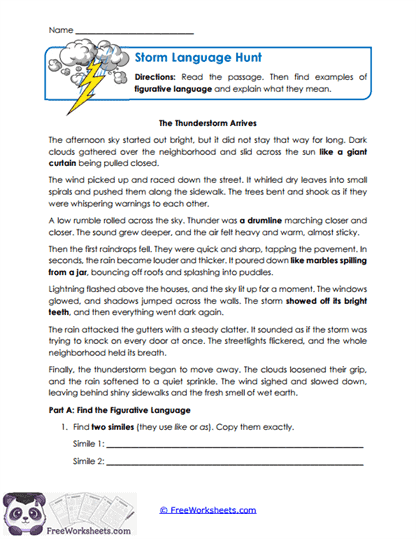
This worksheet is a figurative language analysis activity focused on identifying similes and understanding their meaning within a descriptive passage. It is designed for Grade 4 students and emphasizes interpreting imagery. Students read a passage about a thunderstorm and locate examples of similes. For example, comparing rain to marbles shows how similes create vivid mental images.
Curriculum and Grade Alignment
This worksheet aligns with Grade 4 standards for interpreting figurative language in literary texts. The primary learning goal is to help students recognize similes and explain their meaning. Students should already be familiar with basic figurative language concepts before completing this activity successfully. This supports CCSS.ELA-LITERACY.RL.4.4 and TEKS 4.8(A).
Student Tasks
On this worksheet, students will read a descriptive passage about a thunderstorm. They will identify similes and copy them exactly from the text. Learners must also explain what the similes mean in context. The activity encourages careful reading and interpretation of figurative language.
Common Challenges and Misconceptions
Students may confuse similes with other types of figurative language or miss key examples in the passage. Some learners might copy phrases incorrectly or incompletely. Others may struggle to explain the meaning of the similes in their own words. Teachers should model identifying and interpreting figurative language.
Implementation Guidance
This worksheet is ideal for lessons focused on descriptive writing and figurative language. Teachers can introduce similes with examples before assigning the activity. Parents and homeschool educators can use this worksheet to support reading and writing skills at home. It also works well as a creative writing extension.
Details and Features
The worksheet includes a vivid descriptive passage that highlights figurative language. It features structured prompts for identifying and explaining similes. The layout is clear and easy for students to follow. It is designed for printing and repeated instructional use.