
Grade 4 Reading Passages Worksheets
Grade 4 reading Grade 4 Reading Passages worksheets help students build comprehension through fiction and nonfiction texts with skill-based follow-up questions. These free, ready-to-print resources are provided in PDF format for immediate classroom use. Students strengthen summarizing, inference, and evidence-based reading analysis aligned to Common Core standards.
About This Collection of Worksheets
Reading passages are an essential part of Grade 4 instruction because students are expected to read more independently, manage longer texts, and explain their thinking with stronger evidence. These worksheets support that growth by aligning with Common Core standards such as RI.4.1, RI.4.2, RI.4.3, RI.4.5, RL.4.1, RL.4.2, RL.4.3, RL.4.4, and RL.4.6, helping students analyze informational and narrative texts in purposeful ways. With consistent practice across a range of comprehension skills, students learn to read closely, organize ideas, and respond with confidence.
This collection works well in many classroom settings, including morning work, homework, RTI support, literacy centers, guided reading, small groups, and formative assessment. Teachers can use these passages to target specific standards, reinforce close reading routines, or provide independent practice with evidence-based questions. Because the set includes science, social studies, and narrative topics, students encounter varied text types while strengthening core reading habits.
Each worksheet is designed for strong print quality, low ink use, and easy accessibility in both classroom and homeschool settings. The layouts are clean, readable, and low-prep, making them simple to add to daily instruction without extra materials. With clear directions and focused response sections, these printable resources help students stay organized while practicing meaningful comprehension skills.
Paul’s Teacher Tip
When using reading passages, teach students to read with a purpose before they answer questions. In Grade 4, many readers can find details, but they still need support deciding which details matter most for a summary, inference, or text-evidence response. Model how to annotate lightly by circling signal words, underlining key sentences, or jotting short notes in the margin. For students who need more support, narrow the focus to one question type at a time, and for stronger readers, ask them to explain why one piece of evidence is better than another. Strong passage work comes from slowing down, rereading, and thinking deeply about how the text is built.
Worksheet Collection Skill Spotlights
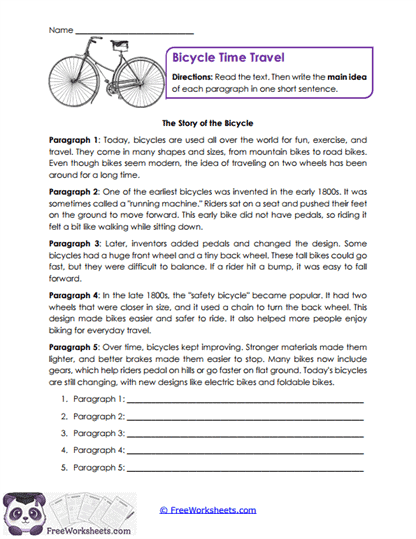
Bicycle Time Travel
- What Kids Do:
Students read a multi-paragraph informational passage about bicycle history and write one clear main-idea sentence for each paragraph. - Target Skill:
Builds paragraph-level summarization by helping readers separate central points from interesting but less important details.
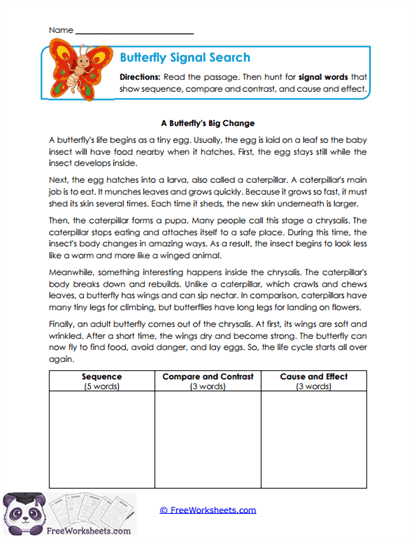
Butterfly Signal Search
- What Kids Do:
Learners read a science passage about the butterfly life cycle and sort transition words into categories such as sequence, comparison, and cause and effect. - Target Skill:
Strengthens text-structure awareness by identifying the language authors use to connect and organize ideas in nonfiction.
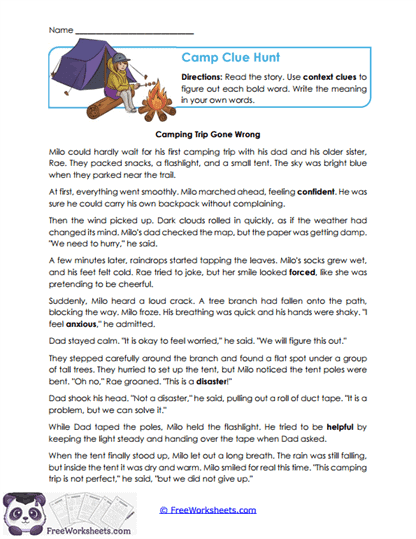
Camp Clue Hunt
- What Kids Do:
Students read a camping story, examine highlighted vocabulary, and use nearby sentences to determine each word’s meaning. - Target Skill:
Develops context-clue strategies by using surrounding details to unlock unfamiliar words during independent reading.
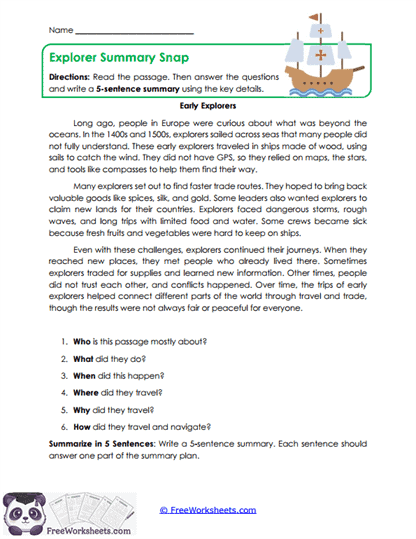
Explorer Summary Snap
- What Kids Do:
Students read about early explorers, answer guiding questions about key details, and turn those notes into a five-sentence summary. - Target Skill:
Builds concise informational writing by organizing important facts into a focused summary using original wording.
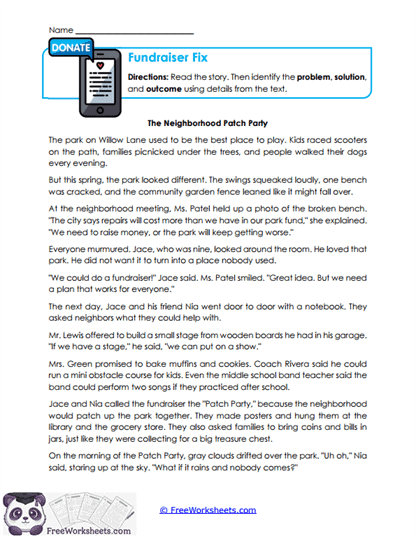
Fundraiser Fix
- What Kids Do:
Learners read a story about a neighborhood fundraiser and identify the central problem, the chosen solution, and the final outcome. - Target Skill:
Strengthens narrative structure analysis by tracing how challenges are resolved through character action and community effort.
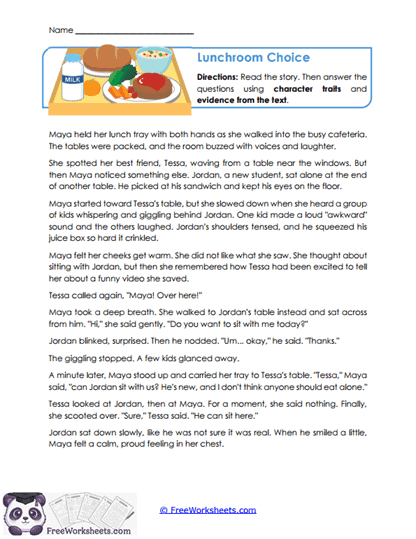
Lunchroom Choice
- What Kids Do:
Students read a story about a thoughtful lunchroom decision and answer questions about the main character’s traits using evidence from the text. - Target Skill:
Builds character-analysis skills by connecting social choices and behavior to specific personality traits.
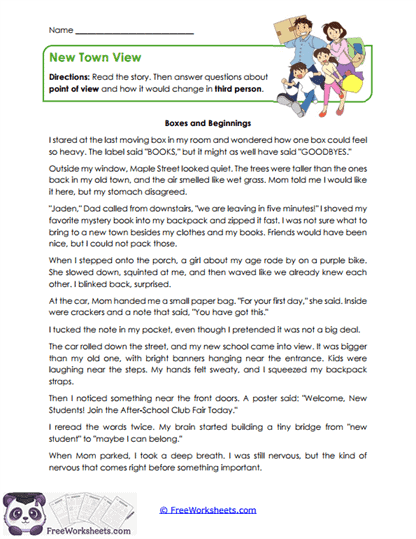
New Town View
- What Kids Do:
Students read a first-person story about moving to a new town and consider how the narration would change if told in third person. - Target Skill:
Develops point-of-view understanding by comparing how perspective shapes what readers learn and feel in a story.
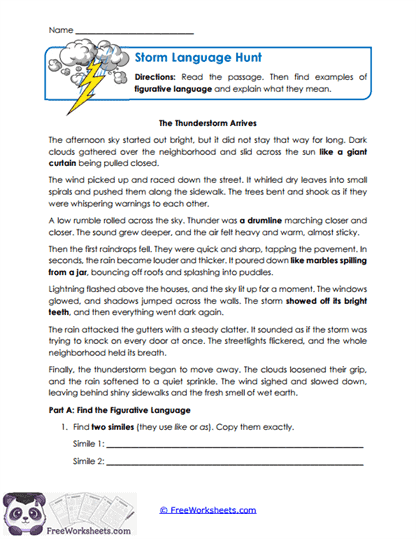
Storm Language Hunt
- What Kids Do:
Learners read a descriptive thunderstorm passage, locate similes, and explain what each comparison means in context. - Target Skill:
Strengthens figurative-language interpretation by showing how similes create imagery and deepen meaning in literary text.
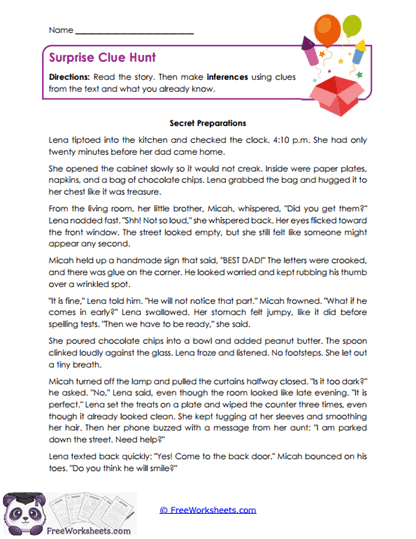
Surprise Clue Hunt
- What Kids Do:
Students read about preparations for a surprise, gather clues from the story, and answer inference questions supported by reasoning. - Target Skill:
Builds inferential comprehension by combining text evidence with background knowledge to reach logical conclusions.
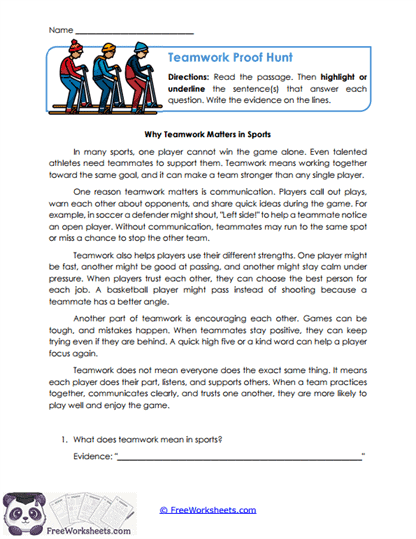
Teamwork Proof Hunt
- What Kids Do:
Students read an informational passage about teamwork in sports, underline supporting sentences, and record exact evidence to answer a question. - Target Skill:
Develops close-reading precision by selecting the strongest textual proof to support understanding of a key idea.
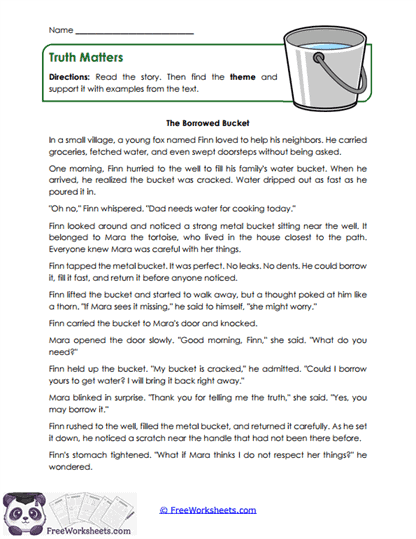
Truth Matters
- What Kids Do:
Learners read a moral-choice story, identify its lesson, and explain how events in the narrative develop that theme. - Target Skill:
Strengthens theme analysis by connecting plot events and character decisions to a broader life message.
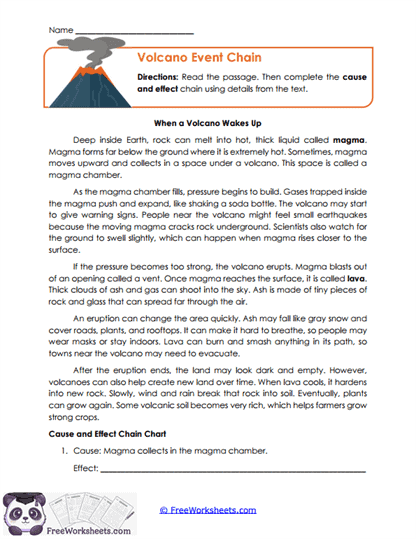
Volcano Event Chain
- What Kids Do:
Students read a science passage about eruptions and complete a chain showing how one volcanic event leads to the next. - Target Skill:
Builds cause-and-effect reasoning by tracing linked events and explaining logical relationships in informational text.