
Characters in Stories Worksheets
Grade 4 reading Characters in Stories worksheets help students analyze traits, feelings, motivations, and growth through engaging narrative passages. These free, ready-to-print resources are provided in PDF format for immediate classroom use. Students strengthen character analysis, inference, and evidence-based reasoning skills aligned to Common Core standards.
About This Collection of Worksheets
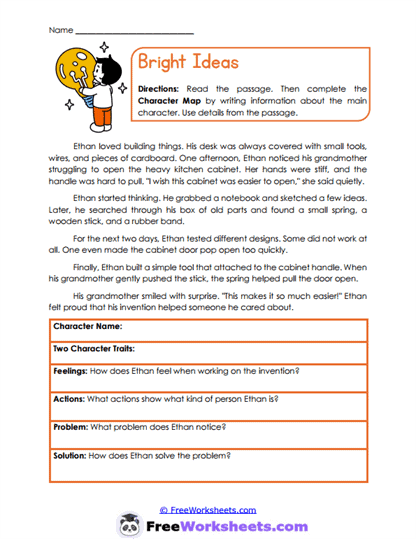
Character analysis is a key part of Grade 4 reading instruction because students are expected to move beyond simply identifying who is in a story and begin explaining how characters think, feel, act, and change. These worksheets support that progression by aligning with Common Core standards such as RL.4.3, helping students describe character traits, track emotional shifts, examine motivations, and analyze how actions and dialogue reveal personality. As students work through varied passages and response formats, they build stronger comprehension and deeper literary understanding.
This collection is flexible for use during morning work, homework, RTI support, literacy centers, guided reading, small groups, and formative assessment. Teachers can use these worksheets to introduce character-focused skills, reinforce text evidence routines, or assess whether students can explain their thinking clearly. With activities that include matching, charts, timelines, dialogue analysis, and written responses, students get repeated practice with important reading skills in meaningful ways.
Each worksheet is designed for strong print quality, low ink use, and easy classroom or homeschool implementation. The layouts are clean, readable, and student-friendly, allowing learners to focus on the text and response task without distraction. With low-prep formatting and clear directions, these printable resources fit smoothly into daily instruction and independent practice.
Paul’s Teacher Tip
When teaching character analysis, encourage students to look at three things together: what the character says, what the character does, and how the character changes. Many Grade 4 students can name a trait, but they often need support proving it with details from the text. Use sentence stems such as “This shows the character is ___ because ___” to help students explain their reasoning clearly. For students who need extra support, provide trait word banks and graphic organizers, and for stronger readers, ask them to compare beginning and ending traits or explain how dialogue and actions work together. Repeated practice with evidence-based responses helps students move from guessing to true literary analysis.
Worksheet Collection Skill Spotlights
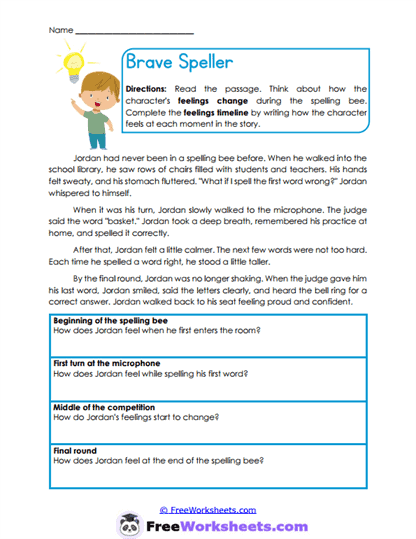
Brave Speller
- What Kids Do:
Students read about a spelling bee experience, complete a feelings timeline, and explain how the character’s emotions shift from one part of the story to another. - Target Skill:
Builds understanding of emotional development by tracing how events influence confidence, worry, and perseverance across a narrative.
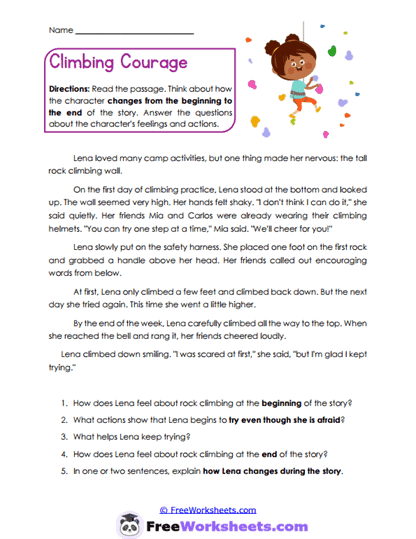
Climbing Courage
- What Kids Do:
Learners read a story about rock climbing, compare the character’s feelings at the beginning and end, and explain how her actions show growth. - Target Skill:
Strengthens character development analysis by connecting challenge, persistence, and change over the course of a story.
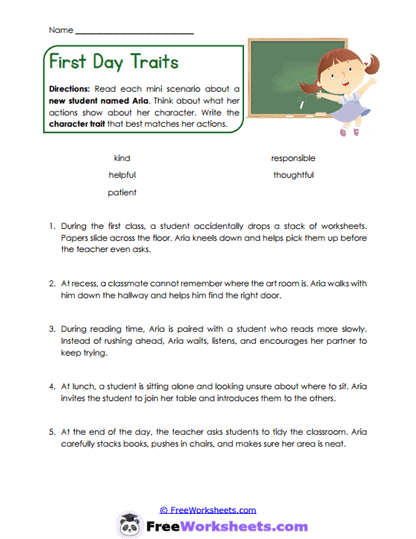
First Day Traits
- What Kids Do:
Students read short school-based scenarios and match each action to the character trait that best fits the behavior shown. - Target Skill:
Develops inferential thinking by linking specific actions to personality traits using context clues and character vocabulary.
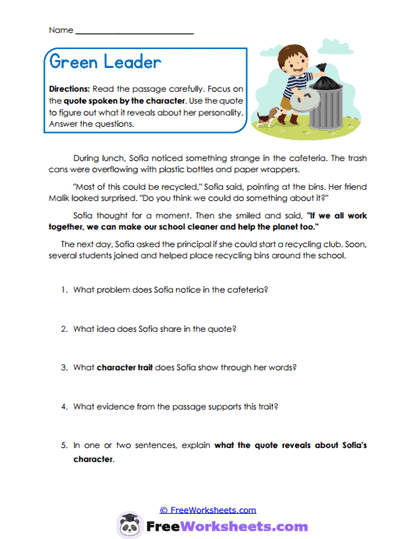
Green Leader
- What Kids Do:
Students read about a student solving a school problem, answer questions about her idea and actions, and explain what her words reveal about her personality. - Target Skill:
Builds leadership-focused character analysis by examining how dialogue and decisions reveal responsibility, initiative, and motivation.
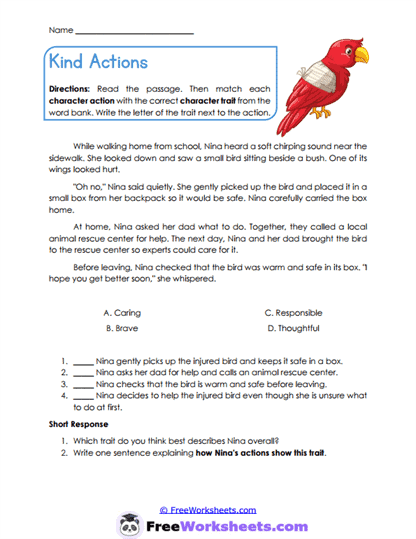
Kind Actions
- What Kids Do:
Learners read a passage about helping an injured bird, match actions to traits from a word bank, and explain which trait best describes the main character overall. - Target Skill:
Strengthens trait identification by connecting behaviors to precise descriptive language and supporting conclusions with evidence.
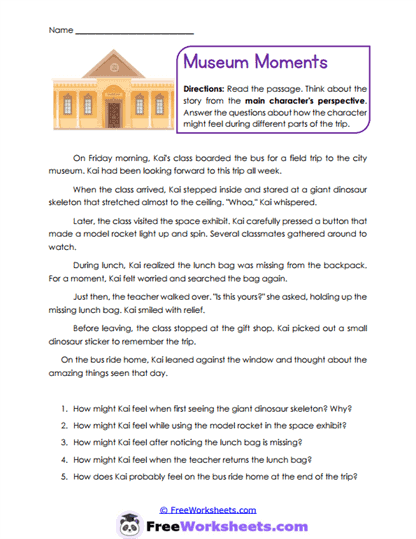
Museum Moments
- What Kids Do:
Students read about a museum field trip and describe how the character feels during different events, explaining each feeling with story details. - Target Skill:
Develops emotional reasoning by analyzing how experiences in a narrative shape a character’s changing responses.
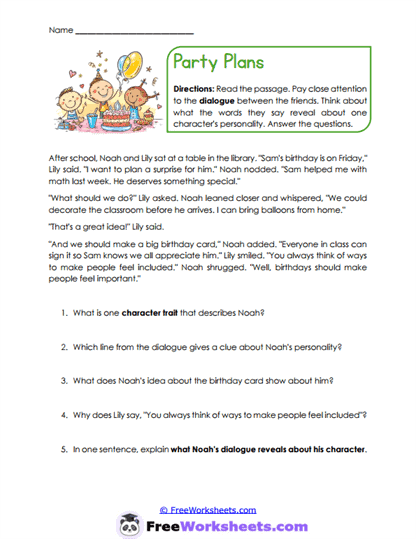
Party Plans
- What Kids Do:
Students read a birthday-planning dialogue, choose a trait that fits one speaker, and cite a line that proves their answer. - Target Skill:
Builds dialogue interpretation by showing how spoken words reveal personality, intentions, and social awareness.
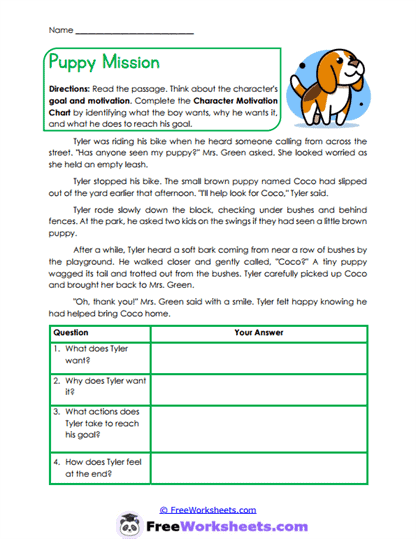
Puppy Mission
- What Kids Do:
Learners read a story about finding a lost puppy and complete a chart showing what the character wants, why it matters, and what actions he takes. - Target Skill:
Strengthens motivation analysis by connecting goals, choices, and outcomes within a narrative structure.
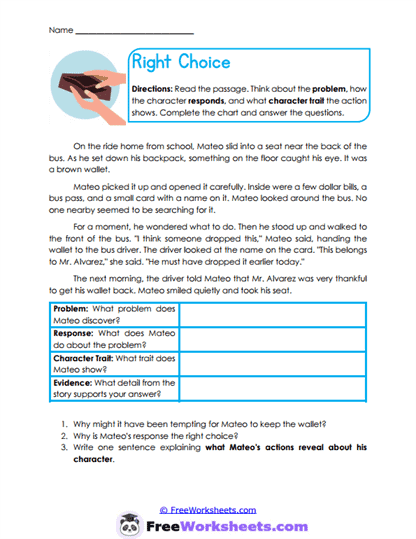
Right Choice
- What Kids Do:
Students read about a lost wallet, identify the problem and the character’s response, and explain which trait the decision reveals. - Target Skill:
Builds ethical character analysis by examining how problem-solving and decision-making show values such as honesty and responsibility.