
Author's Purpose Worksheets
Grade 4 reading Author's Purpose worksheets help students identify why a text was written by analyzing clues, tone, and supporting details. These free, ready-to-print resources are provided in PDF format for immediate classroom use. Students strengthen purpose analysis, evidence-based reasoning, and genre awareness skills aligned to Common Core standards.
About This Collection of Worksheets
Understanding author’s purpose is an essential Grade 4 reading skill because students are expected to move beyond basic comprehension and begin thinking about why an author chose to write a text in a certain way. These worksheets support that progression by aligning with Common Core standards such as RI.4.6, RI.4.8, RI.4.9, RL.4.2, and RL.4.6, helping students determine whether a text was written to inform, persuade, entertain, or sometimes do more than one of these at once. As students practice with both informational and narrative passages, they develop stronger comprehension and more thoughtful analysis of text.
This collection works well for morning work, homework, RTI support, literacy centers, guided reading, small groups, and formative assessment. Teachers can use these worksheets to introduce author’s purpose, reinforce how tone and evidence connect to purpose, or assess whether students can explain their thinking clearly. Because the activities include multiple-choice, short response, text comparison, classification, and evidence-based explanation, students get repeated practice in a variety of useful formats.
Each worksheet is designed for strong print quality, low ink use, and accessible classroom implementation. The layouts are clean, student-friendly, and low-prep, making them easy to use in both school and homeschool settings. With clear directions and focused response sections, these printable resources help students stay organized while practicing deeper reading skills.
Paul’s Teacher Tip
When teaching author’s purpose, remind students to ask, “What does the author want me to know, feel, or do?” That question helps Grade 4 learners move past the topic and focus on intent. Many students can identify inform, persuade, or entertain in obvious examples, but they often need support when a passage includes more than one purpose or blends facts with opinions. Use mentor texts and anchor charts with clue words, and encourage students to prove their answers with exact details from the passage. For students who need scaffolding, sentence stems like “The author’s purpose is ___ because the text says ___” can make their thinking much clearer.
Worksheet Collection Skill Spotlights
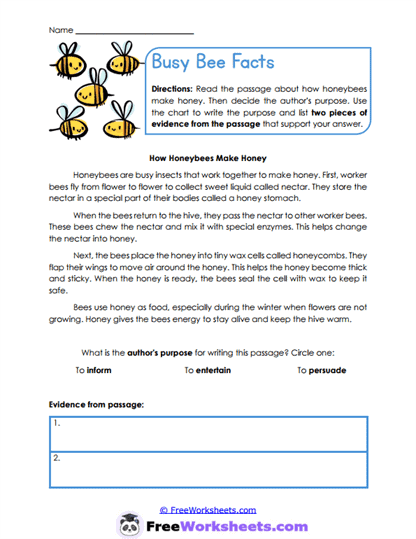
Busy Bee Facts
- What Kids Do:
Students read a nonfiction passage about honeybees, choose the writer’s purpose, and support their choice with evidence from the text. - Target Skill:
Builds informational text analysis by connecting factual details to an author’s intent to explain and teach.
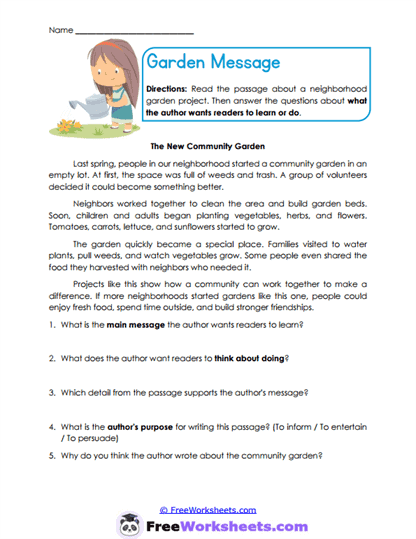
Garden Message
- What Kids Do:
Learners read about a community garden, identify the central message, and explain how the author’s ideas reveal the reason for writing. - Target Skill:
Strengthens comprehension of message and intent by linking key details to overall purpose in nonfiction text.
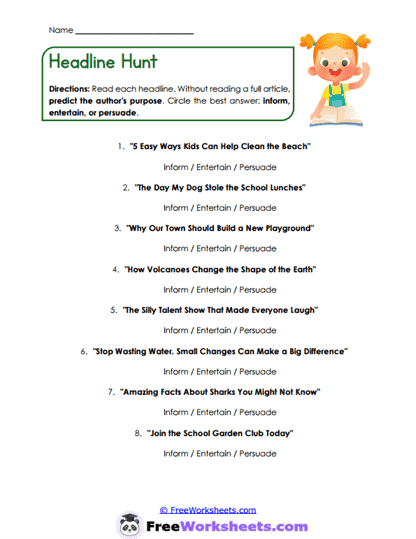
Headline Hunt
- What Kids Do:
Students examine a set of headlines and predict whether each one is meant to inform, entertain, or persuade. - Target Skill:
Develops quick purpose recognition by using title clues and language patterns to infer writing intent.
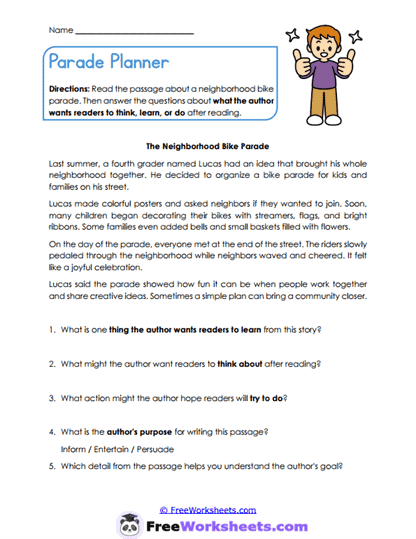
Parade Planner
- What Kids Do:
Students read a story about organizing a neighborhood bike parade, determine whether the text entertains, informs, or inspires action, and cite a supporting detail. - Target Skill:
Builds narrative purpose analysis by connecting story events and theme to the author’s intended impact on readers.
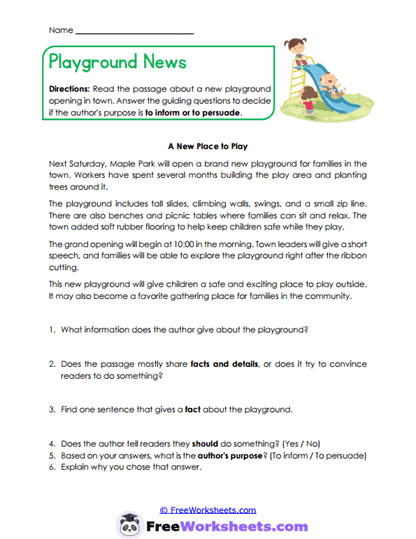
Playground News
- What Kids Do:
Learners read a passage about a new playground, answer questions about facts in the text, and decide whether the writing mainly informs or persuades. - Target Skill:
Strengthens distinction-making between objective information and persuasive intent in school-related informational text.
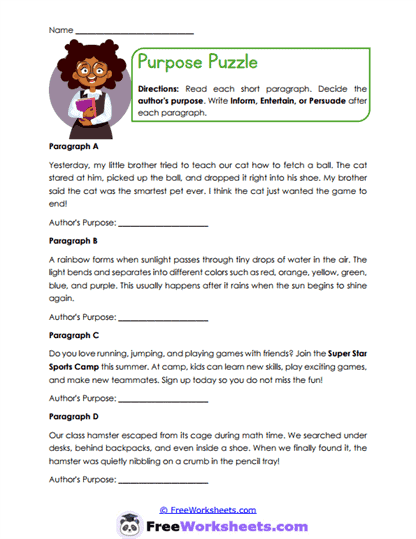
Purpose Puzzle
- What Kids Do:
Students read several short paragraphs and classify each one by purpose using inform, entertain, or persuade. - Target Skill:
Builds flexible purpose identification across varied text types through repeated short-form analysis.
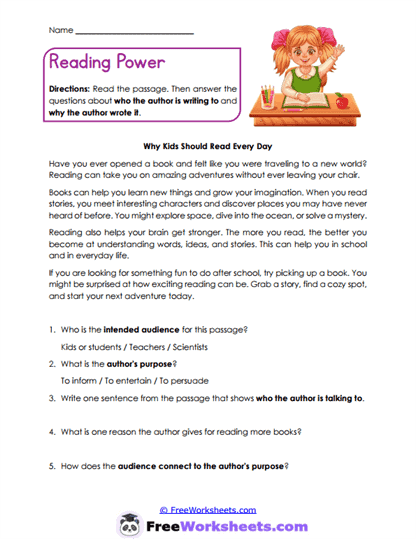
Reading Power
- What Kids Do:
Students read a passage encouraging reading, identify the intended audience, and explain how the audience connects to the author’s purpose. - Target Skill:
Develops audience-and-purpose reasoning by analyzing how writers shape messages for specific readers.
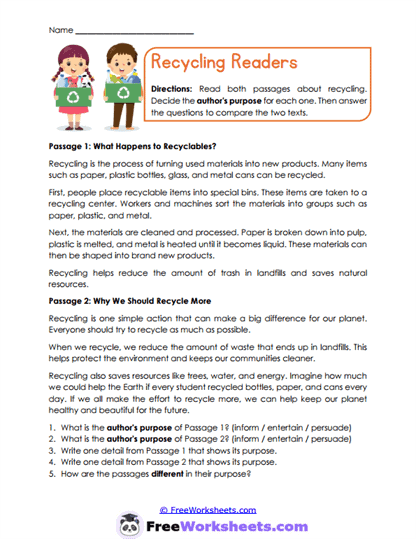
Recycling Readers
- What Kids Do:
Learners compare two passages about recycling and determine how each writer’s reason for writing is different. - Target Skill:
Strengthens cross-text analysis by comparing how shared topics can be presented with different purposes.
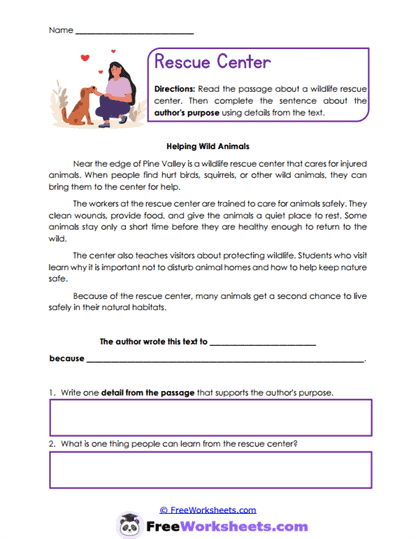
Rescue Center
- What Kids Do:
Students read about a wildlife rescue center, complete a response about the author’s purpose, and provide a detail that proves their thinking. - Target Skill:
Builds evidence-based explanation by connecting real-world informational details to author intent.
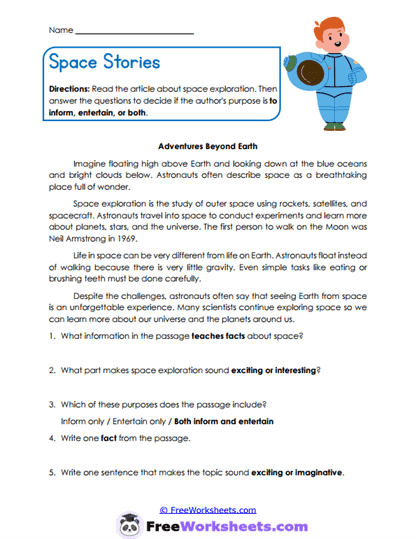
Space Stories
- What Kids Do:
Students read a passage about space exploration and decide whether it was written to inform, entertain, or do both. - Target Skill:
Develops nuanced reading analysis by recognizing that a single text can serve multiple purposes.
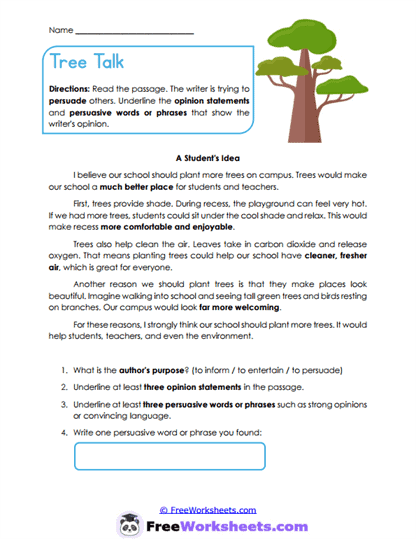
Tree Talk
- What Kids Do:
Learners read a persuasive passage about planting trees, underline opinion statements, and identify convincing words and phrases. - Target Skill:
Strengthens persuasive text analysis by examining how opinion language is used to influence readers.
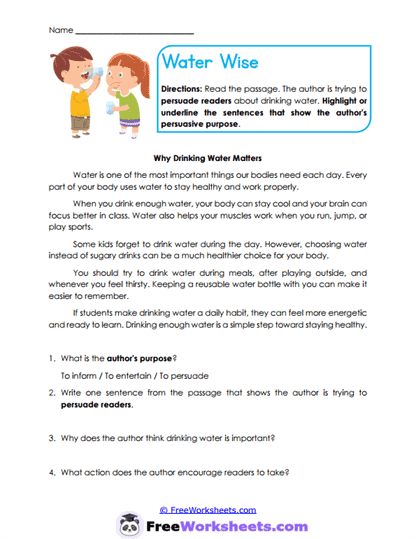
Water Wise
- What Kids Do:
Students read a passage about drinking water, highlight persuasive sentences, and explain why the author encourages certain habits. - Target Skill:
Builds argument awareness by identifying purposeful language that promotes action and supports claims.