
Novel Study Worksheets
These worksheets go through rigorous analysis of classic texts and author craft. These free, ready-to-print PDF worksheets are built for immediate classroom use with evidence-based prompts. Students practice theme development, symbolism tracing, rhetorical and perspective analysis, and character-driven interpretation.
About This Collection of Worksheets
Senior novel study requires students to do more than recall plot-they must trace how authors build theme over time, use symbols and imagery to shape meaning, and develop complex characters whose choices carry moral and philosophical weight. This collection reflects Common Core expectations for analyzing theme, character development, structure, language, and point of view in complex literature (including RL.11-12.2, RL.11-12.3, RL.11-12.4, RL.11-12.5, and RL.11-12.6). Across canonical novels and plays, students are pushed toward interpretive depth, synthesis, and precise textual support.
These worksheets fit naturally into whole-class novel units, seminar discussions, and pre-writing work for literary analysis essays. Because prompts are structured around thematic stages, symbolic development, and evidence-backed interpretation, they work well as guided reading checks, discussion launchers, or essay organizers. Many tasks also support AP-style analysis by requiring students to connect author choices-diction, imagery, structure, and perspective-to broader social critique and philosophical questions.
Each printable PDF is classroom-ready, low-prep, and designed for senior-level written responses in complete sentences and paragraph form. The questions are built to help students move from observation to claim-making-identifying patterns, explaining how they evolve, and defending an interpretation with quotations or clear event references. Teachers can easily extend activities into Socratic seminars, comparative essays, or creative rewrites that test how theme shifts when a craft choice changes.
Paul’s Teacher Tip
At the senior level, push students beyond “what happens” into “how meaning is built.” A simple shift in questioning helps: instead of asking “What does the symbol mean?”, ask “How does its meaning change-and why does that matter?” Encourage students to track patterns (imagery, diction, structure) across the whole text, not just in one scene. This is what separates basic comprehension from true literary analysis-and it’s exactly what prepares them for strong essays and discussions.
Worksheet Collection Skill Spotlights
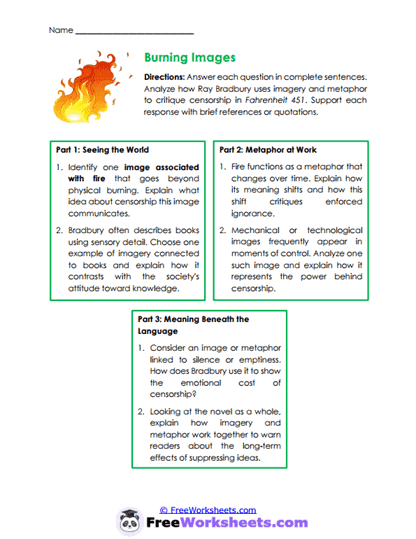
Burning Images
• What Kids Do – Students track how fire and mechanical imagery change meaning across the novel and connect them to theme.
• Target Skill – Analyzes how evolving imagery develops theme over time.
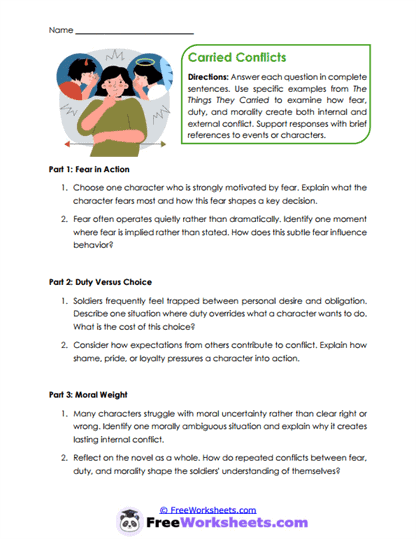
Carried Conflicts
• What Kids Do – Students examine internal and external conflicts and how they shape characters’ identities.
• Target Skill – Builds analysis of complex conflict and its role in theme and character development.
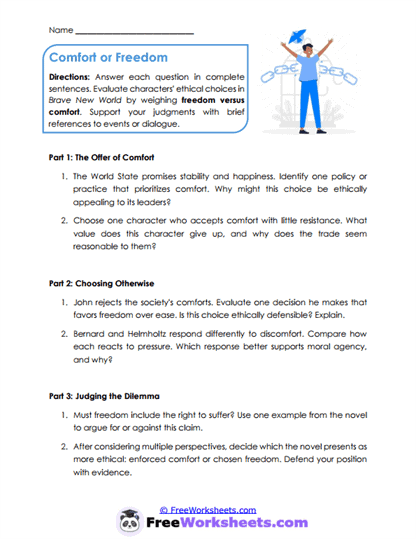
Comfort or Freedom
• What Kids Do – Students evaluate a dystopian society and defend a position using textual evidence.
• Target Skill – Develops ethical analysis and evidence-based argument writing.
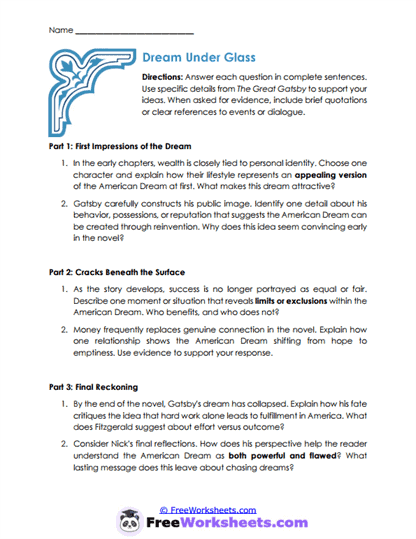
Dream Under Glass
• What Kids Do – Students analyze Gatsby’s journey and the symbolism behind the American Dream.
• Target Skill – Builds interpretation of theme through symbolism and characterization.
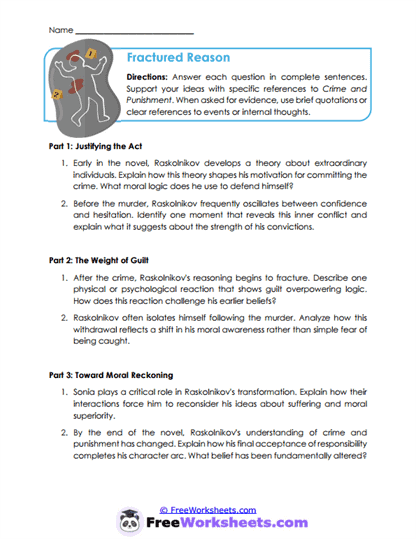
Fractured Reason
• What Kids Do – Students trace a character’s psychological and moral transformation across the novel.
• Target Skill – Develops analysis of internal conflict and philosophical ideas in character development.
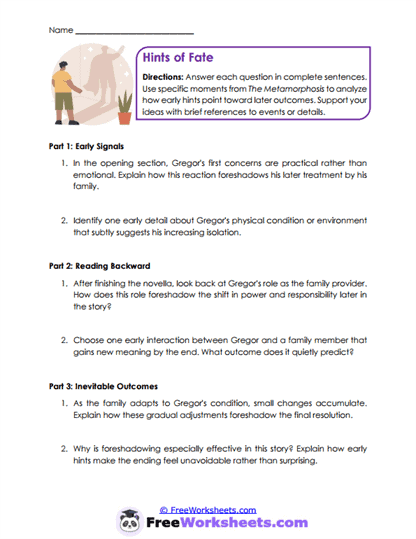
Hints of Fate
• What Kids Do – Students identify early clues in the text and connect them to later events.
• Target Skill – Builds understanding of foreshadowing and structural development.
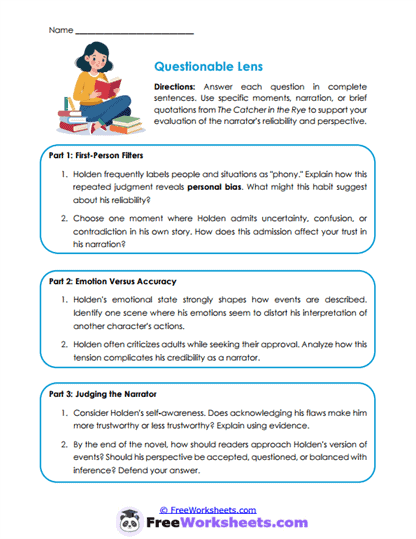
Questionable Lens
• What Kids Do – Students evaluate narrator reliability by analyzing bias, tone, and contradictions.
• Target Skill – Develops analysis of point of view and narrative reliability.
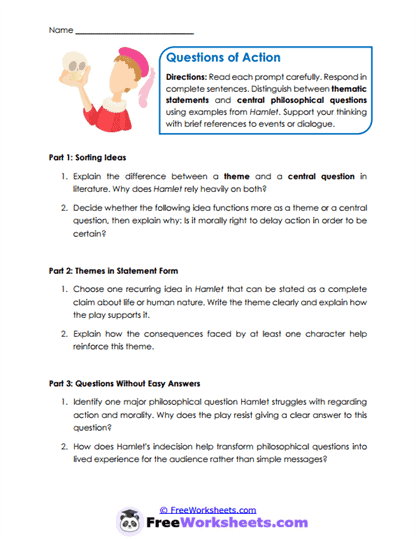
Questions of Action
• What Kids Do – Students distinguish between theme and central philosophical questions, then support interpretations.
• Target Skill – Builds thematic analysis and philosophical reasoning.
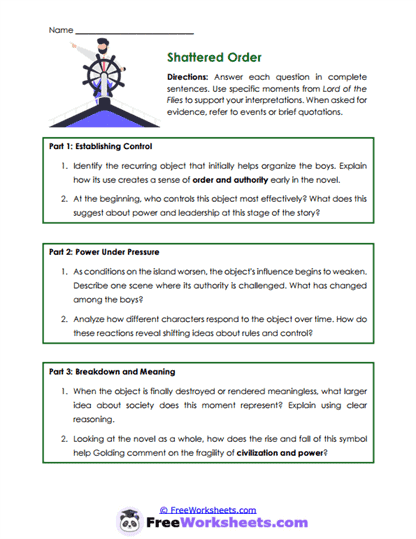
Shattered Order
• What Kids Do – Students track how a symbol changes meaning as events unfold.
• Target Skill – Develops analysis of symbolic evolution and its connection to theme.
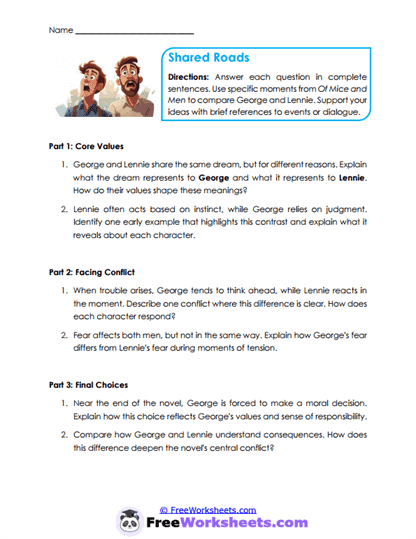
Shared Roads
• What Kids Do – Students compare two characters’ responses and connect differences to larger themes.
• Target Skill – Builds comparative character analysis with evidence.
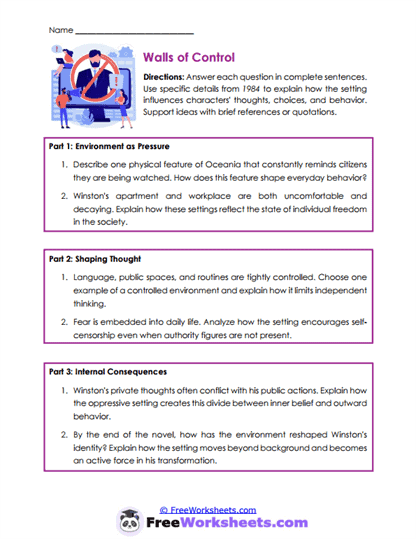
Walls of Control
• What Kids Do – Students analyze how setting influences characters and reinforces themes.
• Target Skill – Develops understanding of setting as a structural and symbolic force.
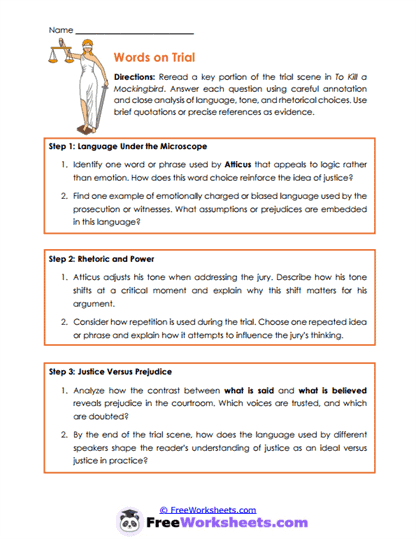
Words on Trial
• What Kids Do – Students analyze how language and rhetoric shape meaning in a key scene.
• Target Skill – Builds rhetorical analysis within literary context.