
About This Worksheet
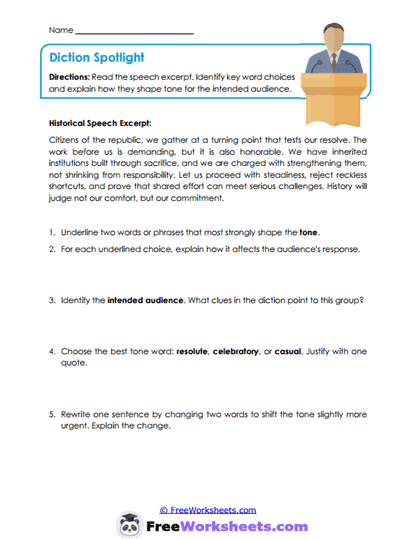
Diction Spotlight is a grade 11 speech analysis worksheet focused on evaluating how word choice shapes tone and audience impact. It is a high school literacy resource that develops students’ ability to analyze persuasive diction in formal speeches. The historical-style excerpt uses elevated language such as “turning point” and “steadfast” to create a serious, resolute tone. This worksheet strengthens students’ understanding of how diction influences credibility and audience response.
Curriculum and Grade Alignment
This worksheet is designed for Grade 11 and emphasizes analyzing word choice and tone in persuasive texts. The primary learning goal is to explain how specific diction choices affect audience perception. Students should already understand basic rhetorical appeals before completing this task. The next progression skill involves composing rhetorical analyses that examine diction and tone together. This resource aligns with CCSS.ELA-LITERACY.RI.11-12.4 and RI.11-12.6.
Student Tasks
Students read a speech excerpt and underline key phrases that signal tone. They explain how each phrase affects the audience. Learners identify the intended audience and justify their conclusion with textual clues. Students select the best tone descriptor and support it with evidence. Finally, they revise a sentence to shift tone and explain the impact of that change.
Common Challenges and Misconceptions
Students may identify tone words without analyzing effect. Some learners might misidentify the intended audience. Others may struggle to revise diction meaningfully. Teachers can model analyzing connotations and emotional weight.
Implementation Guidance
This worksheet works well in rhetoric or public speaking units. Teachers can extend the lesson by having students compare speeches from different historical contexts. The activity reinforces advanced tone analysis skills.
Details and Features
The worksheet includes a formal speech excerpt and multi-step analysis questions. Prompts emphasize evidence-based reasoning. The layout provides structured writing space. The printable format supports classroom discussion and independent practice.