
Audience, Purpose, And Tone Worksheets
This collection will sharpen audience, purpose, and tone analysis by evaluating how authors target readers and shape meaning. These free, ready-to-print PDF worksheets support immediate classroom use with structured, text-based questions. Students build rhetorical analysis skills, including tone shifts, purpose precision, diction impact, and audience alignment.
About This Collection of Worksheets
In Grade 11, reading moves into sophisticated rhetorical analysis as students evaluate how authors craft messages for specific audiences and purposes. This collection supports the Common Core expectation that students analyze how style and content contribute to power, persuasiveness, and meaning, especially in complex nonfiction and argument (including RI.11-12.6 and RI.11-12.4). Across editorials, speeches, commentaries, and policy-focused excerpts, students practice identifying audience assumptions, distinguishing subtle purpose differences, and selecting precise tone language grounded in evidence.
These worksheets fit naturally into argument analysis units, AP-style rhetorical practice, civics and government connections, and college- and career-readiness instruction. They also work well for warm-ups, small-group analysis, stations, or assessment checks because prompts require short, text-based justification rather than lengthy essays. Many activities invite discussion and comparison-students can defend tone labels, debate purpose rankings, or analyze how different stakeholder groups interpret the same passage.
Each printable PDF is designed for low-prep implementation with clear layouts, ink-friendly formatting, and space for evidence-based responses. The tasks emphasize annotation, quoting, and concise reasoning, making them accessible for whole-class instruction or independent practice. Teachers can easily extend lessons by having students rewrite excerpts to shift tone, target a new audience, or improve rhetorical alignment.
Paul’s Teacher Tip
When teaching rhetorical analysis, push students to connect three layers at once: word choice → audience → purpose. A helpful routine is to ask: “Why this tone for this audience right here?” This keeps students from labeling tone in isolation and instead trains them to see rhetoric as intentional decision-making-exactly the kind of thinking expected in AP and college-level analysis.
Worksheet Collection Skill Spotlights
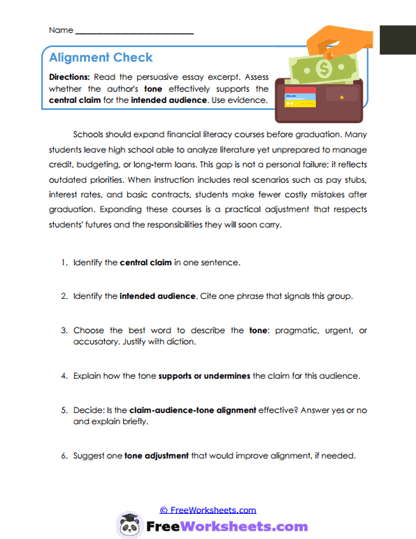
Alignment Check
• What Kids Do – Students analyze a claim, identify the audience, and evaluate whether tone matches purpose.
• Target Skill – Builds understanding of claim-audience-tone alignment.
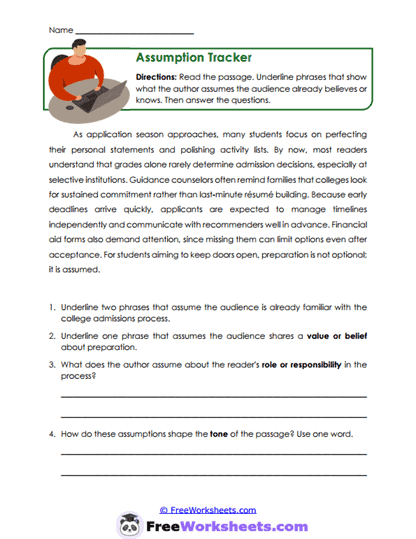
Assumption Tracker
• What Kids Do – Students identify implied assumptions and explain how they shape tone and purpose.
• Target Skill – Develops analysis of audience assumptions and implicit meaning.
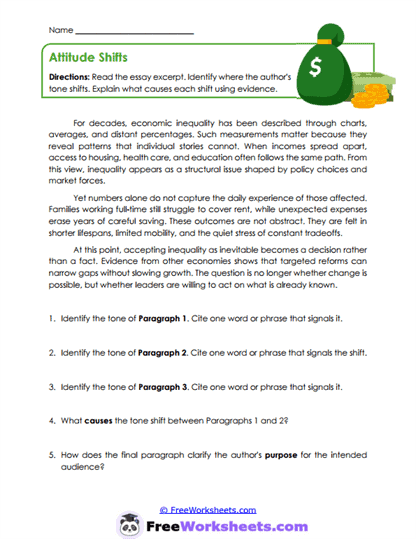
Attitude Shifts
• What Kids Do – Students track tone changes across paragraphs and explain their effect.
• Target Skill – Builds analysis of tone progression and its role in purpose.
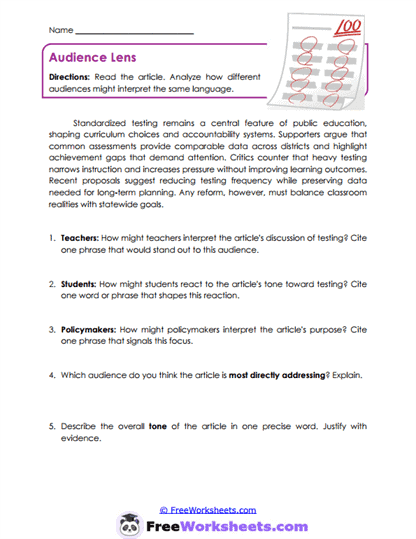
Audience Lens
• What Kids Do – Students evaluate how different audiences might interpret the same text.
• Target Skill – Develops understanding of audience perspective and interpretation.
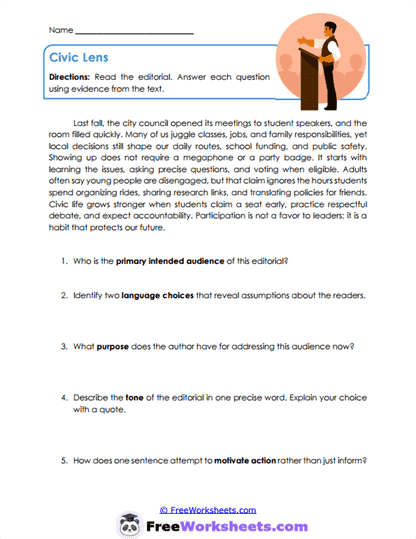
Civic Lens
• What Kids Do – Students analyze an editorial’s audience, tone, and persuasive purpose.
• Target Skill – Builds analysis of audience targeting and civic persuasion.
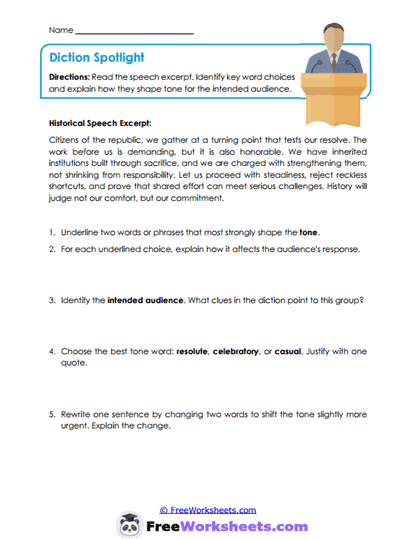
Diction Spotlight
• What Kids Do – Students analyze how word choice affects tone and revise sentences to shift tone.
• Target Skill – Develops understanding of diction and its rhetorical impact.
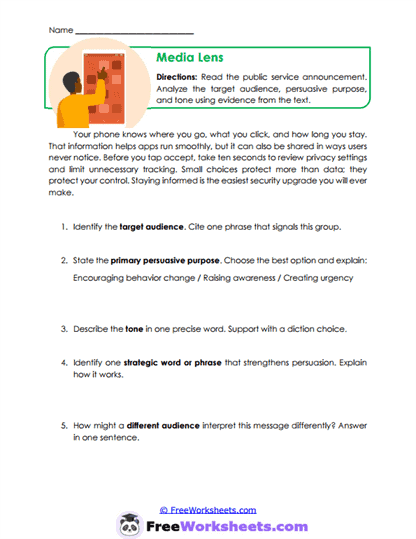
Media Lens
• What Kids Do – Students identify audience, purpose, and tone in a short persuasive text.
• Target Skill – Builds analysis of concise persuasive communication.
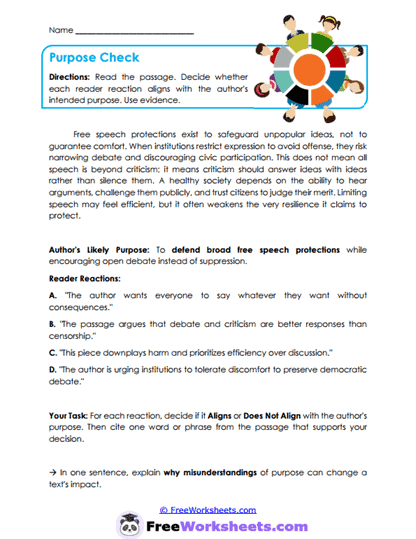
Purpose Check
• What Kids Do – Students evaluate whether responses align with the author’s intended purpose.
• Target Skill – Develops ability to assess purpose and avoid misinterpretation.
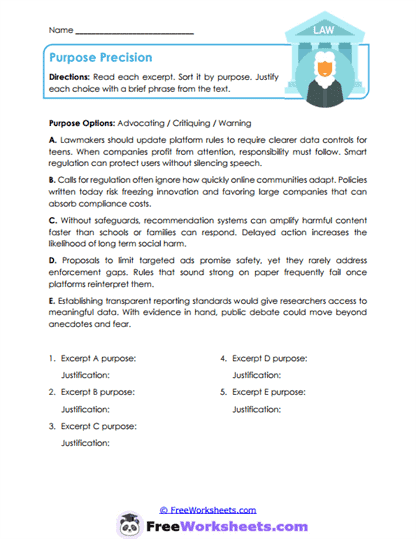
Purpose Precision
• What Kids Do – Students distinguish between similar purposes and justify their choices with evidence.
• Target Skill – Builds nuanced analysis of author intent.
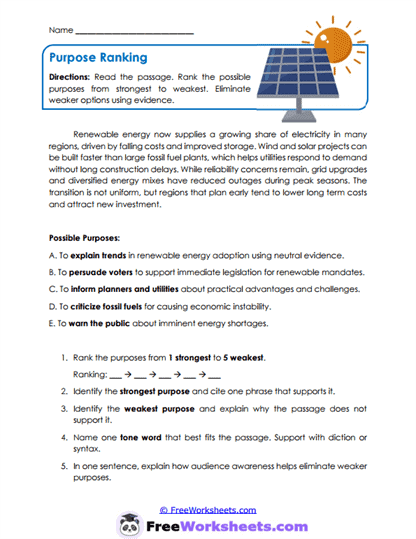
Purpose Ranking
• What Kids Do – Students rank possible purposes and defend their reasoning with text evidence.
• Target Skill – Develops evaluation of competing interpretations.
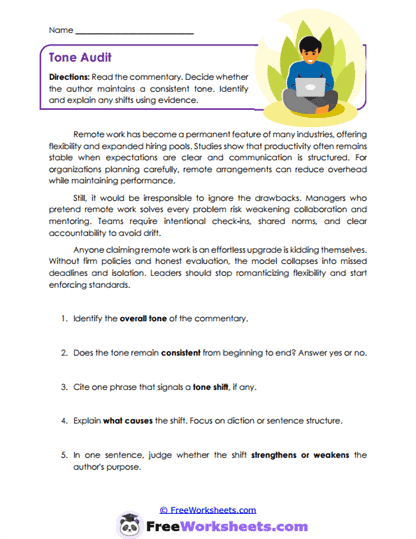
Tone Audit
• What Kids Do – Students identify tone shifts and evaluate whether they strengthen the argument.
• Target Skill – Builds analysis of tone consistency and rhetorical effectiveness.
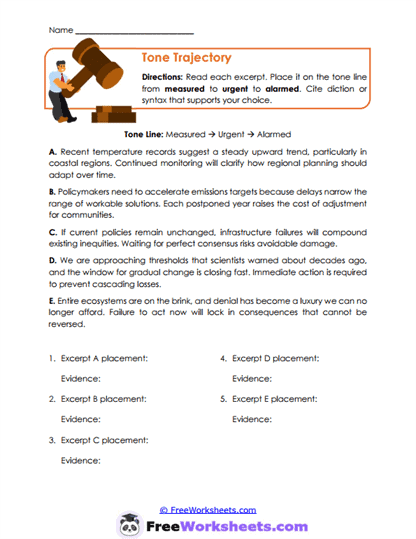
Tone Trajectory
• What Kids Do – Students rank passages based on intensity of tone and justify with evidence.
• Target Skill – Develops understanding of tone variation and emotional impact.